Nuclear weapons and national security
The Express Tribune, May 27, 2012

Nuclear weapons and national security

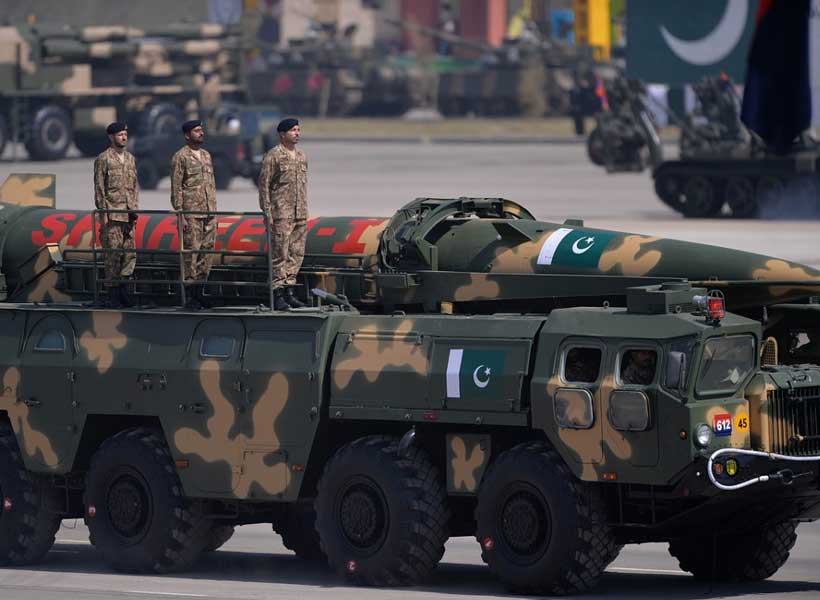
Nuclea­r weapon­s combin­ed with elemen­ts of nation­al power are an instru­ment of policy to safegu­ard nation­al securi­ty.

By Adil Sultan

The writer is a PhD scholar at the Quaid-i-Azam University, Islamabad and a former Visiting Fellow at Henry L. Stimson Center Washington DC

In January 1972, at a meeting in Multan, then President Zulfikar Ali Bhutto made the momentous decision to develop nuclear weapons that could ensure Pakistan’s territorial integrity and provide security against existential threats that emanated mainly from India. On the 14th anniversary of Pakistan’s nuclear tests, it may be useful to analyse the role of nuclear weapons in national security and how safe these weapons are from external threats.

The term ‘national security’ is a broad concept and its remit goes beyond military power. Other elements of national power, including geography, geostrategic environment, economy, diplomacy, demography, and most importantly, the leadership play equally important roles in strengthening national security interests. No single element of national power can alone guarantee safeguarding of national interests.

Nuclear weapons are a vital part of Pakistan’s military strategy. They have not only helped neutralise the military disadvantage as a result of the increasing conventional disparity vis-à-vis India, but have also prevented several wars in the region. In the first 25 years of its existence, Pakistan fought three full-scale wars with India, which eventually led to its dismemberment in 1971. In the following 40 years since work on the nuclear weapons programme started and subsequently when Pakistan acquired nuclear capability, there have been no wars between the two neighbours, except for the 1999 Kargil crisis that does not fall under the category of a conventional war.

Due to the existence of an effective nuclear deterrence, India, despite having a qualitative and quantitative edge in conventional military hardware, was restrained from waging wars in 1985-86 (Brasstacks), 1990 (Kashmir uprising), 1999 (Kargil conflict), 2001-02 (military stand-off), and 2008 (Mumbai attacks). From the economic perspective as well, the cost of three wars far outweighs the money spent on developing and maintaining nuclear weapons capability.

Contrary to the ‘engineered misperceptions’, the acquisition of nuclear deterrence have in fact reduced the imperative for maintaining conventional military parity vis-à-vis India, thus significantly lowering defence expenditures.

Pakistan’s nuclear deterrence was conceived with a focus on deterring future wars with India. It does not take into account the multitude of internal and external threats being faced by it today. In order to transform its threat perception from being mainly India-specific, Pakistan needs to redefine its national objectives that must be consistent with its national power potential. Nevertheless, existence of nuclear capability does provide inherent strength and guarantee that the country cannot be treated like states, which do not have the military means to defend themselves.

The safety and security of Pakistan’s nuclear weapons has been a focus of international attention especially after 9/11. Several Western scholars continue to churn out scenarios depicting Pakistan as a fragile state, incapable of handling its nuclear assets.

While these concerns are mainly politically motivated, nevertheless, Pakistan has put in place an effective command and control system. Over 20,000 people are guarding Pakistan’s nuclear assets to ensure that they do not fall into the wrong hands. Likewise, the system also caters for all possible external threats to obviate the likelihood of damage or sabotage.

The history of Pakistan’s nuclear weapons programme is a story of national resilience and tremendous sacrifices. Safeguarding it against external threats — both intellectual and physical — is a national responsibility.

Nuclear weapons combined with other elements of national power are an instrument of policy to safeguard national security interests. Possession of nuclear weapons offers significant edge in terms of enhanced political stature and diplomatic relations. It is up to the state and the leadership to formulate a strategy to exploit this potential.

Published in The Express Tribune, May 28th, 2012.


Dysfunctional disarmament

The Frontier Post, May 23, 2011

Ban Ki-moon

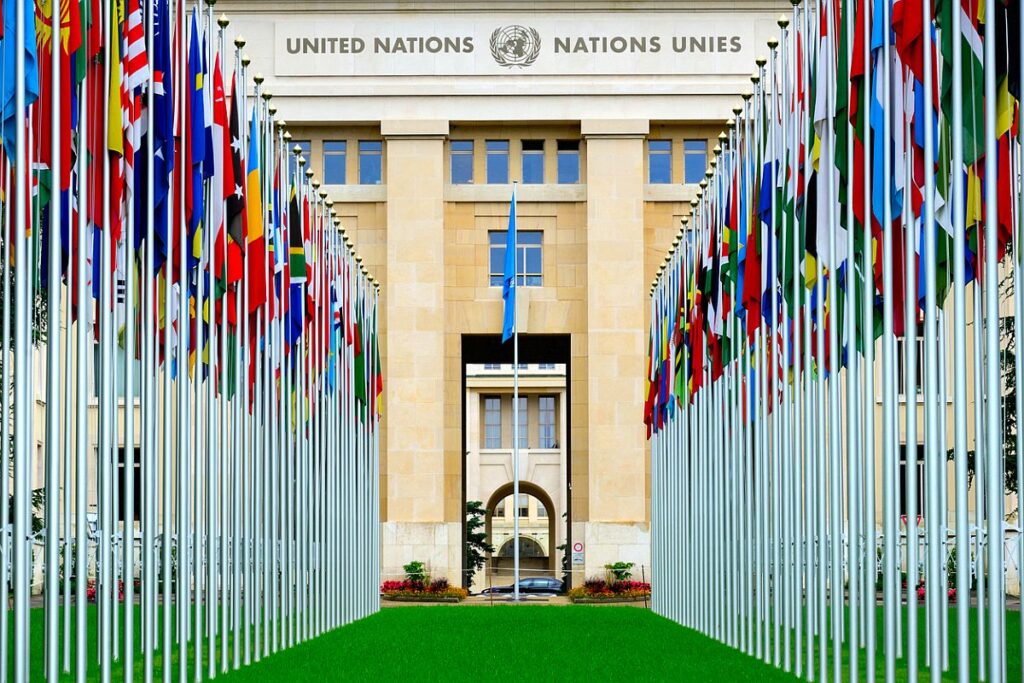
As the United Nations Conference on Disarmament begins a seven-week session in Geneva, its future is on the line. Whereas countries and civil-society initiatives are on the move, the Conference has stagnated. Its credibility – indeed, its very legitimacy – is at risk.The “CD,” as it is informally known, has long served as the world’s only multilateral forum for negotiating disarmament. Its many impressive accomplishments include the Biological and Chemical Weapons Conventions, the Nuclear Non-Proliferation Treaty, and the Comprehensive Nuclear-Test-Ban Treaty. Much of this progress was achieved during the Cold War, proving that it is possible to create global legal norms even in times of deep political division.Yet today, all is not well at the CD. It operates under a consensus rule, and its member states have different priorities. Some want negotiations on nuclear disarmament; others want to ban the production of fissile material for weapon purposes; and still others insist that such a treaty should also cover existing stocks. Some want a treaty on security guarantees for non-nuclear-weapon states to assure them against the threat or use of nuclear weapons; others want a treaty to prevent an arms race in outer space. But, instead of compromise and the give-and-take of good-faith discussions, there has been paralysis. There was a brief glimmer of hope in 2009, when the sense of paralysis led the Conference to consensus on a programme of work. Unfortunately, that agenda was never implemented. As a result, the CD has failed to make any substantive progress for 15 years. We simply must not let one lost decade turn into a second.The CD’s future is in the hands of its member states. But the disarmament and non-proliferation agenda is too important to let the CD lapse into irrelevancy as states consider other negotiating arenas. Last September, I convened a high-level meeting at the UN to consider ways to revitalise the CD’s work and to advance multilateral disarmament negotiations.The participants – who included dozens of foreign ministers – were unanimous in stressing that membership of the CD is a privilege. So is the consensus rule. Just one or two countries should not be able to block the organisation’s work indefinitely.The message was clear: no more business as usual. The CD’s member states must recognise that the Conference’s future is at a critical juncture. Continued stalemate increases the risk that some like-minded countries might take up the matter elsewhere.After all, the deadlock has ominous implications for international security; the longer it persists, the graver the nuclear threat – from existing arsenals, from the proliferation of such weapons, and from their possible acquisition by terrorists.I have urged the CD to adopt an agenda based either on the consensus that was forged in 2009, or on an alternative arrangement. Upon my request, the UN’s entire membership will take up the matter in a first-of-its-kind General Assembly meeting this July. That schedule makes the CD’s current session crucial to its future.Reaffirming the CD’s agenda offers the prospect of renewed negotiations on disarmament issues. Prior agreement on the scope or outcome should not be a precondition for talks – or an excuse to avoid them – but rather a subject of the negotiations themselves.The current stalemate is all the more troubling in view of recent momentum on other disarmament tracks, including last year’s successful NPT Review Conference and heightened attention to nuclear security. With the world focused so intently on advancing disarmament goals, the CD should seize the moment.Shakespeare once wrote that “there is a tide in the affairs of men.” The tide of disarmament is rising, yet the CD is in danger of sinking. And it will sink unless it fulfills its responsibility to act.Ban Ki-moon is Secretary-General of the United NationsCourtesy: Khaleej Times


Foreign Policy

In the short history of Pakistan, if we just concern about the foreign policy of Pakistan we will reach the conclusion that it was not consistent. Mostly our foreign policy was and is based on personality base, and our foreign policy is changed due to the changing of leadership or government. There were lots of fluctuations in our foreign policy throughout history by which we face a lot of long-lasting problems in forming good relations with India. Some internal factors were also there such as large identity groups who have much influence in domestic policy which ultimately impose effects on our foreign policy. Due to our religious class, the State is unable to its good relations with India. Someone rightly said that we cannot change our neighbors; we have to live with them in any case. But now the state is taking rational decisions like in the case of China and Russia, we are determining to form good relations with them it is a good initiative. But it will take some time in the case of Russia when both states have to forget their past role which both States did. Pakistan House will also provide some rules and regulations in this context so that the maximum benefit can be achieved only via forming good foreign policy.


Time to review our national security policy

The Express Tribune, May 27, 2012

Nuclear weapons and national security

Nuclea­r weapon­s combin­ed with elemen­ts of nation­al power are an instru­ment of policy to safegu­ard nation­al securi­ty.

By Adil Sultan

The writer is a PhD scholar at the Quaid-i-Azam University, Islamabad and a former Visiting Fellow at Henry L. Stimson Center Washington DC

In January 1972, at a meeting in Multan, then President Zulfikar Ali Bhutto made the momentous decision to develop nuclear weapons that could ensure Pakistan’s territorial integrity and provide security against existential threats that emanated mainly from India. On the 14th anniversary of Pakistan’s nuclear tests, it may be useful to analyse the role of nuclear weapons in national security and how safe these weapons are from external threats.

The term ‘national security’ is a broad concept and its remit goes beyond military power. Other elements of national power, including geography, geostrategic environment, economy, diplomacy, demography, and most importantly, the leadership play equally important roles in strengthening national security interests. No single element of national power can alone guarantee safeguarding of national interests.

Nuclear weapons are a vital part of Pakistan’s military strategy. They have not only helped neutralise the military disadvantage as a result of the increasing conventional disparity vis-à-vis India, but have also prevented several wars in the region. In the first 25 years of its existence, Pakistan fought three full-scale wars with India, which eventually led to its dismemberment in 1971. In the following 40 years since work on the nuclear weapons programme started and subsequently when Pakistan acquired nuclear capability, there have been no wars between the two neighbours, except for the 1999 Kargil crisis that does not fall under the category of a conventional war.

Due to the existence of an effective nuclear deterrence, India, despite having a qualitative and quantitative edge in conventional military hardware, was restrained from waging wars in 1985-86 (Brasstacks), 1990 (Kashmir uprising), 1999 (Kargil conflict), 2001-02 (military stand-off), and 2008 (Mumbai attacks). From the economic perspective as well, the cost of three wars far outweighs the money spent on developing and maintaining nuclear weapons capability.

Contrary to the ‘engineered misperceptions’, the acquisition of nuclear deterrence have in fact reduced the imperative for maintaining conventional military parity vis-à-vis India, thus significantly lowering defence expenditures.

Pakistan’s nuclear deterrence was conceived with a focus on deterring future wars with India. It does not take into account the multitude of internal and external threats being faced by it today. In order to transform its threat perception from being mainly India-specific, Pakistan needs to redefine its national objectives that must be consistent with its national power potential. Nevertheless, existence of nuclear capability does provide inherent strength and guarantee that the country cannot be treated like states, which do not have the military means to defend themselves.

The safety and security of Pakistan’s nuclear weapons has been a focus of international attention especially after 9/11. Several Western scholars continue to churn out scenarios depicting Pakistan as a fragile state, incapable of handling its nuclear assets.

While these concerns are mainly politically motivated, nevertheless, Pakistan has put in place an effective command and control system. Over 20,000 people are guarding Pakistan’s nuclear assets to ensure that they do not fall into the wrong hands. Likewise, the system also caters for all possible external threats to obviate the likelihood of damage or sabotage.

The history of Pakistan’s nuclear weapons programme is a story of national resilience and tremendous sacrifices. Safeguarding it against external threats — both intellectual and physical — is a national responsibility.

Nuclear weapons combined with other elements of national power are an instrument of policy to safeguard national security interests. Possession of nuclear weapons offers significant edge in terms of enhanced political stature and diplomatic relations. It is up to the state and the leadership to formulate a strategy to exploit this potential.

Published in The Express Tribune, May 28th, 2012.