The Politics of Strait of Hormuz

Introduction:

Strait of Hormuz is not just a maritime passage, it is a strategic chokepoint through which world energy security, great power rivalry and economic stability intersect. Events of 2026 has placed this strategic chokepoint at the center of global politics and economic stability.

Location:

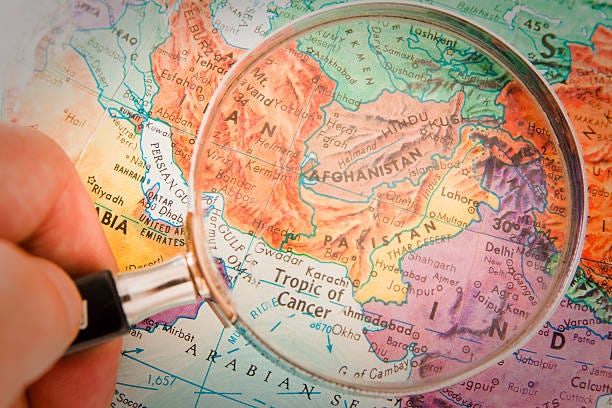
This Strait lies in West Asia (the Middle East), between Oman and Iran, connecting the Persian Gulf to the Gulf of Oman, which opens into the Arabian Sea. This sea passage links the Countries of the Gulf, such as Iraq, Kuwait, Saudi Arabia, Bahrain, the UAE, and Qatar, to the Arabian Sea and beyond.

Why is it important?:

The Strait of Hormuz is the world’s most important oil maritime passage, connecting the Persian Gulf to the Arabian Sea. The Strait is not regional; it is a global economic artery. The Strait accounts for 20% of global oil trade. Through this 167km long and 39 km wide at its narrowest point, an estimated 30,000 vessels pass per year.

Major Middle Eastern exporters like Saudi Arabia, Kuwait, Iraq, and the UAE rely heavily on this channel to export their oil to international markets. While importing nations, primarily India, China, Japan, South Korea, and the European Union are dependent on these oil supplies. According to the US Energy Information Administration (EIA), approximately 20 million barrels of oil, valued around $500 billion in annual global energy trade passed through the Strait of Hormuz every day in 2024. According to EIA, this corridor accounted for one sixth of global oil production and one fifth of the world’s liquefied natural gas (LNG) in 2024, with Qatar accounting for the majority of the volumes.
Other than oil and gas, more than 30% of world’s Ammonia, 50% of Urea, 50 % of Sulphur and 20% and Diammonium Phosphate also passes through the Strait. Ships also carry a third of world’s helium which is used in multiple technologies.
Any disruption in the flow would impact the global economy, hiking fuel prices and affecting economies

Crisis of 2026

The following war between the US and Iran, which started on 28th February 2026, triggered the disruption of oil flows internationally. This is the first time that the Strait has been officially closed. Tankers are either delayed, rerouted, or temporarily halted. The traffic has plunged by more than 95% since the war began.
This disruption has surged oil prices above $100 per barrel, an increase of more than 40% compared to pre-war levels. While some analysts predict that prices could rise to $150 or even $200 a barrel if the closure continues. Tehran has clearly stated that the Strait is open to everyone except the US and its allies. The Iranian Minister of Foreign Affairs, Abbas Araghchi, stated that the Strait is “Open, but closed to our enemies.”
The international community has expressed serious concerns over the closure of the Strait. Countries like China, India, Japan, and South Korea, which heavily depend on oil imports, are being impacted by fuel shortages, price increases, and inflation in the transport and food sectors. Japan’s benchmark Nikkei 225 was up about 2.3%, while South Korea’s KOSPI was 2.6% higher. In Hong Kong, the Hang Seng Index was up to 0.7 percent.

Exporters in the UAE, Saudi Arabia, Kuwait, Iraq, and Qatar have been directly affected by export blockages, revenue losses, and economic pressure. Overall, oil prices have impacted international markets, causing global instability. While small number of ships have been passing through the Strait each day, the traffic still is far from it pre-crisis levels. Pakistani, Chinese, Turkish, and Indian Ships have been allowed to pass through the Strait, according to reports. Various other countries are in contact with Iran seeking for a safe passage for their carriers. The Foreign Minister of Iran, Abbas Araghchi, informed CBS (US television network) that Iran has been “approached by number of countries” regarding safe passage, and that “this is up to our military to decide.” Despite the closure of the Strait, Iran has earned nearly $5 billion in oil exports, nearly 55.2 million barrels in the past month. However this revenue is now at risk with United States naval blockade, as this could seriously damage Iran’s economy.

Recent developments:

US President Trump has announced that the US will implement a naval blockade after negotiations in Islamabad failed, asking other states to join the US Navy in blocking the Strait. Iran’s armed forces has responded by calling it “an illegal act” that “amounts to piracy”. Despite the US announcing a blockade on vessels of all nations entering or departing the Strait, Chinese tankers have crossed the Strait of Hormuz.
The countries have also rejected Trumps request to join the operation. Germany, Greece and France said that they will not engage in military operations. The United Kingdom’s Prime Minister, Keir Starmer, also told the media, “We will not be drawn into the wider war.” Starmer has announced diplomatic engagement co-hosted with France to be held this week, aiming to end the war on Iran and secure the safe passage for future shipments. According to recent reports, Iran and the US might engage in another diplomatic effort to reach an agreement. The international community is relying on these diplomatic engagements to prevent further escalation and the reopening of the Strait of Hormuz. The Strait of Hormuz continues to be the linchpin of this war. It has shifted the focus of the war and intensified global vulnerabilities. Any disruption to the flow of capital will pose a serious risk to international markets and global economies.


Pakistan China Strategic Partnership in a Multipolar Asia

Introduction:

Asia is facing a major shift as the international system transitions from unipolarity towards a multipolar order. China’s growing economic, technological and geopolitical influence have threatened the long standing dominance of the United States’ one world order, reshaping world affairs.
Pakistan’s strategic partnership with china has gained a significant importance in regional power dynamics of South Asia.
The long standing bilateral relationship between Pakistan and China is often described as an ‘all weather strategic cooperative partnership’ built on mutual trust and cooperation in defense, economy, diplomacy and infrastructure regardless of global and regional changes. However with the emergence of multipolar Asia, this partnership has evolved beyond its traditional framework.

Multipolar Asia:

Multipolarity is an international system structure where power is distributed among multiple states rather than being dominated by one hegemon. This diffused structure threatens the survival of countries which is now shaped by power, competition, economic resilience and collaboration (alliances). United States’ maintains a global dominance, however it has encountered challenges from a rising China and other regional actors such as India, major powers like Russia and key Middle Eastern countries gaining strategic and economic independence.
The Indo- Pacific Strategy of US aims to counter China’s growing influence through strategic alliances, collaborative work, economic cooperation and military presence, primarily with countries like India, Japan, and Australia.
As a response, China has taken strong economic and strategic initiatives such as the Belt and Road Initiative (BRI), also known as One Belt One Road and often as New Silk Road, serving as the cornerstone of the regional connectivity in Asia. This has been signed by more than 140 countries, including several members of the European Union.
For Pakistan, multipolarity generates opportunities for strategic and diverse economic collaboration. However, it also creates external pressures as major powers attempt to control and regulate strategic coalitions. Hence Pakistan’s partnership with China has become a key driver for its economic and financial stability as it provides Pakistan freedom to act more independently.

Historical context:

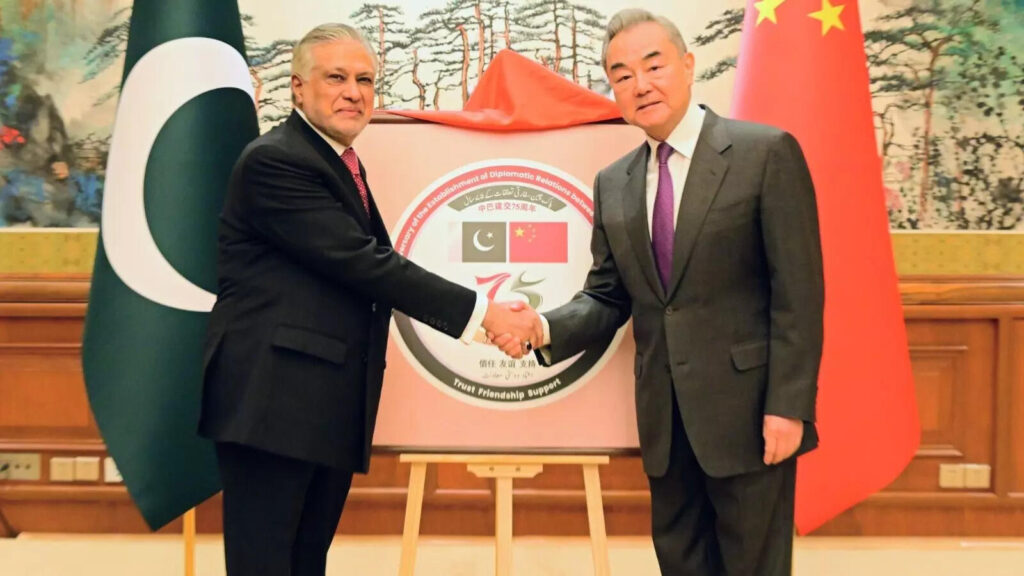
The relations between Pakistan and China have progressed since their establishment on May 21, 1951 launched on political, economic and strategic cooperation. The partnership strengthened with time through defense, cooperation and political alignment. In 1963, the two countries signed a border agreement, defining territorial boundaries and solidifying diplomatic relations. China’s consistent support for Pakistan key issues, including Kashmir and Pakistan’s endorsement of China on matters such as Taiwan and Xinjiang, set the groundwork for long term strategic partnership.
Over the decades, security and defense cooperation became key component of bilateral ties. Defense collaborations, Joint military exercises, and intelligence sharing have further consolidated trust between the two countries. Following 21st century, this relationship began to grow significantly with economic collaboration under CPEC .The partnership has progressed beyond traditional military or political cooperation, and now expands into more comprehensive framework further improving regional connectivity which includes energy, trade, infrastructure and transport.
China maintains its status as the largest trading partner and a major investor of Pakistan, playing a crucial role in shaping regional dynamics in South Asia.

China-Pakistan Bilateral Trade:

China is Pakistan’s largest trading partner and biggest import source. Pakistan-China trade has exceeded US$28 billion in 2025. Pakistan’s export to china stood at US$2.8 billion, while monthly imports from China has surpassed US$1.74 billion in September 2025, including machinery, electronics, chemicals and industrial inputs.
China’s exports to Pakistan is dominated by electrical machinery, iron and steel products and mechanical appliances, reaching approximately $19.62 billion to $20.23 billion, revealing Pakistan’s interdependence on China. While, Pakistan’s export profile remains sector specific, primarily led by copper products and sesame seeds.
China’s total investment in Pakistan under CPEC totals US$64-65 billion over the past decade across energy, transport, and infrastructure. In September 2025 US$8.5 billion has been added through new MoUs and joint ventures in agriculture, renewable energy, EVs, steel and health sector.
Other bilateral treaties include trade, taxation, security and cultural cooperation agreements. The Pakistan-China Free Trade Agreement (CPFTA) established in July 2007 is the foundation of the economic partnership fostering trade relations and mutual economic growth between two countries. The Phase II of this agreement was signed in 1January 2020, expanding tariffs concessions for examples on Pakistani products such as cotton, yarn, leather, apparel, aquatic products and nuts. While Pakistan removed tariffs on Chinese furniture, electrical machinery, textiles, glass products, fertilizers and automobiles.
China and Pakistan also signed several treaties such as the Bilateral Investment Treaty (BIT) in 1989, to protect and promote investments and the Double Taxation Agreement (DTA) signed in 1989 prevents double taxation on income earned by individuals and businesses from either country, promoting cross-border investment and trade.
Pakistan and China have also strengthened their counter- terrorism cooperation. A key aspect of the counter terrorism cooperation is the joint military training and exercises. In November and December 2024, the joint counter- terrorism exercise was conducted, called “Warrior-8”. These drills include joint planning, mixed-unit training, live-fire exercises, and command operations, seeking to improve the coordination and security measures in counter terror operations.
Pakistan and China also share a cultural cooperation. Over the years both countries have collaborated to enhance cross-culture dialogue and solidarity. This includes exchanges in areas such as art, literature, music, sports, cultural diplomacy, educational collaborations and language programs.

CPEC as a strategic instrument in a multipolar Asia

Pakistan holds significant importance for China’s overseas construction and engineering projects due to its geographical location, a gateway to the Arabian Sea and Indian Ocean through Gwadar port. Since the launch of the CPEC in 2015, Chinese companies have actively engaged in Pakistan’s energy, transport industries, transmission lines, oil exploration, communication hydropower, airports and ports.
To strength regional connectivity, primarily for trade enhancement The China-Pakistan Economic Corridor serves as a multidimensional platform, This project seeks to expand and enhance the economic cooperation and development which not only provides gains to these both countries but also benefits the neighboring countries such as Afghanistan, Iran and some Central Asian states (Kazakhstan, Uzbekistan, Turkmenistan,)
The CPEC comes under the China’s Belt and Road (BRI) initiative, which aims to establish a connectivity corridor through the network of railways, highways and energy projects that offers alternate trade and energy routes. This direct access to the Arabian Sea via Gwadar Port further strengthens China’s presence in the Indian Ocean region and reduces its reliance on high risk maritime chokepoints such as Strait of Malacca.
For Pakistan, this corridor is likely to stimulate trade and investments, further yielding employment opportunities and reducing poverty through infrastructure, logistic centers and industrial zones developments. These strategic ventures thus aim to address Pakistan’s long-standing economic difficulties, subsequently improving regional connectivity for both nations.
The phase II of CPEC comprises of new additional sectors, incorporated by Industrial cooperation, agriculture and technology transfer, strengthening its position in a multipolar world.
Major energy development initiatives include various hydroelectric, wind, coal, solar projects have been completed, such as the 1320MW Sahiwal Coal-fired Power Plant and the 1000MW Quaid-e-Azam Solar Park in Bahawalpur. Further energy projects are in progress, including the 1124MW Kohala Hydropower Project and the 300MW Gwadar Coal-Fired Power Project, providing lasting energy security and sustainability.
In Transport sector, the broad railway infrastructure and extensive road networks have further improved connectivity. Completed projects include the Peshawar-Karachi Motorway’s Multan-Sukkur section and the Orange Line Metro Train in Lahore. Developments such as the upgrade of the Main Line-1 (ML-1) railway and new motorways like the Peshawar-D.I. Khan Motorway are still in progress which will further enhance transportation and trade.
However, CPEC still faces significant challenges including major security concerns, mainly regarding the Chinese national’s protection and infrastructures. Furthermore, there has been economic criticism which has made implementation quite complicated, encompassing debt sustainability and project delays. These impediments highlights the nexus between strategic risks and economic objectives within Pakistan-China relations.

Pakistan’s strategic balancing in great power competition:

Pakistan’s geostrategic location holds significant leverage in South Asia, particularly due to its borders with Afghanistan, India and Iran and other Middle Eastern countries. This geopolitical position places Pakistan at the center of the greater power competition providing both strategic advantages and disadvantages. India’s proximity calls for necessary strong defense and security measures. While other border sharing with Afghanistan and Middle Eastern countries exposes Pakistan to regional instability and cross-border tensions. As a result, Islamabad has developed plans to tackle these complications by maintaining its relations with various powers to protect its national Interests.
United State and other countries view Chinese investments and technological support to Pakistan as China’s growing influence and dominance. This creates a major challenge for Pakistan as to balance its strategic alignment with United States while managing its deepening partnership with China. Pakistan maintains a cooperative and collaborative relations with United States based on economic and diplomatic exchanges, particularly in areas such as trade, financial engagement, counter-terrorism, defense and regional instability. Correspondingly, Pakistan also maintains bilateral relations with other with Middle Eastern countries particularly with Saudi Arabia and UAE on labor, energy and defense collaborations.
Through these engagements Pakistan aims to balance its reliance on any single power thereby enhancing flexibility and autonomy to protect its national interest in this highly competitive world.

Constraints:

Pakistan and China, both face several challenges despite the strengths that threatens its multidimensional partnership. Pakistan’s autonomy becomes quite restricted due to its economic weaknesses such as fiscal instability, political instability, governance constraints which restricts Pakistan to fully utilize Chinese investment. The delays in project implementations and institutional inefficiencies diminish the performance outcomes of major projects, including CPEC.
Furthermore, the regional uncertainty and political flux also create security dilemma and intensifies rivalries. The increasing polarization, ongoing tensions with India and the instability in Afghanistan impedes regional cooperation. The substantial Chinese investments, especially in high risks regions like Balochistan and Khyber Pakhtunkhwa triggers security challenges from insurgency, political unrest and militant threats. This increases mutual vulnerability between security cooperation and economic engagement creating security burdens and constraining Islamabad’s strategic flexibility
At the diplomatic level, Pakistan should pursue autonomy over reliance thus find a balance to maintain flexibility and sustainability. Excessive dependence can limit Islamabad’s diplomatic adaptability and agility in decision making.
It is crucial for Pakistan to maintain and monitor financial accountability so it does not enter into such debt terms with China otherwise it would make it impossible for the country to pay off loans in the future. The momentum and range of future engagements may also be affected due to China’s domestic deceleration and evolving global priorities.

Looking-ahead, Pakistan-China deepening partnership will continue to play a pivotal role in Asia’s politics. The partnership built on mutual growth and economic interests requires careful management to avoid overdependence. Nevertheless, the effectiveness and productivity of this partnership depends on Pakistan’s capability to convert the strategic alignment into concrete economic gains and greater regional influence.
In today’s transitioning multipolar world, a country’s survival truly depends on its flexible diplomacy. Hence Pakistan must pursue diverse partnerships to avail opportunities for maximum strategic benefits and economic gains.

Conclusion:

The emerging multipolarity of Asia highlights the significance of Pakistan’s partnership with China exhibiting both an opportunity and a test. To manage this relationship effectively requires balancing ambition with capacity, alignment with autonomy and cooperation with caution to keep up with this competitive race.

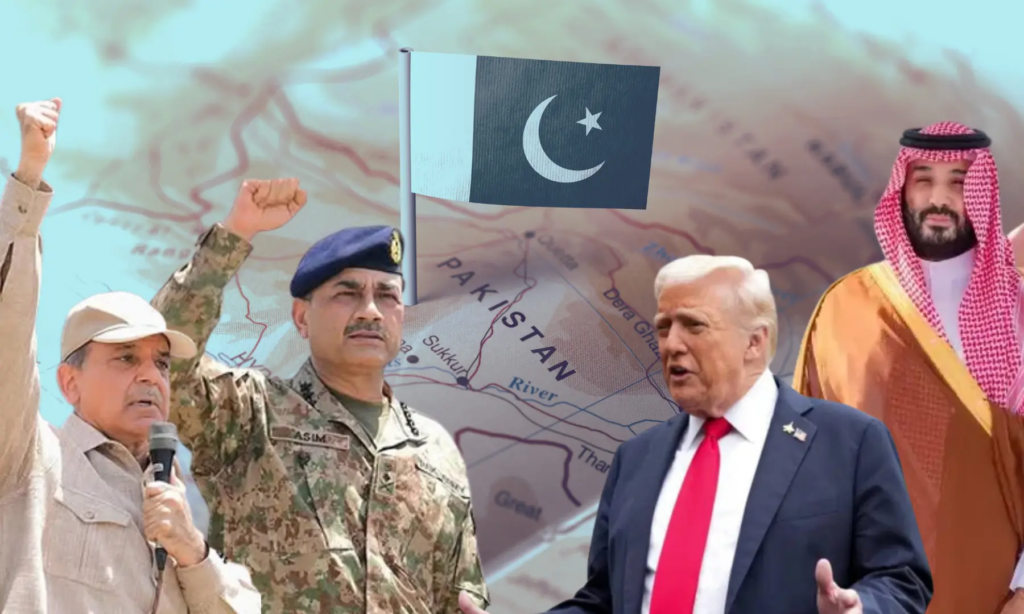
PAKISTAN-AFGHAN WAR

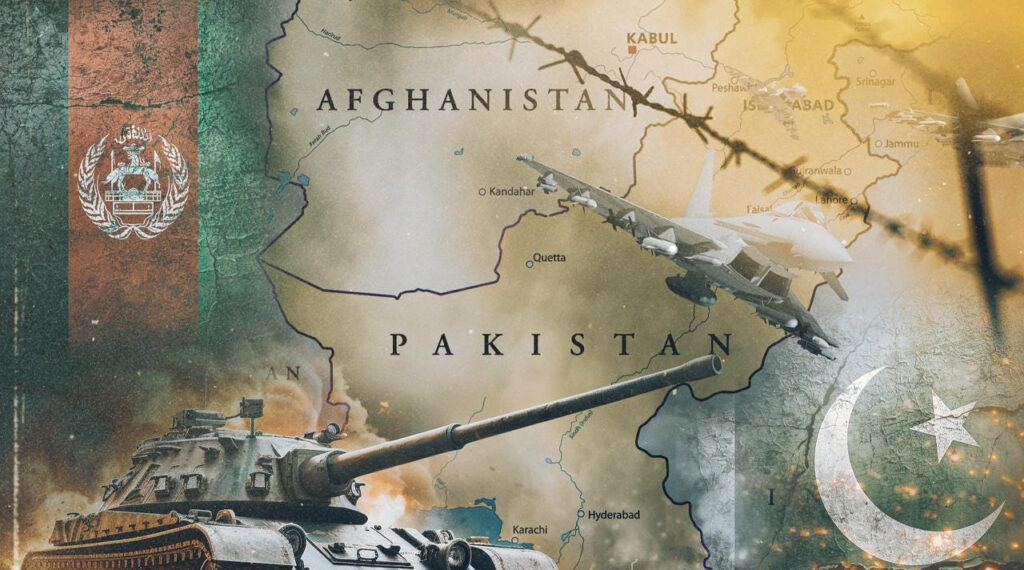
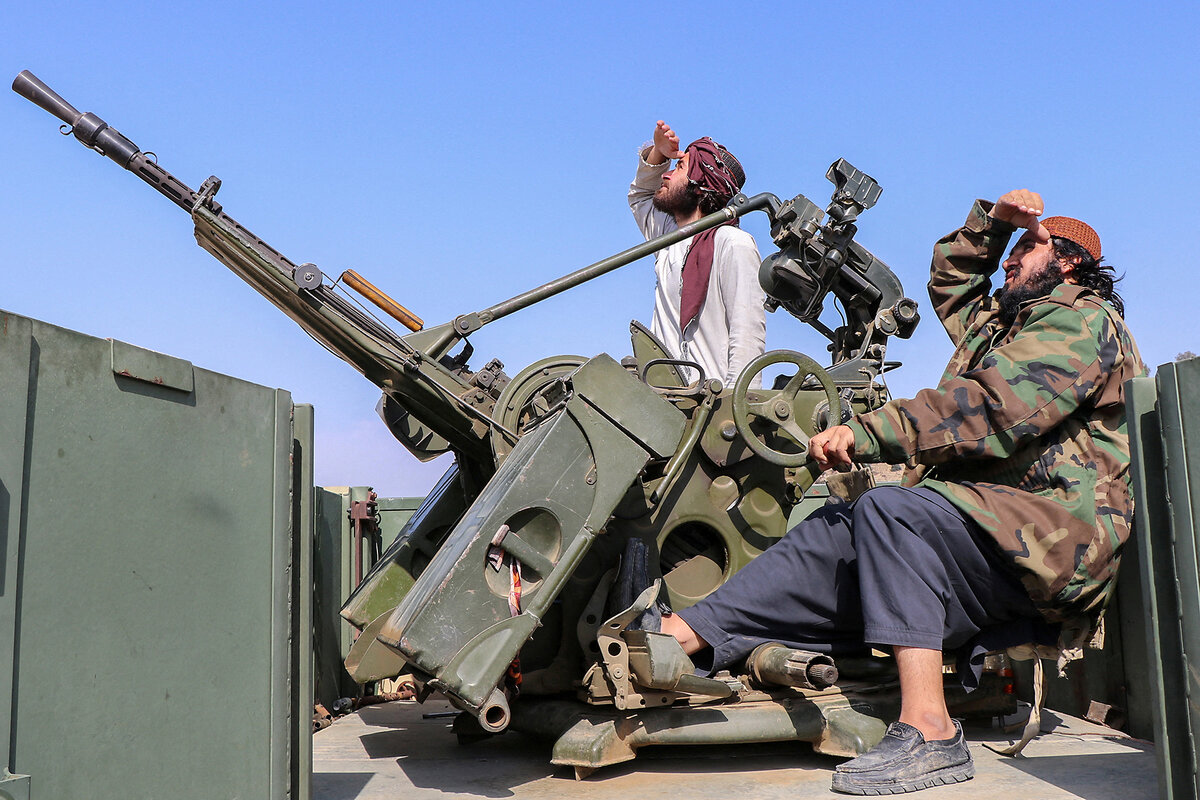
The August 2021 takeover by the Taliban has significantly shifted Pakistan-Afghanistan relations from strategic alignment to heightened tensions. The recent escalations have pushed both countries into armed confrontation.

Historical background: The Roots of Hostility

The hostilities between these two countries date back to 1947, when Afghanistan became the only country to vote against the admittance of Pakistan into the United Nations. This was primarily due to the Durand Line Agreement of 1893, signed by Sir Mortimer Durand, representative of British India, and Amir Abdur Rahman Khan of Afghanistan. This agreement drew a line stretching about 2,649 km, cutting through Pashtun tribal regions between the British Raj and Afghanistan. When Pakistan emerged as an independent state in 1947, it inherited the international borders of British India under the principle of state succession. The issue arose when Afghanistan refused to accept the Durand Line Agreement after 1947, arguing that it was only valid between British India and should have been renegotiated after British withdrawal, thus demanding a separate Pashtun state. This resulted in border clashes for the first time in 1949-50.

Contemporary Drivers of Conflict

Today the issues revolve around border fencing, refugee politics, cross-border militancy (primarily TTP), and sovereignty disputes.
Pakistan has fenced most of the Durand Line, which Afghanistan opposes. These have led to armed confrontations at the Torkham and Chaman crossings.
Moreover, Pakistan is host to 3-4 million Afghan refugees, placing significant pressure on its systems. Thus prompting large-scale deportations from 2023 onwards, deporting 2,009,241 from 15 September 2023 to 31 January 2026. The government proclaims the increased crime and suicide bombings as a reason behind these mass deportations, leading to humanitarian and diplomatic tensions.
The key issue, however, remains Tehrik-i-Taliban Pakistan (TTP), a militant group targeting Pakistan, which Pakistan claims to be operating from Afghan soil. Pakistan views TTP as an existential internal threat, referring to it as Fitna al Khawarij. While Kabul denies harboring them.

The February 2026 Escalation

The recent escalation took place on Thursday, 26 February 2026, when Pakistan launched airstrikes in Afghanistan, including its capital city, Kabul. The birthplace of the Taliban movement, Paktia and Kandahar provinces, was also targeted.
Pakistan claims that the airstrikes were a response to the earlier cross-border attacks. Pakistan launched the operation ‘Ghazb lil Haq,’ targeting militant hideouts across Afghanistan. The information minister Attaullah Tarar in his post on X stated that Pakistan’s armed forces have destroyed 188 Afghan Taliban posts, capturing 31, killing 464 Afghan Taliban, and injuring over 665 since the start of the operation. He further confirmed that Pakistan has destroyed 192 tanks, armored vehicles, and artillery guns while targeting 56 different locations across Afghanistan by air.
Security forces have also conducted intelligence operations in the Domel tehsil of Khyber Pakhtunkhwa’s Bannu district, reportedly injuring several militants. The information minister confirmed that 40 Taliban personnel were killed in KPK overnight operations. Security forces have also carried out operations in Balochistan in response to their physical attack on 16 locations in the north of the province, killing 27 Afghan Taliban.
State-run PTV news also reported that Pakistan armed forces have carried out operations in Jalalabad targeting Afghan Taliban fighters. Moreover, the Pakistan Air Force has struck the Bagram air base and Khugyani base in an ongoing Ghazab lil-Haq operation, inflicting heavy damages.
The shelling across the Pakistan-Afghanistan border in KPK continues, with no major casualties. KPK remains on high alert, announcing the closure of 37 public and private sector educational institutes. There have been reports of intense clashes with heavy firing in the Mohmand district of KPK. According to the residents, 54 educational institutes and local shops have been closed as precautionary measures.

Both countries have repeatedly blamed each other for provoking attacks.

In 2024, the TTP was held responsible for over 480 attacks and 558 deaths, the highest since 2011. Pakistan claims that it has conclusive evidence that TTP was behind the recent bombings in Islamabad, Bajaur, and Bannu. The strikes by Pakistan on 21 February were a response to the terrorist attacks by militant groups operating from Afghan soil. Pakistan accuses Taliban of serving as an Indian proxy. According to Asif, “India wants to engage in a low-intensity war with Pakistan. To achieve this, they are using Kabul.”
The Taliban government says that Pakistan is violating Afghan sovereignty and that the attack by Pakistan was unprovoked. They stated that the Afghan attack was a retaliatory operation against the earlier attack carried out by Pakistan on the night of 21 February in Nangarhar and Paktika provinces, killing at least 13 Afghan civilians, according to UN reports. The Taliban’s spokesperson, Zabihullah Mujahid, said that the “security challenges inside Pakistan have no connection to Afghanistan,” and that Pakistan “must resolve their own issues and refrain from further harming their ties with Afghanistan, as this would be detrimental to both countries and the entire region.”
According to Afghan official Zakir Jalali, active diplomacy is taking place alongside military actions. Jalali stated that Afghanistan has held detailed discussions with the foreign ministries of Turkey, Qatar, and Saudi Arabia, briefing them on their position.


Islamabad has rejected the Afghan claims and maintains the position that Pakistan launched the operation after the unprovoked firing from across the Afghan border. Pakistan also refused any suggestions of talks; the spokesperson of Prime Minister Mosharraf Zaidi stated that “There won’t be any talks. There is no dialogue. There is no negotiation. Terrorism from Afghanistan has to end.” The Defense Minister Khawaja Asif said, “Now it is open war between us.”

International Response

The international actors have urged both countries to de-escalate and engage in diplomacy. The UAE, Jordan, Saudi Arabia, the UN, and the Council of the European Union have called for an immediate end to these hostilities and the pursuit of diplomatic means to resolve the conflict.
Throughout 2025, both countries have been involved in a series of heated exchanges. The major escalation took place in Oct 2025, when Pakistan conducted airstrikes inside Afghanistan targeting the militant bases, leading to multiple clashes on the border. After days of fighting, both agreed to the ceasefire in mid-October in Doha. The talks were mediated by Qatar and Turkey to put an end to the violence and work towards peace. However, the follow-up negotiation talks held in Turkey at the end of October failed and did not produce any lasting breakthrough. Since then, trade and the border crossings between the two countries have been shut down.

Pakistan claims that its main objective is to counter terrorist activities, justifying its cross-border intelligence-based operations as necessary security measures to dismantle TTP infrastructures. While Afghanistan aims to protect its sovereignty and territorial integrity.
The major dilemma, however, remains the lack of verified information from both sides. As the Taliban does not allow easy access to foreign journalists to investigate the sites and verify the claims. It is also not easy to gather information from borders in Pakistan.
The claims from both sides remain largely accusatory.


Pakistan and regional security: Current Development and Strategic Implications

Early 2026 has been marked by a severe escalations of militant attacks and regional instability for Pakistan. Recent deadly suicide bombings, growing insurgent activity, cross border tensions has become a matter of serious concern.

Islamabad Terror Attack and Capital Security

The recent attacks on country’s capital has revealed security oversight and intelligence gaps. Islamabad’s recent suicide bombing on 6th February 2026 at Khadija Tul Kubra Shia mosque in Tarlai Kalan arear claimed lives of 30 people and injured over 170, marking it the deadliest attack on the capital since 2008. The Defence Minister alleged that it was planned and financed from across the Afghanistan border, allegations denied by Kabul. On Friday evening, the ISIL (ISIS) group claimed the responsibility for the attack on its telegram channel.
Another incident back in November 2025, at a district court in G-11 took lives of 12 people and injured 27 others. Jummat UL Ahrar, a splinter group of the Tehrik-e- Taliban (TTP) claimed responsibility. The condemnation came from various international partners, including U.S, China, EU, Russia, reflecting global concern over extremist spillover.
These incidents highlights the danger posed by regional affiliate of ISIS and heightened concerns about sectarian violence and militant reach within highly secured cities.

Balochistan Insurgency and Internal security

The militant violence and resistance in Balochistan is not episodic, it is structural. There is strong underlying resentment in Balochistan, which stems from long standing political marginalization, unequal distribution of resources, resources extraction without local ownership, demographic fears, identity and historical grievances, with CPEC seen as intensifying these existing injustices. The core objective behind these militant violence is greater autonomy and an independent Baloch state.

Balochistan has recently witnessed a rise in coordinated militant attacks, mainly by the Balochistan Liberation Army (BLA) and affiliated groups. Reports have indicated at least 177+ militant casualties in counter insurgency operations. These confrontations have led to dozens of civilian and security personnel deaths, necessitating a revamp of the counter terror strategies.


The government has declined negotiation initiative and instead prioritized a security-led, military response to restore stability. Since Baclochistan’s security dynamic directly affects the China Pakistan Economic corridor (CPEC) projects representing billions in investments, the focus is essentially on increasing military presence to protect mineral- rich areas and border routes with Afghanistan and Iran. Initiatives to expand CPEC in 2025 between Islamabad, Beijing and Kabul seeks to improve regional connectivity and economic cohesion while placing additional demands on Pakistan’s security to manage emerging vulnerabilities.

Afghanistan- Pakistan Border security

Pakistan foreign policy regarding Afghanistan has always been based on the principle of Muslim brotherhood. Despite shared geography, ethnicity, and faith, relations between Pakistan and Afghanistan have never been smoother, except for a short period of Taliban rule.

For Pakistan, the cross-border security has always remained a major concern. Although Kabul has publicly denied its involvement and support of anti-Pakistan militant, Pakistani authorities have continuously accused the Taliban-led government in Kabul of enabling anti-Pakistan groups including TTP and other extremists groups. Border tensions have sporadically escalated into violence in Kurram and Bajaur, with mutual accusations of provocations and cross-border militant activities.
Pakistan has taken strict measures to tightened border controls, including periodically closing formal crossings with Afghan border.
According to Centre for research and security studies, there has been significant increase in fatalities, the figure report for violence- related deaths reveals the jump form 2555 in 2024 to 3417 in 2025.
The recent diplomatic engagements of 2025, including Doha truce talks and Trilateral engagements involving China, Pakistan and Afghanistan, aims to mitigate tensions, boost regional cooperation and manage security challenges.

India- Pakistan Relations and regional Tensions

India and Pakistan has remained in deep-rooted historical and culture conflicts, resulting in complex security rivalries. There is a long list of events that has created hostility and security problems for Pakistan but the core issues is the Kashmir dispute.
India’s strategic stance in South Asia continues to overlap with Pakistan’s security concerns. The recent intense exchange of 2025 including missiles, drones and shelling followed by the suspension of Indus Waters Treaty have sparked serious concerns for regional security, stability and economic partnerships.

China-Pakistan strategic Partnership

China-Pakistan’s all weather strategic partnership remains a key aspect of Pakistan’s security and economic policies. Both countries share strategic cooperation to mitigate security threats, which includes counter-terrorism, intelligence sharing, and the protection of Chinese national and infrastructure under CPEC projects.
Despite these high level engagements, both countries faces security challenges from militant attacks, prolonged tensions with India and instability in Afghanistan. Pakistan’s Foreign Ministry and Chinese Embassy formally agreed to work together to counter extremism and expand security measure, including the establishment of a Special Protection Unit for Chinese personnel and cybersecurity cooperation in early 2026.
This highlights the intensity of China and Pakistan’s partnership, demonstrating shared interests in maintaining stability and Pakistan’s role in Asia’s evolving multipolar security dynamics.