The Houthis, Saudi Arabia and the War in Yemen
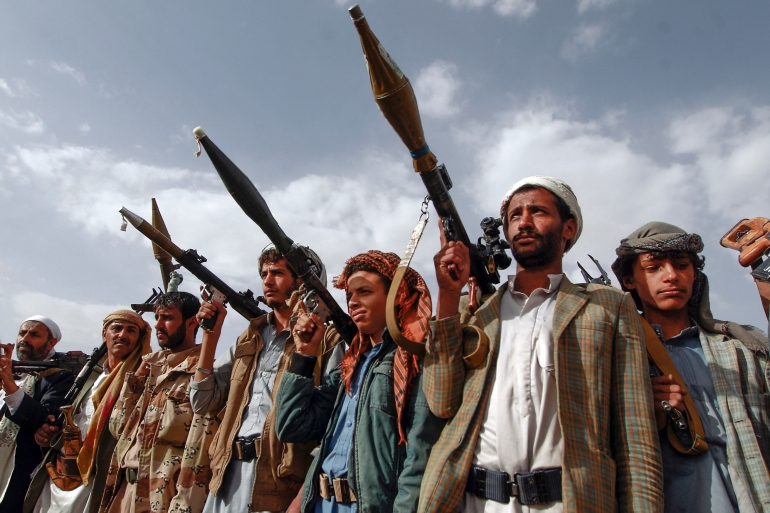
The Houthis have a complex relationship with Yemen’s Sunni Muslims. The movement has discriminated against Sunnis, but also recruited and allied with them. Under the leadership of Hussein Badreddin al-Houthis, the group emerged as an opposition to former Yemeni president Ali Abdullah Saleh, whom they charged with massive financial corruption and criticized for being backed by Saudi Arabia and the United States.

The Houthi movement attracts its Zaidi-Shia followers in Yemen by promoting regional political-religious issues in its media, including the overarching U.S.  Israeli conspiracy theory and Arab “collusion”. In 2003, the Houthis’ raised a slogan, “God is great, death to the U.S, death to Israel, curse the Jews, and victory for Islam”, and it became the group’s trademark. Houthis officials, however, have rejected the literal interpretation of the slogan. Iran is widely accused of backing the Houthis, a Zaydi Shiite movement that has been fighting Yemen’s Sunni-majority government since 2004. The Houthis took control of the Yemeni capital Sanaa in September 2014 and continued on towards Aden, Yemen’s largest city. In response to Houthi advances, Saudi Arabia and other Arab states launched a military campaign in March 2015.

Recently, The Houthi armed group has fired artillery and ballistic missiles indiscriminately into populated areas of Yemen’s Marib governorate resulting in civilian casualties, including women and children, and causing a new wave of civilian displacement. And now Houthi rebel attack on the Saudi Arabian town of Jizan resulted in two casualties and seven injured. The Houthi–Saudi Arabian conflict is an ongoing armed conflict between the Royal Saudi Armed Forces and Yemeni Houthi forces that has been taking place in the Arabian Peninsula, including the southern Saudi regions of Asir, Jizan, and Najran, and northern Yemeni governorates of Saada, Al Jawf, and Hajjah since the onset of the Saudi Arabian-led intervention in Yemen in 2015. On December 7, 2021, Reuters reported that the Saudi-led coalition bombed military targets in the capital Sanaa after the Iran-aligned Houthis launched ballistic missiles and armed drones into Saudi Arabia.

What is happening in the conflict now?

As the war has dragged on, Houthis have stepped up the boldness of their attacks on Saudi Arabia. Using drones and missiles, the Houthis have launched attacks on Saudi airports, oil facilities and military sites.

While Houthi attacks have failed to cause massive devastation, they have been enough to rattle global oil markets. Houthi attacks on Saudi Arabia have more than doubled this year compared to last year. CSIS records 78 Houthi attacks per month this year on Saudi Arabia, compared with 38 a month in 2020.

In Yemen, there is much criticism of the Saudi-led coalition’s attacks for targeting civilians in one of the world’s poorest countries. More than 80% of the population of 30 million requires food assistance. Estimates on the number of fatalities caused by the conflict vary widely, though at least some 130,000 have been killed over the course of the conflict. By contrast, the UN estimates the conflict will have claimed 377,000 by the end of the year, both through the direct and indirect consequences of war, such as disease and starvation.



China’s Interests in Afghanistan: Post U.S. Military Withdrawal

By Zara Qurban

Since the withdrawal of the U.S. troops and its European allies after decades of war in April 2021, Afghanistan is entangled in the wickedest kind of security. Afghanistan’s commandeering by the Taliban after the U.S. military withdrawal has presented the regional States with many new emerging challenges. An abrupt withdrawal of the U.S. military from Afghanistan has created a huge power vacuum and neighboring States are extending helping hands to avert the possible fall of Afghanistan.
Countries such as Pakistan, Russia, India, Iran and Turkey have their own grounds to intervene but now the global are on China including re-evaluating its persistent ‘non-interference’ policy. China was against the invasion of the U.S. military and also opposed the abrupt withdrawal stating that it will leave Afghanistan in mayhem. China’s Foreign Ministry said “the recent abrupt U.S. announcement of complete withdrawal of forces from Afghanistan has led to a succession of explosive attacks throughout the country, worsening the security situation and threatening peace and stability as well as people’s life and safety.”
Many spectators are considering the exchange of dialogues between Chinese Foreign Minister Wang Yi and the Taliban leaders an attempt by China to exert more influence in the region. But, China does not look at Afghanistan from the lens of prospects, the Chinese influence and involvement, especially after the U.S. military withdrawal, is all about the management of threats. Another observation entails that Chinese political and economic interest in Afghanistan revolve around the wariness of Afghanistan becoming a safe haven for militant groups targeting China like the last time Taliban were in power.
Though Mullah Baradar and Wang Yi in Tianjin have been in contact for decades, the Taliban’s ideological agenda does not fit well with China. Andrew Small, Associate Senior Policy Fellow, states, “China certainly has substantial commercial and economic interests in the wider region, but they are minimal in Afghanistan itself. Its major investments there, the Aynak copper mine and the Amu Darya energy projects, have been in stasis for many years. There have been numerous discussions about Afghanistan’s involvement in the Belt and Road Initiative, including connections to the China-Pakistan Economic Corridor, but Beijing’s view has been that, in Afghanistan, stability has to precede serious new economic commitments.” Other than copper, Afghanistan has untouched mines of minerals such as cobalt, iron, mercury and lithium which are estimated to the value of about $1 trillion.
In order to maintain better political and economic relations with Afghanistan, China offered to rebuild the infrastructure “by funneling funds directly to the group through Pakistan.” As a result to continuous exchange of dialogues and China’s commitment of support in Afghanistan, the spokesman for the Taliban Political Office in Qatar established that they recognize China “as a friend of Afghanistan”, he also stated that Taliban and Afghanistan will no longer provide refuge or safe haven to Muslim Uyghurs. On one occasion the Chinese foreign minister said that Taliban are expected “to play an important role in the progress of peaceful reconciliation and reconstruction in Afghanistan.”
China’s policy towards Afghanistan is primarily based on the security implications resulting from the U.S. and Taliban peace agreement, which China believes in not going in the right direction. The disturbances, instability and radicalization will eventually seep through the borders into China. As per the researchers based in Afghanistan, “through military assistance, China helped Kabul build its military mountain brigade in the Wakhan Corridor near Afghanistan’s northern Badakhshan province with the primary goal of preventing infiltration by the Islamic State into China.” It is believed that Beijing will keep close bilateral ties with Afghanistan in order to tightly manage any spill over into China by engaging all its diplomatic energies because it fears that the success of Taliban might encourage militant groups to carry out terror activities. If the security situation becomes better in Afghanistan, China is likely to go forward with more investment plans and programs but it will be very cautious.


Analyzing Persecutions of Muslims in Pseudo Democratic India

It is not the first time that Hindu mobs carrying pickaxes and iron rods hurled rocks at Muslims and other minorities. Delhi has seen one of the worst violence in the name of religion. The violence sparked in New Delhi after the first visit of President Donald Trump. The sit-ins and the protests started two months back after the Indian Parliament passed the Citizenship Amendment Act (CAA) changing the Citizen Amendment Act of 1955 that provoked peaceful protests by people from different backgrounds including students from different universities. However, analyzing the response of the Bhartiya Janta Party (BJP) it has been very aggressive as the violence has devastating religious overtones destroying mosques and targeting Muslim majority with gasoline bombs. Moreover, India’s Hindu nationalist Prime Minister Narendra Modi has been criticized for not acting on time.

Citizenship Amendment Bill has been passed by Indian parliament which offers amnesty to non-Muslim illegal immigrants from three neighboring countries. The bill provides citizenship to religious minorities from Pakistan, Bangladesh and Afghanistan. The government, led by the Hindu nationalist Bharatiya Janata Party (BJP), says this will give asylum to people fleeing religious oppression. The CAB amends the 64-year-old Indian Citizenship law, which currently prohibits illegal migrants from becoming Indian citizens. It defines illegal immigrants as foreigners who enter India without a valid passport or travel documents, or stay beyond the permitted time. Illegal immigrants can be deported or jailed. The new bill also amends a provision which says a person must have lived in India or worked for the federal government for at least 11 years before they can apply for citizenship. Opponents of the bill say it is exclusionary and violates the secular principles enshrined in the constitution. They say faith cannot be made a condition of citizenship.

Delhi has become the center of the worst communal violence and the bill is said to be one of the most consequential action of the Modi government. People have seen a big part of Delhi burning and it has been said that what was a completely peaceful protest has been deliberately, in a planned way sought to be converted into a communal issue. The authorities claim that security has been deployed but this seems unlikely to be the end and the repercussions of what has happened are likely to affect all of India. It is clear that this bill has been passed to delegitimize the Muslim citizenship. It is a state sponsored terrorism as the police kept its silence against the rioters. The government have failed to curb the violence. Moreover, the current situation is a clear depiction of clashes of 2002 Gujrat Riots. The BJP government have been trying to use the religious criteria for the citizenship. However, as per human rights experts and political analysts the CAA was deliberately designed by the government to prevent Muslims from acquiring refugee status in India. Moreover, legal scholar considers this law as unconditional as it breaches article 14 and 15 of the constitution which guarantees equal protection for all and prevents religious discrimination. There is no doubt that the bill has been used as a legal process to discriminate Indian citizenship.

The Nationalist BJP government is pursuing its agenda of constructing a Hindu nation and it has been taking all the possible steps to achieve this mission. This can be clearly seen from the past events like the National Registration of the Citizens in Assam identifying them as illegal immigrants. Then in August the Indian government repealed the autonomous state of Kashmir removing its powers to formulate laws. Following this Hindus were granted permission to establish a temple at the place of Babri mosque devastated in 1992 which further aggravated the situation increasing the sense of insecurity among the Muslims of India. Critics say the bill is part of a BJP agenda to marginalize Muslims.

The International Community including United Nations, representatives of America and different international groups of religious organizations have raised their concerns calling citizenship bill discriminatory. Modi’s ideology is clear enough that he is trying to take India away from its democratic and secular roots and wants to convert it into land of Hindus. In short, these waves of communal violence have pushed India to the brink of chaos.

BY 


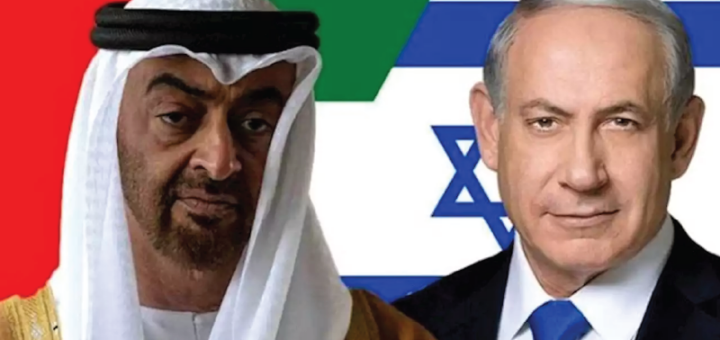
The UAE-Israel Relations and its Impact on Palestinians

Introduction

For many decades, Arab and Muslim states have remained hostile towards Israel and supported the Palestinian cause. The 21st century has seen many developments that Israel has established with the world, especially the Arab countries. The Middle East has tried to modernise with time, including its foreign policy that has sparked debate on sensitive issues such as the Israel-Palestine conflict and the new peace deal. While Israel’s peace deals with the United Arab Emirates and Bahrain provides opportunities for trade, cybersecurity cooperation and lessens Israel’s isolation, it questions the chances of Palestinian independence.

The new peace-deal

Many experts and authors have tried to assess the significance of the peace deal in regard to the Israeli-Palestinian conflict. Different narratives emerge from the literature and media as the challenge to resolve the conflict increases. The ancient normative approach that has been applied to this issue was to isolate Israel, by countries closing their borders and restricting any economic exchange. This has resulted in assuring Palestinians that they have support from around the world. The emerging consensus among some scholars is that if Arab/Muslim countries establish peace with Israel, a better policy solution can be formed to resolve the Israel-Palestine conflict. However, the question is to what extent can the Muslim countries benefit from Israel’s growing economy and innovation by establishing trade relations?


As experts and authors continue to reflect on the advantages of the peace deal, it is important to reflect on the intention of the countries recognizing Israel. The true nature of the peace deal seems to be based off on economic and trade relations, rather than to encourage a two-state solution regarding Israeli-Palestinian conflict. The initial statement issued by the UAE for the peace deal was to obstruct Israel’s plan of annexing the West Bank. However, as proclaimed by the Israeli officials, the UAE statement is invalid.  The DAWN news published the reality of the “peace treaty” illusions developed by the UAE, that may cost the Palestinians their land and their rights. As per Turkey and Iran, the anti-Israel states, claim that the former US President Trump influenced the motive of establishing the peace deal, in order to promote US’ Gulf state allies’ bilateral relations. So, when the idea of reforming the methods to resolve the Israel-Palestinian conflict is concerned, the real intentions of the states must be acknowledged. This is because the ideology of a state has a great impact on its politics. If a capitalist country decides to recognise Israel to better trade relations, then the threat to Palestinians is significant. The new approach towards Israel may still put the Arab/Muslim countries in a difficult situation.

Cybersecurity perspective

The cyber security cooperation between Israel and the UAE has been established in the recent years. According to Al Jazeera, the UAE has poured hundreds of millions of dollars to purchase the Pegasus spyware from Israel based on the conditions set by Israeli Intelligence service. A Palestinian analyst, Issa uncovers that “the Palestinians are at the weakest point ever in history”.

The NSO group is an Israeli company that sells the product called Pegasus, which is a spyware for mobiles. The company was founded in 2010 and has over 500 cyber security experts. Pegasus is the company’s essential product, used for offensive hacking. According to Cooper Quintin, a cyber security specialist, Israel is one of the most sophisticated cyber actors in the world. This is because the Israeli forces are training its military officials to use such offensive hacking in their Defence department. The NSO company claimed that it was launched to detect and prevent terrorism but the people it has targeted is questionable, as human right activists, politicians, and the elites are usually the ones targeted. So, the question arises, who are the NSO clients? Although the company is supposed to work for the government and is legally advised to not sell its services, it extends it services to other countries. The spyware service has been sold to Mexico, Saudi Arabia, UAE and even Colombia.


A possible analysis of UAE-Israel cybersecurity cooperation clearly indicates Israel’s ability to exploit confidential information of countries top officials with an advanced spyware in use. Israel can easily attain a position where rather than asking the US, it can turn to Saudi Arabia or UAE to make Palestinians accept a deal favourable for Israelis.
Conclusion

To witness Israel’s strength in cybersecurity and innovation, an allied sentiment of the Muslim countries on Israel-Palestinian conflict may be difficult to achieve. To approach Israel with a proposal for Israel-Palestinian conflict is risky business, as Israel has better and advance technology that can cause serious damage politically and economically to other countries. Considering the imbalance of power between majority of the Muslim countries and Israel, a safe approach would be to get Israel to recognise its boundaries with Palestine’s agreement before more countries open its borders to Israel with the intention of trade.


Israel’s 4th Election in 2 years

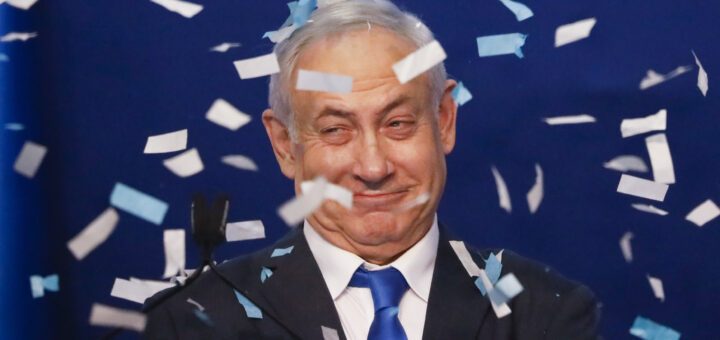
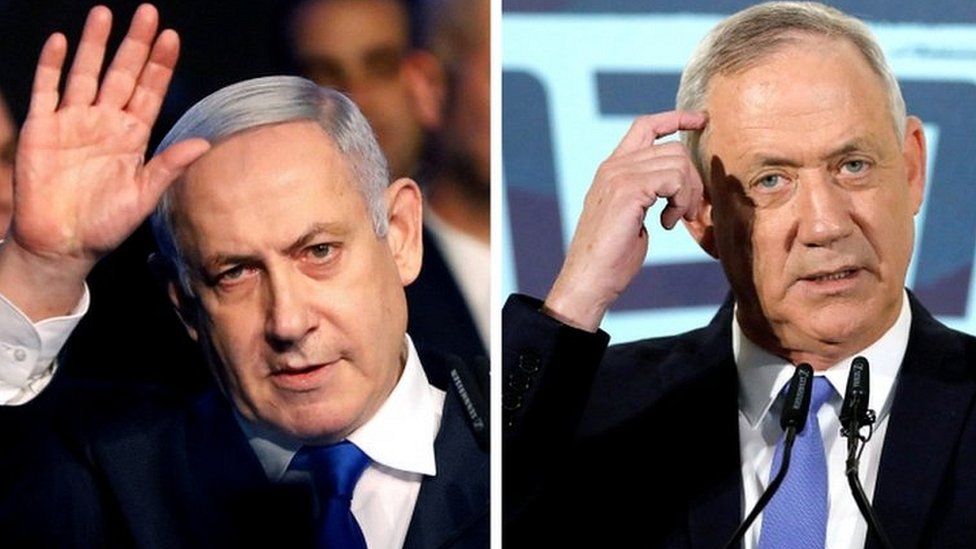
Israel had its fourth legislative election in a two-year period to establish a single dominating party rather than a coalition. Despite staying short of a clear parliamentary majority, Netanyahu’s Likud party has remained popular. The recent election results on 23rd March 2021 signified the possibility of another election in the summer to end the political deadlock. While Netanyahu remains popular, protests have erupted in Israel against Netanyahu’s policies and leadership. Critics have also accused Netanyahu of seeking new elections solely for the purpose of gaining enough support in parliament to pass legislation to end the legal proceedings against him. Netanyahu has refuted the charge, as well as any personal involvement in any potential criminal immunity moves.

The candidates who ran in the elections are as follows.

Benjamin Netanyahu – Likud party leader and runs his campaign on hopes to vaccinate the population and normalise ties with some Arab countries. But he is the first sitting prime minister to be indicted and is facing three corruption trials, earning him the title of “Crime Minister”. In his campaign, he has used his vaccination success and is offering one state solution and peace with the Arabs. Then is Naftali Bennet who belongs to the right-wing Yemina party and has criticised Netanyahu’s approach towards the pandemic but is likely to join Netanyahu’s coalition. Another right-wing candidate is Gideon Saar, the leader of New Hope party which supports settlement construction in the occupied west bank and opposes the Iran Nuclear deal. His campaign agenda is similar to Netanyahu’s. Then there is the TV host turn politician, Yair Lapid, the leader of opposition Yesh Atid party. He is considered the main challenger candidate to Netanyahu, even though he has served as a coalition partner in Netanyahu led government in 2013.

Exit polls showed the country remained divided, according to Mr Yohanan Plesner, President of the Israel Democracy Institute, a non-partisan think tank, and a fifth national election remained a viable choice. “At the same time, if Bennett joins his alliance, Netanyahu would be closer than ever to forming a narrow government comprised of the most radical elements of Israeli society,” Mr Plesner said.

On Twitter, Netanyahu remained cautious with his words to declare victory, he said, “It is clear that a clear majority of Israeli citizens are right wing”, expressing the country’s ideological preference. This allows for further analysis on why the citizens are maintaining the stable right-wing government in Israel.

Likud is expected to be the largest party with 30 seats, down from its existing 36 seats. Yesh Atid, the centrist opposition party led by Mr. Yair Lapid, came in second place with 18 seats. Mr. Lapid, 57, had hoped that the anti-Netanyahu bloc would be big enough to depose the veteran leader, who has been in power since 2009. Although, the results appeared in favour of Netanyahu, he would have to stitch together an unlikely coalition that might include Yemina party, Jewish ultra-Orthodox, ultra-nationalist and Arab parties to secure another term.


United Arab List (UAL) leader Mansour Abbas has proposed collaborating with Netanyahu to resolve the needs of Israel’s 21 per cent Arab minority – a stance opposed by most Arabs, and which forced Abbas’ faction to break from a coalition of Arab parties ahead of the vote. However, it seems unlikely that Mansour Abbas will be added to the Netanyahu led coalition. Netanyahu may provide Abbas some benefits under Socio-economic development and political representation but not a seat in the government. Although Bennett’s right wing Yemina party is yet to decide if he wants to join Netanyahu’s coalition, there is a good chance that it will. What he has said to the press is that he will do what is good for the state of Israel, which indicates that he will go with Netanyahu and extract a high price from him. Since analysts highlight that Bennett is interested to gain the position of Minister of Justice and to implement changes in the ministry of Justice, it is possible that Netanyahu negotiates a position in the ministry of justice for Bennett. Besides, for helping Netanyahu form a government, he may want a rotating prime ministership as well.
So, what does the new coalition mean for Israel? Since Israel has not had a budget for three years, they need a stable government to revise the 2018 budget. However, the new coalition could be less stable than anticipated, this is because the coalition parties can influence and raise demands from Netanyahu, resulting in a fairly unstable government. Despite Netanyahu being the Prime Minister for the past 2 years, he has not had majority in Knesset supporting his government, resulting in coalitions that have time and gain failed to bring political stability in the country.

Another aspect of Israel’s frequent election is because analysts believe that Netanyahu does not want to loose his power and revisit the corruption charges. He is scheduled to be back in court by the second week of April, possibly as the serving Prime Minister. But since he has not gained enough majority in the Knesset, his influence to revisit the charges may be low. It was anticipated that after winning majority, Netanyahu may replace the court judge who may work in his favour, however, with the new coalition he may feel the threat to be prosecuted on corruption charges.

Israel’s population faces the dilemma to vote for an alternative who is better than Netanyahu, however, the opposition fails to provide such a leader that the population could vote for. It is fair to say that Netanyahu has made great progress to vaccinate the population and end the lockdowns which affected many layers of the society. However, the critical masses of the opposition remined intact and even grew slightly in the past two years. The current polls indicates that Netanyahu has exhausted the electoral pool of which he has been living as Prime Minister.


Confrontation in Himalayas

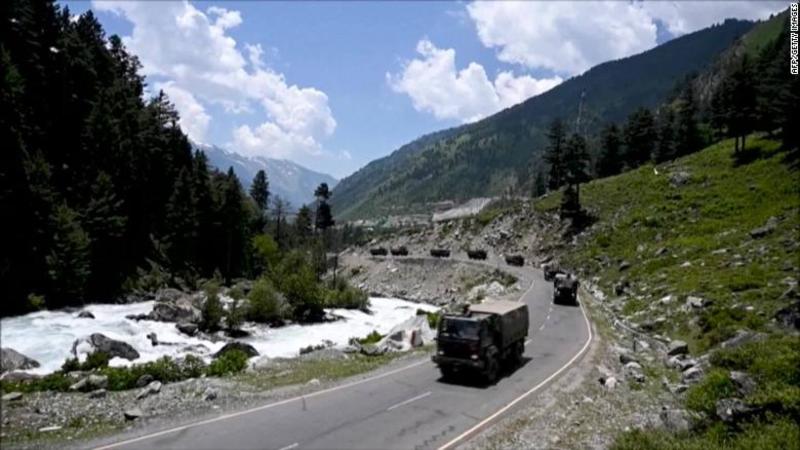
In more than four decades for the first time tensions sparked in the world’s most difficult terrain, Himalayas when China and India stumbled in a bloody military confrontation. In early June, clashes resulted in the death of 20 Indian soldiers and an unconfirmed number of Chinese soldiers. The clashes are a result of competing claims of China and India on the demarcation of the border called Line of Actual Control. Neither state has agreed on the exact position of the border that is 3,500 km long.  The dispute over Ladakh, that has cultural ties with Tibet, remains unresolved and highly dangerous as the tensions can aggravate between the two nuclear powers, China and India. Since the abrogation of Article 370, putting an end to Jammu and Kashmir’s special status, Indian government has been taking measures which are provocative to the neighboring countries. The Chinese authorities were already suspicious of India trying to restore the status quo pre 1962 Sino-India War, in which India faced a humiliating defeat. Thus, when India started constructing a road network in the Union Territory of Ladakh, Chinese suspicions grew, giving rise to tension between both countries.

Indian authorities began constructing roads and bridges in the area of Galwan Valley that lies near to the India China border, Line of Actual Control (LAC). India is building a bridge, in Galwan valley that will give access to another strategically important area Aksai Chin. China is skeptical that Indian construction of bridge are meant to facilitate the fast movement of troops in order to make the recapturing of Aksai Chin easier. China captured Aksai Chin in 1962 and holds great importance because it is required for a national highway between Tibet and Xinjiang NH219.Despite the clashes between two nuclear powers, India has signaled that it will not stop the construction of new infrastructure. India aims to neutralize China’s logistical advantage. The Indian government is planning to improve the rail lines in border area with China. On the other hand, China started modernizing the infrastructure in early 1950s and has now developed a fully functional vast road and railway network in Tibet and Yunnan Province. The poor infrastructure of India means it will face difficulties in defending the areas it claims against China. The developed Chinese infrastructure is seen as a threat, because in the latest clashes China was able to move a huge number of troops with few hours along the LAC.

The wariness of China strengthened with the aggressive stance of Indian government in Jammu and Kashmir and her claims on Gilgit Baltistan. Apart from that India has given asylum to Tibetan government in their country and is closely aligned with the US. New Delhi’s defense technology cooperation with Washington might play a role in helping India change the geopolitical landscape of Indo-Pacific region. Presently, Indian economy is facing a downturn, while the cases of corona virus are growing. Options for India to direct the territorial shift in her favor remain limited, because China is does not only have a stronger military but also a stronger economy. India has restored to nonmilitary options such as boycotting Chinese products, banning 118 Chinese applications. The economic relationship between China and India came under highlight after 15th June and the Prime Minister launched a campaign of self-reliance encouraging the citizens to buy local products. Apart from this Indian government has also announced to review procedure of investment from the neighboring countries. India has also been engaged in stepping up her partnerships with the like-minded countries in the Indo-Pacific region.

As a result of the growing tensions, both countries have deployed thousands of troops on the border along with a heavy supply of weapons- artillery, tanks, fighter jets and helicopters. The Chinese run state media agency, Global Times said that the country’s security forces would “quickly deal a heavy blow to Indian troops, and they will be all annihilated” if a war is provoked from New Delhi. Alternatively, the Indian Defense Minister, Rajnath Singh warned that Chinese should have no doubts about the resolve of India’s determination to fight back if the country’s territorial sovereignty is challenged. In the aftermath of India unilaterally declaring Ladakh a federal territory, the relations with China became adversarial. These clashes can further exacerbate the relations between China and India, putting the ailing peace at a much greater risk. Consequently, both states will not only look to increase the competition militarily and economically but will also look towards influencing their maritime spheres. The Asian waters can face Sino-Indian rivalry.

On 10th September, a meeting was held in Moscow, between Chinese Foreign Minister, Wang Yi and his Indian counterpart, Subrahmanyam Jaishankar where both states agreed to move toward de-escalation on the border and continue through dialogues to ease the tensions. However, the tensions flared up again when India blamed China for the violence on the border by labelling Chinese President Xi Jinping as the “architect” of the hostilities on the border. Five rounds of military level talks have failed to reach a peaceful conclusion between both countries. Tens of thousands of troops from both countries are still deployed on the disputed border of Himalayas. To defeat each other, states can rely on hard military tactics and increasing their economic dependence in the neighboring countries. To turn events in her favor against China’s superiority, India will seek multilateral diplomacy and form alliances with the countries that have a similar agenda. The tensions can become more volatile in future if India does not give up her aggressive stance in the disputed territory of Jammu and Kashmir and does not surrender to the fact that the problem is not a matter of internal affairs, but external. The clashes between China and India can have grave consequences for the neighboring countries, especially Pakistan.


Jawaharlal Nehru University: Violent attack by ABVP Mob

Jawaharlal Nehru University named after India’s first Prime Minister Jawaharlal Nehru became a war zone when a mob with their faces covered having sticks and rods thrashed students causing damage to the property inside the campus. The situation around the campus for the past few days was tense because the students were protesting against the increase in the university fees. Initially before this protest minor fights were reported. Moreover, Teachers Association had organized a peace march in Jawaharlal Nehru University. This was the time when they got attacked by a group of people with their faces covered beating people with rods and sticks creating a chaos in the campus. The incident is the latest in the violent crises in India. The police men were present in numbers that day but when some of the teachers and students were under attack they took their time. Being one of the Elitist University to enter inside one must get the clearance from the security guard so the students and the teachers, who are beaten up are raising their concerns that were the security guards just careless or were the administration of the university complicit in the attack that took place.

On the eve of attack around 50 people including women wearing masks holding iron rods in their hands moved from one hostel to another beating and threating students and teachers. The students who became the victim of this mob target allege that the group that beat them up were not gangsters but were part of Akhil Bharatiya Vidhyarthi Parishad (ABVP) which is a student union affiliated with the Hindu nationalist Bharatiya Janta Party (BJP). The home Minister of the Country who comes from that party has ordered an enquiry and several ministers who have studied in this university have condemned the violence. But the students don’t feel safe anymore as many of them have left their hostels and have gone back homes.

The question that people are now asking is, as there is a sense of disbelief and panic that how such an attack took place. The students are not safe inside their hostels. The students of Jawaharlal Nehru University have been protesting against the controversial citizenship law and also more recently against the proposed fee hike. Amid the violence, on 5th January one picture stands out with a women in check shirt, blue mask on her face and stick in her hand she was seen standing with a section of mob in a corridor. As the videos of the incident went viral, social media exploded with claims that the girl was Komal Sharma.

The question still remains, who were the masked goons who were responsible for beating JNU students? The left blames the ABVP, the right blames the left. Moreover, JNU student Union President Aishe Ghosh, who got injured in violence alleged that “it was an organized attack as they were singling out people and attacking. There was a clear nexus of JNU security and vandals as they did not intervene to stop the violence.” Congress leader Sanjaya Nirupam also raised his concerns about this attack stating that, “What happened in JNU was like a terror attack. The teachers and students were beaten up by masked goons. The way the student power is being suppressed is not good for the country. Every person in Delhi is feeling unsafe.”

The teachers and students claim that there is no doubt that it was a planned and pre-meditated attack in which the private goons from RSS or ABVP attacked the students and police did nothing as if they provided mob the protection. This depicts that the enmity of Modi government to JNU is well known. There are concerns that youth and the students should not be prosecuted to the point where the entire nation stands against the government. The attack took place on live TV which shows that it was an attack of impunity as it can only happen with the support of the government.

BY  


Pakistan-Iran Trade: New Dimensions

The Pakistan-Iran relations have been progressing with the passage of time. Relations between the two States have been shaped bilaterally on the basis of security concerns that shadowed the economic and political engagement. Pakistan having strong ties with Saudi Arabia and Iran’s tilted loyalties towards India only made the bad situation worse. Iran has World’s fourth largest oil and second largest gas reserves, it is the second largest economy in the MENA (Middle East and North Africa) region and the 18th largest in the world, only if Pakistan and Iran pursue to have stable ties this immense potential can be utilized for the development of the region. In Pakistan, there is averseness to augment political ties with countries that have strategic and defense partnerships with India because of its national security concerns. Recently, leadership on both sides have shown interest in increasing border security cooperation to maintain peace and possible escalations.

In May 2019 Pakistan Foreign Minister, Shah Mehmood Qureshi, explained that he had four meeting with Iranian leadership and discussed the situation between the two States. Pakistan premier Imran Khan’s visit to Iran broke the ice between two countries and that’s when they set-off to lay better ties with a clean slate. Both PM Khan and President Rauhani agreed to set up Joint Rapid Reaction Force to deal with terrorism and smuggling in order to promote bilateral relationship and economic activities. The meeting between Khan and Rauhani brought out some fundamental pronouncements; MoU signed for health sector cooperation, Railway line to connect Gwadar and Chabahar ports, Completion of gas pipeline to Pakistan and Iran showed willingness to tenfold electricity export to Pakistan. Leaving all the grumbles and grouses aside, leadership on both sides have decided to make efforts to look ahead for the sake of economic stability.

Pakistan and Iran agreed to promote barter trade at the concluding session of the eighth Iran-Pakistan Trade Committee under the delegation led by Adviser to the Prime Minister for Commerce Abdul Razzak Dawood while the Iranian side was led by Industries Minister Reza Rahmani. Barter trade can help Pakistan to enhance the export of wheat, sugar, rice and fruit to Iran. The entire banking sector is under sanctions, it is not possible to open branches of Iranian banks in Pakistan for which the establishing a mechanism for barter trade will help do the business. Pakistan proposed the removal of various taxation measures such as road and freight taxes on vehicles/trucks crossing the borders to facilitate trade by establishing an exclusive desk at the Trade Development Authority of Pakistan in Islamabad, whereas, Iran showed interest in importing 500,000 tons of rice from Pakistan and to remove potential bottlenecks so that the trade volume can be enhanced.

Pakistan and Iran talked about opening a “Free Economic Zone” under Iranian Consul General Muhammad Rafiei at Mir Jawa to sell fuel to Pakistan on relatively lower prices. Both the countries have cultural, social and political relations for years and opening a tax-free border markets in Pakistan and Iran will boost political and economic ties. In today’s world, trade is the most pivotal in strengthening and boosting the bilateral relations. Pakistan and Iran agreed to resolve issues including removing barriers which have made Pak-Iran Preferential Trade Agreement (2006) ineffective. States that have rivalry with another also shares a common interest as well. Pakistan and Iran have realized that economic ties and developments will bring prosperity to their own countries and this interest should be harbored to its best. To convert the negative public sentiment towards each other, trade can be the most appropriate way ahead and it will also overcome the communication barrier.


BY  


Is there an End to Yemen War?

Half of the Saudi’s crude oil production was attacked on September 14th, when a drone hit the Aramco facility. The Houthi’s accepted the responsibility of the attack but Iran is blamed for the drone attack by the United States as well as Saudi Arabia. The war in Yemen poses a serious threat to the regional security, as it can lead to a full scale war which will destabilize the region and eventually have dire consequences for the global economy. After the attacks, the risk is very much real that Yemen can be a participant in a full scale full between states, which is obviously not going to be proxy war, as it is now. Almost every family in Yemen has lost someone to the war, they have seen their relatives and friends dying due to the bombing.

In the future, if the anti-Houthi bloc, led by a Saudi coalition, which is composed of Sunni Islamists win the war and achieve its objective of capturing the northern territory, it will only result in a protracted conflict, resulting in more bloodshed and chaos in a situation of an already complex civil war. The prospects of peace are very bleak because the structure of talks is problematic as both parties are seeking to gain militarily thus unwilling to talk. The war has devastated the infrastructure in Yemen, that’s why country needs not only a huge time to recover but also strong political arrangements and resources in order to prevent any conflict in future. But if the war doesn’t come to a halt, the sectarian violence will intensify fragmenting the population which eventually can result into a territorial disintegration. In such a scenario, there will be a rise in new refugee crisis in Middle East which definitely undermine the security of Gulf States and other neighboring countries in the region. This will be an opportunity for the violent terrorist’s forces to benefit from the situation, which will exacerbate the crisis and make it difficult to reach to a solution.

The future of Yemen is very gloomy and unpredictable, as since the very beginning Yemen was a poor country depending on its neighbors for support and there are many players involved in the conflict which makes it very complicated. Yemen is an example of world’s worst humanitarian crisis and if the war doesn’t reach an end, thousands of people will die from inadequate health facilities, unavailability of clean water can worsen the diseases and most of all malnutrition. The cost of proxy war in Yemen is being paid by the men, women and children. According to the UN stats the death toll in Yemen is 7,000. If the crisis prevail this can increase much more, and this will only lead to complex sectarian tensions. It is still unclear, whether at the end of crisis, if there will be any, Yemen will emerge as one country or divided into two territories. But what must be realized is that the government led by Hadi will have no future in the times of peace, as it is becoming increasingly unpopular. The only solution to achieve a peaceful and stable Yemen lies in negotiating a political settlement between the parties to the conflict.

BY 


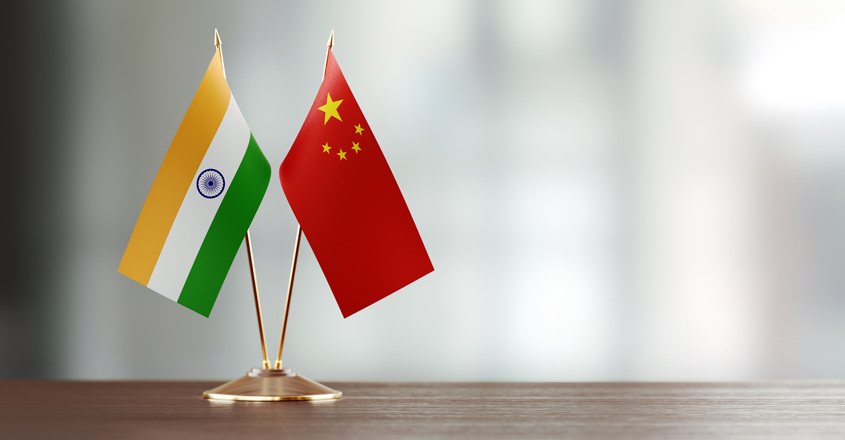
China India Trade

From the past years, China and India are engaged into various conflicts and an example of tensions between them was seen on 21st October 2017 when both the Asian giants were face to face. The tensions escalated to a level where they were in a state of war. The Sino-Indian War of 1962, border conflict, is also an example of the bitter past between China and India. Despite the rivalry the bilateral trade between China and India in post-1962 saw a rapid growth. In 2018, the trade between them touched $87.6 Billion.

If we talk about 2019, the world’s two largest developing economies China and India are negotiating on different dimensions that promote free trade between both the courtiers. China and India both are the competitors in the race of growing economies. A partial equilibrium approach based on highly disaggregated trade data shows that in a scenario where China and India are completely holding the markets, there would be a huge potential to create an impact on trade and welfare in their specific areas, where they enjoy a comparative advantage. Especially, with their annual GDP growth rates standing respectively at 6.2% and 6.1% for 2019, China and India have since come to be recognized as the fastest-growing economies. According to the World Bank estimates and assessments based on purchasing power, China and India have already become the second and fourth-largest economies of the world respectively, surpassing developed countries. Some economists predict that this century will be Asia’s Century.

According to the reports India is thinking to cut or eliminate tariffs up to 80% on Chinese products that will be imported in the future, 16 countries are negotiating on a free trade agreement in Vietnam in which China and India are the main players. India plans to cut duties on 86% of imports from Australia and New Zealand, and 90% for products coming in from ASEAN, Japan, and South Korea. India would immediately eliminate customs duties on 28% of goods, while tariffs on other imports from China would be reduced or eliminated over a period of 10-20 years. The trade deficit with China in 2018-19 was a whopping $53.6 billion.

Recently Xi Jinxing visited India and the visit was dominated by trade matters. Mr. Modi wanted to reduce its huge trade deficit with China. The two leaders are concerned about their economies and thus want focus on trade. China and India share major contention even today due to their border issues yet both rivals have found a common ground, where their mutual interest is to strength their respective economies and utilize the economic potentials that this region offers. The relations between China and India are in the process, in terms of strengthening their economic ties. According to Indians, bilateral trade has been increased with China but so has the deficit and this is a serious matter. Indians appreciate the steps that were taken by the Chinese to improve imports from India. These efforts could be the reason for more success of Indian pharmaceutical and IT products in the Chinese market. Chinese Foreign Minister, Wang Yi appreciated Indian concern over the imbalance of trade. He further said that we stand ready to continue providing facilities to Indian exports to China. He further emphasized on expanding cooperation in industrial production, tourism, border trade, and other areas so that we can achieve overall balance in Indo-China Trade relations. This year the bilateral trade will touch $100 Billion and that is a historic trade figure between two countries. In the financial year that ended in March, Sino-Indian trade stood at $87 billion, down 3% from a year ago. Indian exports rose by 26% and imports fell by 8%, shrinking the deficit by $10 billion.

India and China are showing a huge interest in trade agreements not for the sake of other interests, both countries are self-centric, making their position stronger in the region. China is a big economic threat to the U.S and India is one of the closest allies of the U.S.