United Nations Chief Offers New Proposal to Russia to Combat Global Food Crisis

UN Secretary General António Guterres sent a new proposal to Russia on August 31, 2023, in an attempt to revive the Black Sea grain deal. The deal, which was brokered by the UN and Turkey in July 2022, allowed Ukraine to export grain from its Black Sea ports despite the ongoing Russian invasion. However, the deal collapsed in July 2023 after Russia accused Ukraine of not fulfilling its commitments. Guterres’ new proposal includes a number of changes to the original deal, including the creation of a UN-led monitoring mechanism to oversee the safe passage of grain ships through the Black Sea. A “green corridor” will be established for ships carrying grain, as well as the lifting of sanctions on Russian and Ukrainian food and fertilizer exports. The Secretary General has said that he is hopeful that Russia will accept his new proposal. He added, “We have some concrete solutions, allowing for more effective access of Russian food and fertilizers to global markets at adequate prices. I believe that, working seriously, we can have a positive solution for everybody.”

However, it is unclear whether Russia will be willing to do so. Russia has previously accused the West of imposing sanctions that have made it difficult for it to export food and fertilizer. The Black Sea grain deal is important because it could help to alleviate the global food crisis that has been caused by the war in Ukraine. Ukraine is a major exporter of wheat, corn, and sunflower oil, and the war has disrupted its exports. This has led to a sharp increase in food prices, which has put a strain on food security in many countries. Although Western sanctions implemented after Russia’s invasion of Ukraine do not apply to Russian exports of food and fertilizer, Moscow claims that restrictions on payments, logistics, and insurance have hampered shipments. If the Black Sea grain deal can be revived, it would help to get grain out of Ukraine and onto the global market. This would help to lower food prices and ease the global food crisis.

Russia has stated that it would consider reviving the Black Sea Agreement if requests to enhance its own exports of grain and fertilizer were met. Reconnecting the Russian Agricultural Bank to the SWIFT global payments network is one of Moscow’s top requests. It was cut off by the EU in June 2022. It is still too early to say whether the new proposal will be successful. However, it is a positive step in the right direction to find a solution that will allow grain to flow out of Ukraine and help to avert a global food crisis.


BRICS 2023: Strengthening Cooperation and Expanding Membership

The leaders of the BRICS countries met in Johannesburg, South Africa on August 22-24, 2023 to discuss ways to strengthen cooperation and expand membership. The BRICS countries are Brazil, Russia, India, China, and South Africa. They account for 40% of the world’s population and 25% of the global economy. The summit was hosted by South Africa, which is the current chair of BRICS. The South African President, Cyril Ramaphosa, said that the summit was an opportunity to “strengthen our cooperation and partnership and to address the challenges facing the world today.” The Chinese President, Xi Jinping, called for strengthening BRICS cooperation in areas such as trade, investment, finance, and technology. He also said that BRICS should play a more active role in global governance. The Russian President, Vladimir Putin, also called for strengthening BRICS cooperation. He said that BRICS countries should “work together to build a more just and equitable world order.” The Indian Prime Minister, Narendra Modi, said that India is committed to expanding BRICS membership. He said that BRICS should be open to all countries that share its values and goals. The Brazilian president, Luiz Inácio Lula da Silva, also expressed support for expanding BRICS membership. He said that BRICS should be a “forum for all countries that want to work together for a better future.”

The BRICS summit ended with a joint statement in which the leaders agreed to strengthen cooperation in a number of areas, including trade, investment, finance, and technology. They also agreed to work together to address global challenges such as climate change and poverty. In addition, the BRICS organization of developing countries, which is expanding for the first time in more than ten years, has extended an invitation to oil powers Saudi Arabia and the United Arab Emirates. While concluding the group’s annual conference in Johannesburg, the President of South Africa, Cyril Ramaphosa, announced that Iran, Egypt, Ethiopia, and Argentina will all join the following year. All the invited nations had already expressed a desire to take part. The BRICS summit highlighted the growing importance of the BRICS countries in the global economy. The leaders of the BRICS countries agreed to strengthen cooperation in a number of areas and to work together to address global challenges. The BRICS countries are poised to play an increasingly important role in global governance in the years to come.


US-Japan-South Korea Trilateral Summit to Deepen Security Cooperation and Economic Ties

The leaders of the United States, Japan, and South Korea held a summit at Camp David on August 18-19, 2023, to discuss ways to strengthen their trilateral alliance and cooperation on a range of issues, including the North Korean nuclear threat, China’s growing military power, and economic security. The summit resulted in a joint statement in which the three leaders agreed to deepen security cooperation, including through joint military exercises and intelligence sharing. The three countries will coordinate efforts to deter and counter North Korea’s nuclear and missile programs. The US, Japan and Korea will work together to promote peace and stability in the Indo-Pacific region as well as to strengthen economic cooperation, through the creation of a new trilateral supply chain resilience initiative. The summit was seen as a major step forward in strengthening the trilateral alliance between the United States, Japan, and South Korea. It also sent a strong message to North Korea and China that three countries are united in their commitment to peace and stability in the region.

Key Takeaways from the Summit

  • The three leaders agreed to hold annual trilateral summit and to establish a new trilateral security dialogue.
  • They also agreed to work together to develop new technologies, hold military trainings and share information on North Korean missile launches.
  • The summit also addressed the issue of economic security, with the leaders agreeing to work together to strengthen trade.

The US-Japan-South Korea summit was a major step forward in strengthening the trilateral alliance between the three countries. It also sent a strong message to North Korea and China that the United States, Japan, and South Korea are united in their commitment to peace and stability in the region. The summit was also seen as a way to boost the new Yoon administration in South Korea. Yoon, who took office on May 10, 2023, has made strengthening the US-South Korea alliance a top priority. The summit was an opportunity for Yoon to meet with Biden and Kishida and to discuss ways to further strengthen the alliance.

To conclude, the North Korean nuclear threat remained a major focus of the summit. The three leaders condemned North Korea’s nuclear and missile programs and reiterated their commitment to work together to deter and counter them. They also called on North Korea to return to dialogue and to denuclearize. Moreover, the three leaders also discussed the growing military power of China and expressed concern about China’s presence and growing influence in the East and South China Seas.


The Potential Implications of a New Indo-French Defense Deal

In order to maintain regional security and address global challenges, India and France have a long-standing defense partnership. They have entered into a number of defense agreements over the years, strengthening their strategic alliance and promoting regional stability.

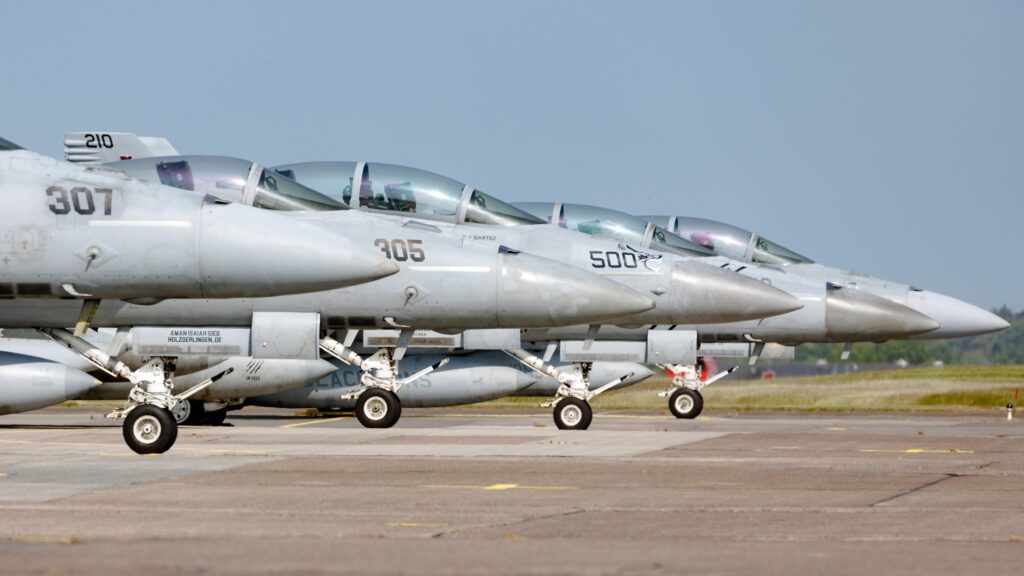
Recently on 15 July 2023, Prime Minister Narendra Modi asserted that defense ties are the basic pillar of India’s bilateral relationship with France, the two countries agreed on the construction of three additional submarines and the co-development of fighter jet engines. However, both sides remained silent on the sale of additional 26 Rafale-M fighter jet planes

The Rafale fighter jet deal is among the most notable agreements between the two countries. The agreement to purchase 36 Rafale fighter jets from Dassault Aviation in France, signed in 2016, marked a significant turning point in Indo-French defense cooperation. For India to modernize its air force and improve its defense capacity, this deal was essential.

The 2006 Scorpene submarine deal, in which France’s Naval Group (formerly DCNS) agreed to build six Scorpene class submarines in India, was another historic agreement. The agreement placed a strong emphasis on technology transfer and domestic manufacturing, supporting India’s “Make in India” initiative. These agreements are a part of a larger trend that shows increased cooperation. France has emerged as one of India’s most dependable allies in Europe, with collaborations in a variety of fields, such as civil nuclear energy, space exploration, and defense.

Given this background, the size and scope of a new defense agreement between the two nations could potentially have significant effects.

First off, a new agreement would probably strengthen the strategic alliance between France and India. Increased defense cooperation would highlight their shared vision for regional and global security as both countries agree on the significance of a multipolar world and freedom of navigation in international waters.

The second benefit is that it might greatly improve India’s defense capabilities. Depending on how the agreement is structured whether it calls for the purchase of more sophisticated equipment, the transfer of technology, or joint development and production it could aid in the modernization of India’s armed forces and the expansion of its defense industry.

Third, the agreement might have broader geopolitical repercussions. Stronger ties with France could support India’s position in the Indo-Pacific region as it seeks to counteract China’s rise and maintain its strategic independence. Stronger defense ties with India could increase France’s role and influence in the Indo-Pacific, where it has territories and strategic interests.

Fourth, a new defense agreement might open the door to more cooperation in fields like space, cybersecurity, and civil nuclear energy. Defense cooperation frequently sparks wider strategic and technological cooperation, fostering a more profound and all-encompassing bilateral relationship.

It’s important to be aware of any potential difficulties. Any defense deal must be handled carefully to prevent inciting regional unrest. Additionally, a focus on transparency would be necessary to allay any domestic worries about the agreement’s costs and advantages in both countries.

In conclusion, a new Indo-French defense agreement would build on a solid foundation of defense cooperation, but it could have far-reaching effects. The two countries’ strategic alliance would probably be strengthened, India’s defense capabilities would be improved, the Indo-Pacific region’s geopolitical dynamics would change, and more cooperation in other strategic areas might result. Both countries will have to carefully navigate the agreement, balancing domestic issues with regional sensitivities, while concentrating on their shared interests and vision for regional security and global stability.


Insights from the HLPF: Collaborative Efforts to achieve Sustainable Development

The High-Level Political Forum (HLPF) on Sustainable Development was held in New York from 10-19 July, 2023. The forum was the first major meeting of world leaders on sustainable development since the COVID-19 pandemic began. For the HLPF, “Accelerating the recovery from the coronavirus disease (COVID-19) and the full implementation of the 2030 Agenda for Sustainable Development at all levels” was the main theme this year. Goals 6 on clean water and sanitation, Goals 7 on affordable, clean energy, Goals 9 on industry, innovation, and infrastructure, Goals 11 on sustainable cities and communities, and Goals 17 on partnerships for the Goals were all thoroughly reviewed. It served as a pre-summit for the SDG Summit, which will take place in September 2023.

The HLPF 2023 was an important opportunity for the world leaders to discuss the challenges and opportunities of sustainable development. The forum highlighted the need for accelerated action, strong partnerships, and a focus on addressing the root causes of inequality. Additionally, the HLPF called for urgent action to protect the environment and mitigate climate change. The event brought together participants to engage in a wide range of discussions, dialogues, and reviews. These discussions included high-level panels, interactive dialogues, and Voluntary National Reviews, with 38 countries providing data on their progress towards achieving the SDGs. Notably, the European Union (EU) presented its review for the first time at the HLPF. The highlight of the HLPF was the recognition that achieving the SDGs requires a collective effort involving governments, civil society, businesses, and individuals. It is crucial to foster partnerships among different stakeholders and mobilize resources to accelerate progress towards the goals. The private sector has a particularly important role to play in driving sustainable and inclusive economic growth through responsible business practices and investments.

All the participants acknowledged that the COVID-19 pandemic has set back progress on the SDGs, and many countries are now facing even greater challenges in achieving them. There is a need for urgent action to accelerate progress on the SDGs, and the HLPF called on all countries to enhance their efforts. The SDGs cannot be achieved by governments alone. There is a need for strong partnerships between governments, businesses, civil society, and other stakeholders. The HLPF called on all stakeholders to work together to achieve the SDGs. Moreover, inequality is a major obstacle to sustainable development. The HLPF called on countries to address the root causes of inequality, such as discrimination, poverty, and lack of access to education and healthcare. It is a fact that the climate change and other environmental challenges are major threats to sustainable development. Therefore, the HLPF called on countries to take urgent action to protect the environment and mitigate climate related issues and challenges. In conclusion, by encouraging multi-stakeholder collaborations and mobilizing resources to speed up progress toward the SDGs, the High-Level Political Forum (HLPF) will play a critical role in accelerating sustainable development.


Algeria and China Seal 19 Agreements to Deepen Cooperation and Strengthen Partnership

Algeria and China signed 19 cooperation agreements on July 19, 2023, during Algerian President Abdelmadjid Tebboune’s official visit to China. It is being reported that China will invest $36 Billion in view of the agreements that cover a wide range of areas, including energy, technology, infrastructure, trade, and investment. A number of MoUs were signed between the two countries, such as joint construction of the Belt and Road Initiative, the cooperation in the field of energy, including the development of oil and gas fields, the construction of power plants, and the promotion of renewable energy. Moreover, an agreement on the cooperation in the field of technology, including the development of telecommunications, the production of electronic products, and the promotion of scientific research were also signed to promote bilateral trade. The signing of these agreements is a significant step in the deepening of the strategic partnership between Algeria and China.

The Ministry of Foreign Affairs of China said in a statement that the agreements were in sectors including aerospace, agriculture, energy, railway transportation, science and technology. There were also agreements in education and sports, as well as telecommunications, sustainable urban development, trade, and inspection and quarantine. The agreements will help to boost trade and investment between the two countries, and they will also help to promote cooperation in a wide range of areas. The signing of the agreements was welcomed by both sides. Algerian President Tebboune said, “The projects and agreements concluded with the Chinese side are huge and mutually beneficial to both countries.” He added, “Algeria seeks to bring economic relations with Beijing to the level of good historical political relations and that his visit opened “all horizons of investment between the two countries.” On the other side, Chinese President Xi Jinping said that the agreements would “deepen the friendship between the two countries and promote their common development.” Algeria and China have been allies for a very long time, and Algerian imports from China have increased significantly in recent years, going from $400 million in 2003 to $8 billion in 2022.

Due to its location in the Mediterranean Sea, the North African country is strategically significant to China. Both Algeria and China are committed to safeguard each other’s sovereignty and territorial integrity. The signing of the agreements is a major step forward for both countries to advance their comprehensive strategic relationship and support mutual interests.


Iran’s President Advances Ties with Africa

Iranian President Ebrahim Raisi visited Kenya, Uganda, and Zimbabwe in July 2023, marking the first visit by an Iranian president to Africa in over a decade. In 2013, Mahmoud Ahmadinejad, was the last leader of Iran who visited Africa. The recent trip is being considered as an Iran’s attempt to broaden its economic relationships in the face of severe U.S. sanctions. Iran’s Foreign ministry has said in a statement, “Iran’s trade with African countries will increase to more than $2 billion this year.” During his visit, Raisi signed a number of agreements with the three countries. Iran signed a total of five memorandums with East Africa’s economic powerhouse, Kenya, for information technology, fisheries, animal products, and investment promotion. As per Kenya’s foreign ministry, “Iran’s President trip to Kenya will provide the two countries an opportunity to review and re-energize their bilateral relations for the mutual benefit of the people of the two countries.” Furthermore, Iran and Zimbabwe have signed 12 agreements in areas of research, science and technology initiatives as well as in the fields of energy, agriculture, medicines, and telecommunications.

The visit by Raisi to Africa was a significant event, and it is likely to have a lasting impact on relations between the two sides. It remains to be seen how these relations will develop in the years to come, but the potential for closer cooperation is certainly there. Iran is increasing its diplomatic outreach to developing countries, in order to bolster support with friends who were also subject to US sanctions, Raisi travelled to three Latin American countries in June 2023. The latest agreements signed during Raisi’s visit to Africa are being contemplated as a step towards strengthening relations between Iran and Africa. However, it remains to be seen how much these agreements will actually translate into increased trade and investment. The future of relations between Iran and Africa will likely depend on a number of factors, including the outcome of the ongoing nuclear negotiations between Iran and the United States. If the negotiations are successful and the sanctions are lifted, Iran will be able to more easily trade with African countries. However, even if the sanctions are not lifted, Iran is likely to continue to seek closer ties with Africa as a way to diversify its economy and reduce its reliance on the West.


25 Years of Strategic Partnership: Franco-Indian Ties Continue to Strengthen
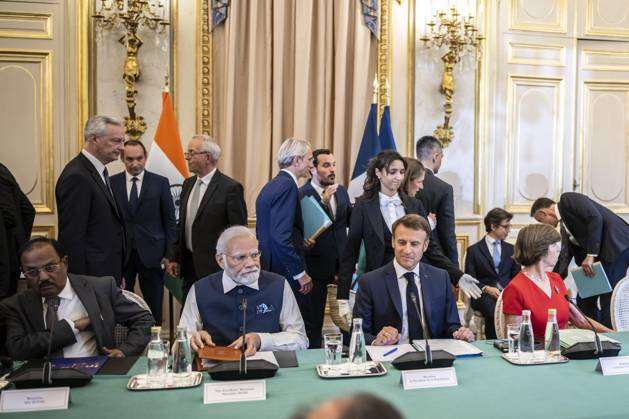
India and France have a long and close relationship, the two countries have a strong cooperation in areas of defense, security, and trade. Indian Prime Minister visited France on 13-14, July 2023, at the invitation of the President of France, Emmanuel Macron. The visit coincided with the 25th anniversary of the India-France Strategic Partnership and the two countries have considered a roadmap for their future bilateral cooperation. During his visit, PM Modi attended the Bastille Day Parade as the Guest of Honour, met with President Macron for formal talks. The grand cross of the Legion d’Honneur (Legion of Honour), the highest rank of France’s order of merit, was presented to Modi by President Macron. According to a statement from the presidency, the award “salutes the role of the prime minister in the excellent relations of friendship and confidence that unite France and India.” Furthermore, Macron said in a speech, India is a giant in the history of the world which will have a determining role in our future, it is also a strategic partner and a friend.”
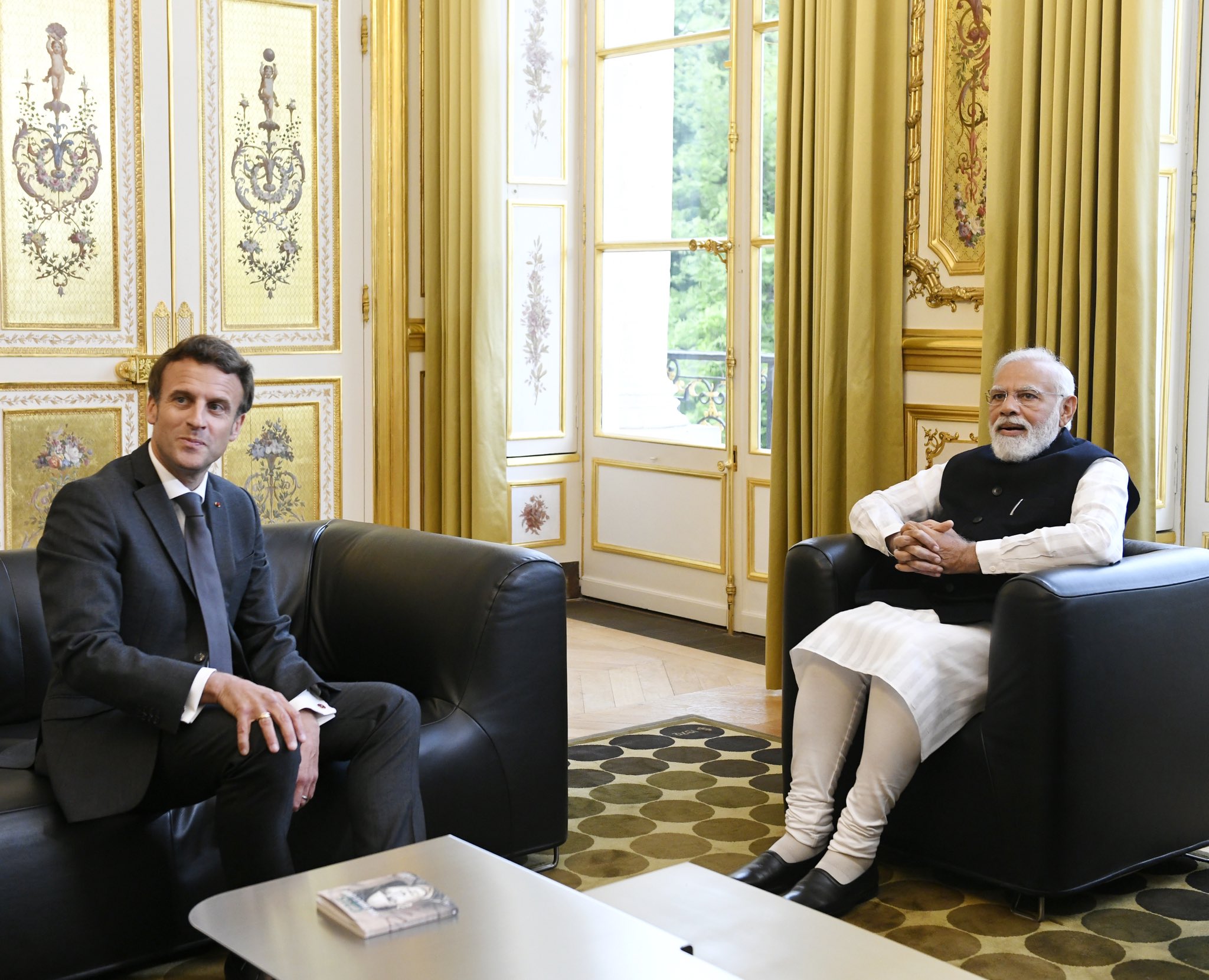
As Indian Prime Minister Modi visits Paris, the Indian government announced that it would purchase from France’s Dassault and Naval Group 26 Rafale Marine fighter jets and three Scorpene military submarines. The military deal comes at a time when the two countries are looking for partners in the Indo-Pacific region. Also, France is stepping up its diplomatic and business connections with India in an effort to win the Asian powerhouse away from Russia, which is now its major arms supplier. In addition, India and France agreed to increase collaboration in key sectors such as sustainable development, space, science, and cooperation at institutional level. Total Energies and Indian Oil Corporation Limited have signed a long-term LNG Sale and Purchase Agreement (SPA). For joint research initiatives and the exchange of technological and scientific expertise, a Memorandum of Understanding (MoU) in the field of scientific collaboration was also signed. The India-France relationship is a vital partnership for both countries, the relationship is poised to grow even stronger in the years to come. The two countries have a number of shared interests, and they are committed to working together to address future challenges,

India, France agree to enhance cooperation in strategic areas, space, science, sustainable development
Read more At:
https://www.aninews.in/news/world/europe/india-france-agree-to-enhance-cooperation-in-strategic-areas-space-science-sustainable-development20230715092208/

Turkey’s EU Accession at Stake: Erdogan Raises Concerns Over Sweden’s NATO Membership

In an astonishing proclamation, Turkish President Tayyip Erdogan recommended recently that the European Association ought to permit Turkey’s promotion to the coalition before Turkiye’s parliament endorses Sweden’s offered to enlist in the NATO military partnership. Turkey’s endeavors to join the EU have been waiting for quite a long time since participation exchanges started in 2005 during Erdogan’s initial term as top state leader. Relations among Ankara and EU part states disintegrated, especially after the bombed overthrow endeavor in Turkiye in 2016, yet have since improved, with the alliance depending on Turkey’s help, especially on movement issues.

Erdogan’s startling change in procedure included connecting Turkiye’s endorsement of Sweden’s NATO bid to Turkey’s hotly anticipated EU enrollment. Preceding withdrawing for the NATO highest point in Vilnius, Erdogan approached nations that have kept Turkey trusting that more than 50 years will open the entryway for Turkey’s entrance into the European Association, and afterward Turkey would uphold Sweden, similarly as for Finland. He expressed that he would emphasize this interest during the culmination.

Nonetheless, a representative for the European Commission stressed that NATO and EU expansion are independent cycles and that every up-and-comer nation’s increase interaction depends on its singular benefits. The representative added that the two cycles can’t be connected. NATO Secretary General Jens Stoltenberg communicated help for Turkey’s EU enrollment yet expressed that, in his view, Sweden had previously satisfied the fundamental circumstances for joining NATO. He likewise referenced the chance of a positive choice with respect to Sweden at the Vilnius highest point.

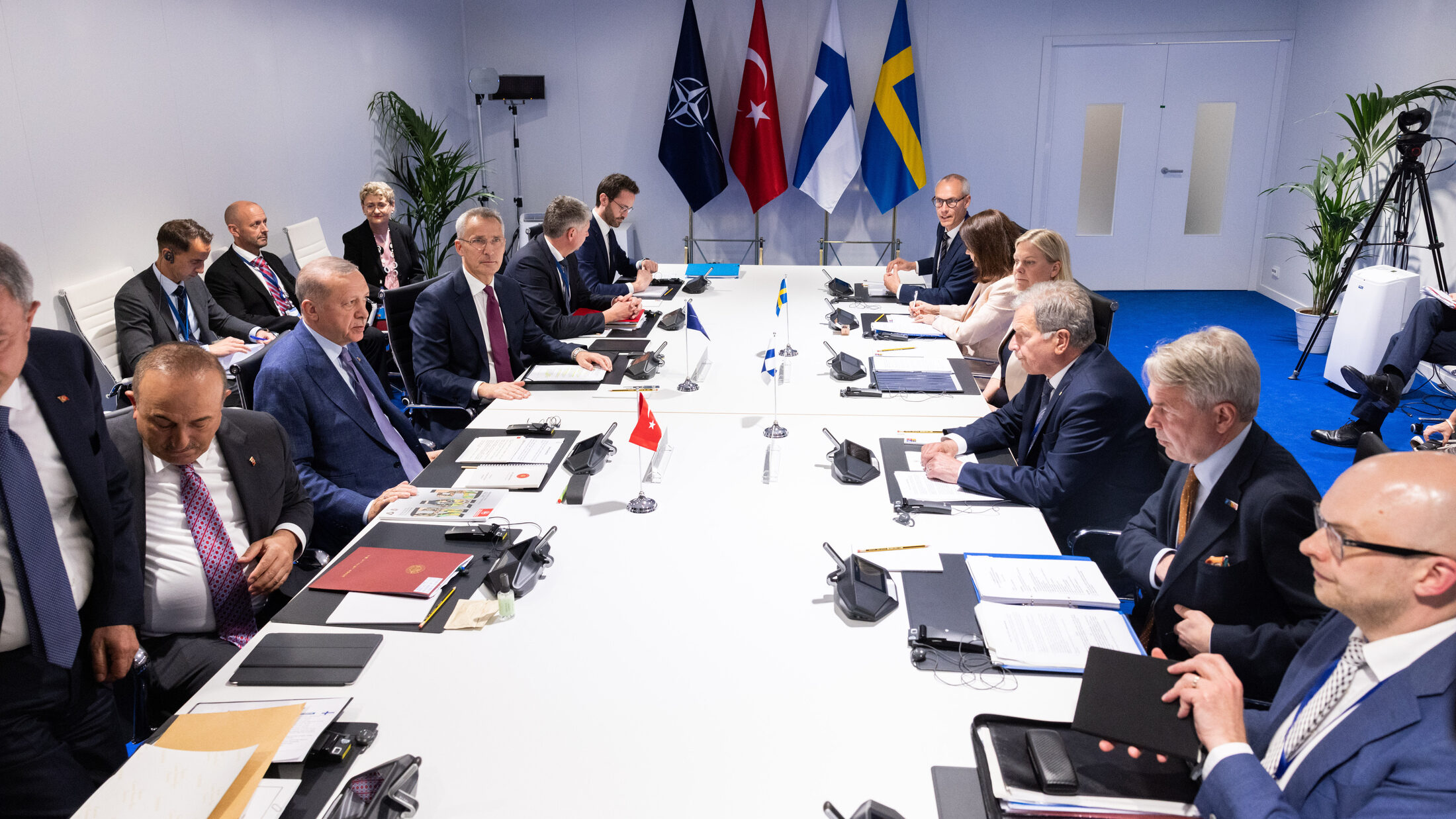
Meeting with NATO Secretary General Jens Stoltenberg, Recep Tayyip Erdoğan (President of Türkiye), Magdalena Andersson (Prime Minister of Sweden) and Sauli Niinistö (President of Finland)

Sweden and Finland presented their applications for NATO enrollment last year, leaving their approaches of military non-arrangement that had been set up during the Virus Battle because of Russia’s intrusion of Ukraine. While Finland’s NATO enrollment was supported in April, Turkey and Hungary still can’t seem to endorse Sweden’s offered. Sweden has been effectively pursuing joining the partnership at the Vilnius highest point.

Erdogan expressed that Sweden’s promotion relied upon the execution of an arrangement settled after during the previous summer’s NATO culmination in Madrid and stressed that Ankara wouldn’t make splits the difference in such manner. Turkey claims that Sweden has not made an adequate move against people it thinks about fear mongers, especially individuals from the banned Kurdistan Laborers Party (PKK), which is named a psychological militant association by Turkey, the EU, and the US.

Sinan Ulgen, a previous representative and head of the Istanbul-based Community for Monetary and International strategy Studies, communicated question that Erdogan’s move would reinforce Turkey’s situation at the Vilnius culmination. He recognized that the astounding declaration showed Turkey’s proceeded with point of view on EU enrollment yet proposed working with progress in Turkey’s offered for EU membership was far-fetched.

Erdogan likewise referenced that settling the contention among Ukraine and Russia would work with Kyiv’s NATO enrollment process.


Global Energy Security: Insights from the 8th OPEC International Seminar

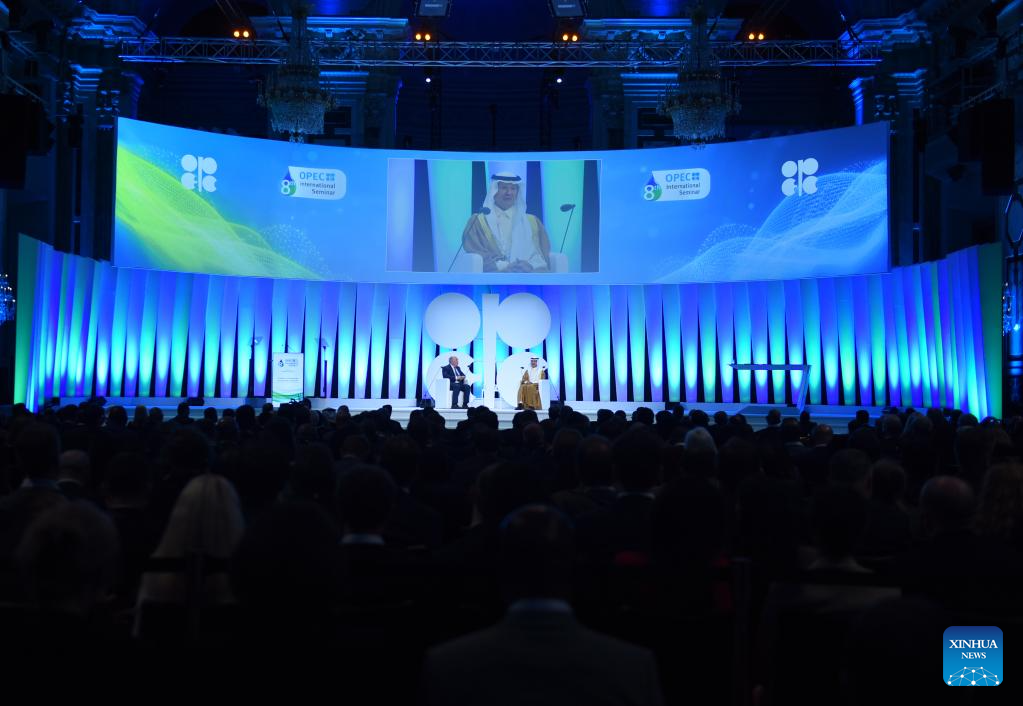
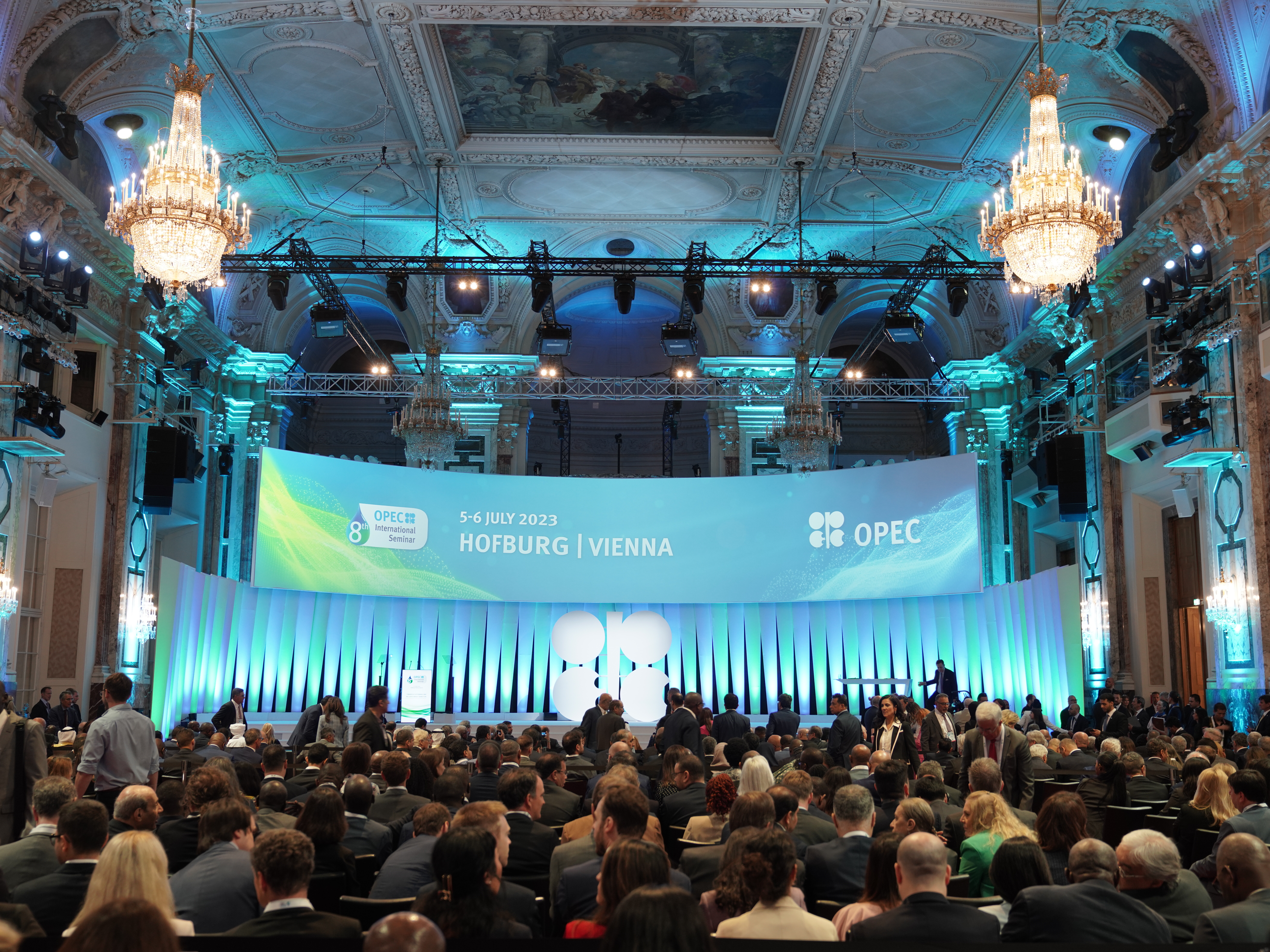
The 8th OPEC (Organization of the Petroleum Exporting Countries) International Seminar, which was held in Vienna, Austria on 5-6 July, 2023, it focused on the theme of “Towards a Sustainable and Inclusive Energy Transition.” A wide range of topics related to the energy transition i.e. development of energy sector, stability of energy markets and financing problems, the energy trends and diversification of the economies considering climate change. The 8th OPEC International seminar was attended by a large number of participants including, ministers from OPEC member countries, the countries participating in the Declaration of Cooperation as well as other oil-producing and energy consuming nations. In addition, heads of international organizations, chief executives of national and international oil companies, energy policy makers, analysts, and energy experts also attended the event.

One of the key topics of discussion at the seminar was global energy security. The participants at the seminar agreed that global energy security is essential for the world economy and for the well-being of the people around the globe. All the stakeholders acknowledged that the energy transition must be managed in a way that ensures that global energy security is not compromised. There was a consensus among the participants that oil and gas will continue to play an important role in the global energy mix for many years to come. However, the world needs to invest in renewable energy and other clean technologies in order to reduce greenhouse gas emissions and mitigate the effects of climate change.

The participants at the seminar discussed a number of ways to ensure global energy security in the context of the energy transition such as investing in new technologies that can help to reduce emissions from fossil fuels. There is a need to diversify energy supplies by developing new sources of oil and gas, as well as renewable energy. Moreover, building strong international cooperation on energy policy can play a significant role in this regard. The member countries were agreed on the fact that global energy security is a complex issue, but it is an issue that must be addressed to ensure a sustainable future for the world. The seminar highlighted the importance of oil and gas to the global economy and the need for a smooth and orderly energy transition. The seminar concluded with a call for international cooperation on energy policy in order to ensure global energy security which is the need of rapidly changing global energy landscape. To conclude, the 8th OPEC seminar was an important opportunity to discuss the challenges and opportunities of energy transition and to reaffirm the importance of global energy security.