US–Iran Tensions: Why Diplomacy Is Struggling Over the Strait of Hormuz
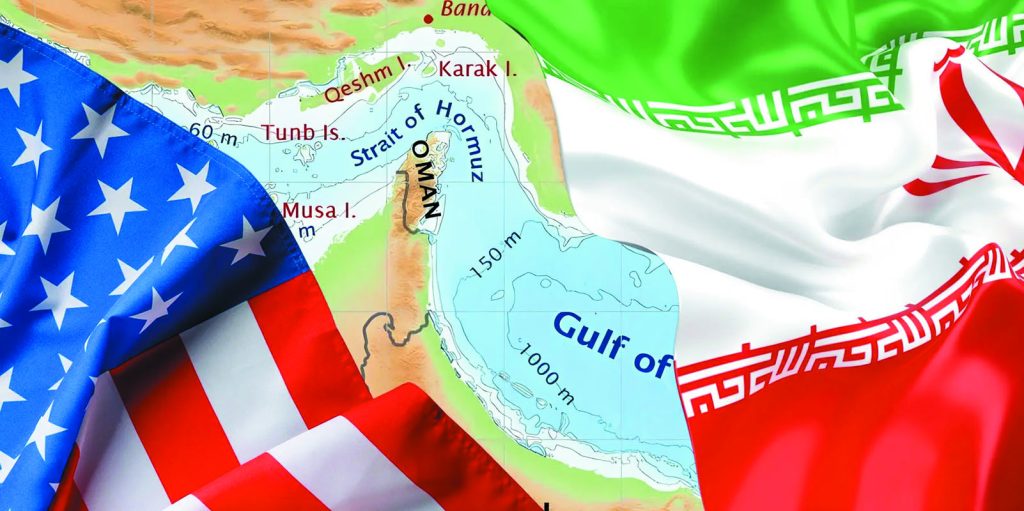
How hard it is in the midst of the US-Iran conflict to distinguish maritime security from the other issues has been demonstrated by the latest diplomatic setback over the Strait of Hormuz. Planned meeting between Iran and Gulf states in Oman was delayed and attacks around regional shipping lanes added to concerns about energy supplies. The meeting was a regional, not Washington-Tehran, event. But, its chances are contingent on its competing requirements. The crux of the issue is that both sides want security, political benefits and as the conflict drags on, the reality of a compromise becomes more difficult. Omani Foreign Minister Badr Albusaidi on 13 September said that they had postponed the meeting scheduled for Monday. There was no new date or explanation given in the announcement for talks which were expected to be aimed at negotiations on arrangements for Hormuz, Reuters reported. This is not a sign of the conclusion of negotiations. A delayed meeting may indicate disagreements in timing, participation or substance. The importance is that such a potential avenue to relieve tensions has come to a standstill when regional governments require greater assurances on shipping and security.
Hormuz is a link between the Persian Gulf and the Gulf of Oman and international sea routes. It is important and thus politically powerful: disrupting it can have an impact on decisions well beyond its borders. Physical access to waterways is not alone sufficient for maritime security. Threats to crew, ship and cargo must all be taken into account as well as insurance and operational costs when deciding on ship ownership. Any declaration of the possibility of passing will offer some comfort if attacks persist. It is necessary to restore normal trade, and therefore the protection and the predictability of conditions, not announcements which commercial operators cannot rely on.
Reuters’ wider reporting outlines the delayed project, new assaults and Iran’s demand for US concessions to re-open Hormuz. These developments link the navigation with the conflict on a broader scale. From a legal perspective, it thus presents a negotiating dilemma: Where pressure is required to get commitments, it could be used by Washington, while disruption might be used to force relief by Tehran. The instrument played by the preferred side can help to build up resistance on the other side. The risk is that coercion leads to counter-coercion, counter-coercion leads to more coercion, and negotiations become more and more indistinguishable from the immediate military events. There is also a disagreement on what an agreement should include. Washington is demanding a wider deal concerning Tehran’s nuclear activities, while the Iranian capital is demanding relief from the blockade of its ports and unfreeze of frozen assets, reports the Financial Times. The following positions reflect various priorities. A solution to a pressing economic issue such as a shipping arrangement can be implemented without deeper security problems being solved. A comprehensive accord could cover more issues, but demand tougher compromises. The question is whether small gains will be enough to make them feel better or if either party will decide that anything less than total is good enough.
The latest comments by President Donald Trump in the debate add to the confusion. He proposed the U.S. stay in Iran and continue to receive its oil, Reuters reported on 13 September, likening the situation to Venezuela. As far as he was concerned, the conflict would likely finish later this year and he’d only accept a favourable contract. These comments must be viewed in light of the President’s remarks and not as confirmation of a military plan. However, any discussion of control of another nation’s resources may make it more difficult to assure other governments that the United States has a definite and limited purpose, and that there are limits to its involvement. There is a lot at stake for negotiation. If either side thinks they will end up in a worse position if they do not comply with an agreement, then they are not going to be successful diplomats. If American messages are seen as a veiled message of unabridged aspirations, Iranian leaders might put more weight on guarantees and verification. On the other hand, the Obama administration might require proof of Iranian promises to ensure safer sailing. This is an analysis rather than an actual record of private conversations. It makes sense that there are differences of opinion on the sequencing of a deal, enforcement, and the repercussions of failure to comply, but that these differences don’t dampen public enthusiasm for a deal.
Gulf governments have their own interests in this process. They have nothing to do with either Washington or Tehran. They require secure exports, security for infrastructure and conditions conducive to local economic activity. The region was the domain of Oman’s proposed meeting to discuss a problem that has immediate relevance to neighbouring states. But mediation will not resolve all conflicts between the principal parties. Communication can be aided by regional governments and practical arrangements can be proposed, but these will only be viable if actors can be made to accept them that can disrupt them. They have an important function, but limited influence.
The impact of the conflict is also spreading to the economy. If the outage lasted, damage to the East-West Pipeline in Saudi Arabia affected some four per cent of the world’s oil supply, Reuters reported. This alternative to exports via Hormuz is typically the road chosen. The fact that it is vulnerable proves that it is not risk-free to move trade along another corridor. Economic pressures can be transmitted through interdependent infrastructure, maritime supply lines. But a threatened shortage of supply is not a confirmed permanent shortage. The actual export and available stocks will determine the eventual impact and repair progress. The pragmatic course of diplomacy would begin with measures that are observable and subject to verification. These may range from a pledge to refrain from attacking commercial shipping, communication protocols to avoid miscommunication and arrangements for monitoring adherence to the agreement. If concessions were to be given up in stages, there would have to be a mechanism in place for resolving disputes and agreed terms with which to deal. These would not ensure a broadened settlement. Their worth would be to eliminate the immediate threat whilst providing proof of the possibility for co-operation. Proposals should thus be evaluated on implementation, not on whether or not they create an upbeat headline. The next signs to look out for are a re-set for the meeting, proposals from both parties and a decline in attacks that continues. These combined would be better proof of progress than prediction of the time when the war might finally be over.New developments indicate that Hormuz is an emergency on the sea and a challenge to US/IR Iran relations. The ongoing regional peace talks and military pressure and public statements are overlapping and not yet providing a roadmap to stability. The level of progress will be dependent on credible commitments, tangible safeguards, and a willingness to not let every new incident get in the way of engagement, while managing competing priorities.