
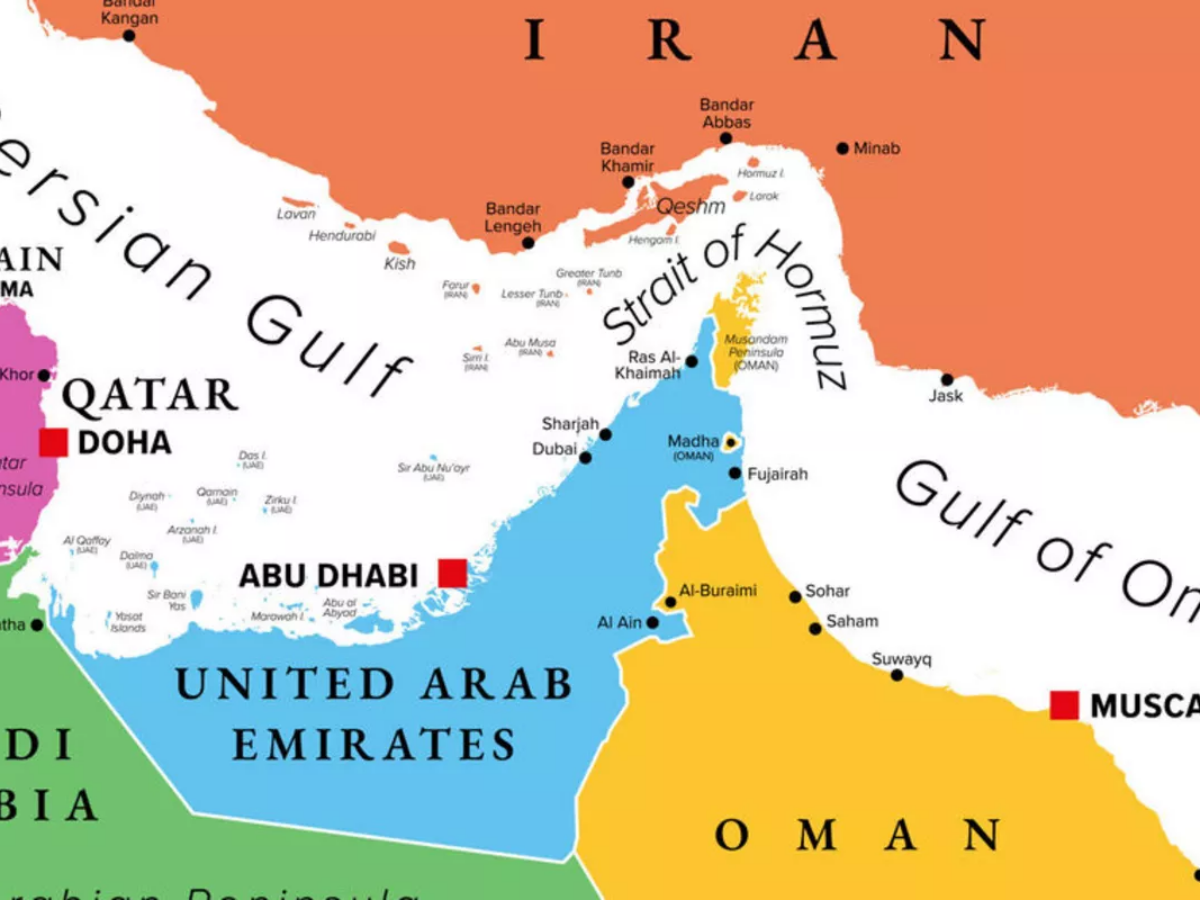
The oil price drop following the Israel-Lebanon ceasefire is not a good indicator that the Middle East energy crisis is behind us. It should be seen as a brief correction of the market in an extremely fragile system. On 4 June 2026, Reuters reported that crude prices dropped as Israel and Lebanon agreed to a cease-fire, bringing a possibility of broader U.S.-Iran talks to revive the Strait of Hormuz, the world’s most vital oil choke point (Reuters, 2026a). The market, however, continued to be under pressure due to a steep decline in U.S. crude stocks and the International Energy Agency’s forecast that global crude stocks could fall into “critical conditions” before peak summer demand (Reuters, 2026a). The problem is not just a diplomatic one. It is structural: global energy security is still vulnerable to one narrow maritime chokepoint; political trust is low and capacity for logistical spares is limited. The Strait of Hormuz is the center, as it is not a normal shipping lane. According to U.S. Energy Information Administration, in 2024, the average flow of oil through the strait was approximately 20 million barrels per day, which represented nearly one-fifth of the world’s petroleum liquids consumption (EIA 2025). The strait is thus one of the most vital bottlenecks in the world economy. In times of threat to the strait, markets don’t just value the loss of oil. They factor in the likelihood of inflation, freight insurance, shortages, reduced business confidence and potential monetary tightening. This is the reason why the cease-fire in Lebanon had an impact on oil prices, even though Lebanon is not a significant oil producer. The ceasefire was linked to the prospect of a comprehensive U.S.-Iran deal and, consequently, the reopening of the Hormuz.
What matters is that oil prices dropped because there was an improvement in expectations – not because the risk of them went away. The Israel–Lebanon ceasefire, on the other hand, was contingent on Hezbollah ceasing fire and withdrawing from the southern region of Lebanon, Reuters reported (2026b). An instant flaw in the deal: In fact, the ceasefire is being designed by talks between the countries, and Hezbollah is a center player in the conflict. Without a full control of non-state military actors, the ceasefire may only temporarily lower the level of violence without addressing the underlying causes of escalation. That is the reason political settlement is not stable. Therefore, the market response is more cautious optimism, rather than confidence.
The U.S.-Iran angle complicates things. Reports pasted said that President Trump was quoted as saying that the Strait of Hormuz could be reopened quickly with a deal with Tehran. This is significant because it heralds the return of the reopening of the strait into a political chess game. But should not be considered a given. The contacts with Washington had not been severed, but no steps had been taken in negotiations, and both sides were studying exchanged texts, Iranian Foreign Minister Abbas Araqchi told Reuters (Reuters, 2026a). This reveals a disconnect between what politicians say and what diplomats do. Markets can react swiftly to positive comments, but the reality of energy security relies on treaties that are enforceable, shipping safety, and insurers and tanker companies’ willingness to put ships back in service.
Recent studies also indicate that geopolitical oil shocks can be more powerful than regular oil supply shocks due to the uncertainty of the shock, which goes beyond the loss of barrels. Verduzco-Bustos and Zanetti (2026) claim that geopolitical oil price shocks pass via inflation, output and cross-border commodity spillovers. This applies to this situation because the Strait of Hormuz crisis is not only for crude oil, but also for refined oil, gas-related markets, freight cost and food supply via fertilizer prices. Similarly, Yang et al. (2023) demonstrate that the connection between geopolitical risk, oil prices and inflation is time-varying and idiosyncratic for the key economies. This is important because no policymaker can rely on a future oil shock being as they were in earlier shocks. Today, it’s about higher financialization, algorithmic trading, sanctions complexity, dark shipping etc. and more politically fragmented supply chains.
The inventory position is the best indicator the crisis is more profound than one ceasefire. According to the IEA Oil Market Report (OMR) (2026), global observed oil inventories declined by 129 million barrels in March and another 117 million barrels in April and on-land stocks fell sharply due to disruptions in seaborne trade through the Strait of Hormuz. The significance of this is that inventories serve as a cushion against any interruption in supply for consumers, and they are not currently available. Low stocks make for high prices when shocks occur in either military or diplomatic domains. That is, the oil market is not responding from a comfortable position. It is reacting from a stressed base.The World Bank’s April 2026 Commodity Markets Outlook backs up this claim. It forecasted energy prices would increase by 24% in 2026 and that by late 2026, the volume of shipping through the Hormuz strait would be back to pre-war levels (World Bank, 2026). Such an assumption is significant. If the strait should persist, the prices might stay above the baseline forecasts and mount greater pressure on the developing economies. Imported fuel-dependent countries like Pakistan, India, Bangladesh and many of the African countries would have to pay more for imported fuel, put pressure on exchange rates, increased transport and food price inflation, and reduced fiscal space.
The energy price channel is also the leading channel in the IMF (2026) through which Middle East war impacts the global economy, alongside energy supply and financial markets. It is particularly relevant, as the Strait of Hormuz crisis has nothing to do with oil supply. It sets in motion a chain reaction. Oil prices are directly linked to costs of fuel and electricity. The higher the shipping risk, the higher the insurance and freight charges. As inflation rises, but central banks will be forced to maintain higher interest rates. If rates of interest are higher, then investment and household consumption are lower. Thus, the war can cause not only energy insecurity, but economic growth as well, even without a real blockade.
The more critical view is that the crisis reveals the fragility of global energy resiliency. The world economy is far from oil transit through securest shipping lanes, while many governments speak about energy transition. Even if there are alternative pipelines and emergency stockpiles the shock cannot be avoided completely. There is some flexibility in Saudi Arabia’s export routes (EAW) and export alternatives in the UAE but this does not eliminate systemic dependence. Geography, military force and political negotiation still play a major role in energy security. The shift to renewable energy sources might lessen the reliance on oil in the long term, but short-term exposure to oil chokepinds remains.
It’s a governance question, too. Political leaders can push prices with their words, markets require credible implementation. While Trump’s suggestion of a quick reopening may help to restore confidence for the short-term, if the deal is vague, temporary, or insufficiently enforced, traders will continue to price risk. Likewise, the Israel-Lebanon ceasefire may serve to pave the way for diplomacy, but if Hezbollah continues to operate or if Israel launches significant operations, then the ceasefire could break down and oil prices could escalate again. Whether one announcement lowers prices for one day, isn’t the key question. The question on everyone’s mind is whether the area can develop a sustainable security agreement that reduces the physical risk of shipping. The lesson for businesses is that the planning for energy-risk needs to be more realistic. Airlines, logistics companies, manufacturers and food producers should only use spot oil prices. They require to plan for a scenario regarding high fuel prices, late delivery, increased insurance costs, and currency pressures. The message to governments is that strategic reserves, diversified energy imports, demand management and renewable investment are “musts.” They are a national resilience resource. For developing economies, the focus should be on targeted subsidy to vulnerable households rather than fuel subsidy as it can adversely affect the public budget accounting and it does not improve the structural dependence.
In sum, the oil price drop following the Israeli-Lebanese ceasefire is significant, but should not be overstated. It indicates that markets are still listening to diplomatic signals. But the underlying data suggests a shaky oil system: Hormuz continues to be a pivotal choke point, inventories are shrinking, political pacts are contingent, and global inflation risk is still present. The crisis thus serves as a reminder of a larger one regarding the current state of energy security: that the world is transitioning to cleaner energy, but that is still economically ensnared in old oil routes. A narrow strait in the Gulf will continue to affect the world’s inflation, growth, and political stability until that dependence is diminished.
Self-assessment
The present article has been focused on critical analysis instead of description. It leveraged information from the current market and from institutions and academics to highlight the significance of the Strait of Hormuz crisis, beyond just oil prices. The connection between diplomacy, inventory stress and global economic transmission is the strongest part of the analysis. The article doesn’t talk about the ceasefire as the solution, but rather discusses the limitations. The limitation is that the situation is a rapidly moving one and, consequently, some of the political claims may change rapidly. The article is weighted in favour of the Reuters, EIA, IEA, IMF and World Bank evidence, as opposed to the live update or politically coloured evidence.
References
EIA (2025) ‘Amid regional conflict, the Strait of Hormuz remains critical to global oil trade’, U.S. Energy Information Administration, 16 June.
IEA (2026) Oil Market Report: May 2026. Paris: International Energy Agency.
IMF (2026) ‘How the war in the Middle East is affecting energy, trade and finance’, International Monetary Fund Blog, 30 March.
Reuters (2026a) ‘Oil falls as Lebanon and Israel agree on a ceasefire’, Reuters, 4 June.
Reuters (2026b) ‘Israel, Lebanon agree to implement ceasefire, boosting hopes for Iran deal’, Reuters, 3 June.
Verduzco-Bustos, G. and Zanetti, F. (2026) The Effects of Geopolitical Oil Price Shocks. London: Centre for Macroeconomics, London School of Economics.
World Bank (2026) Commodity Markets Outlook: April 2026. Washington, DC: World Bank.
Yang, T., Zhou, Y. and Li, X. (2023) ‘Geopolitical risks, oil price shocks and inflation’, Energy Economics, 127, article 107123.

Research Associate, Pakistan House