
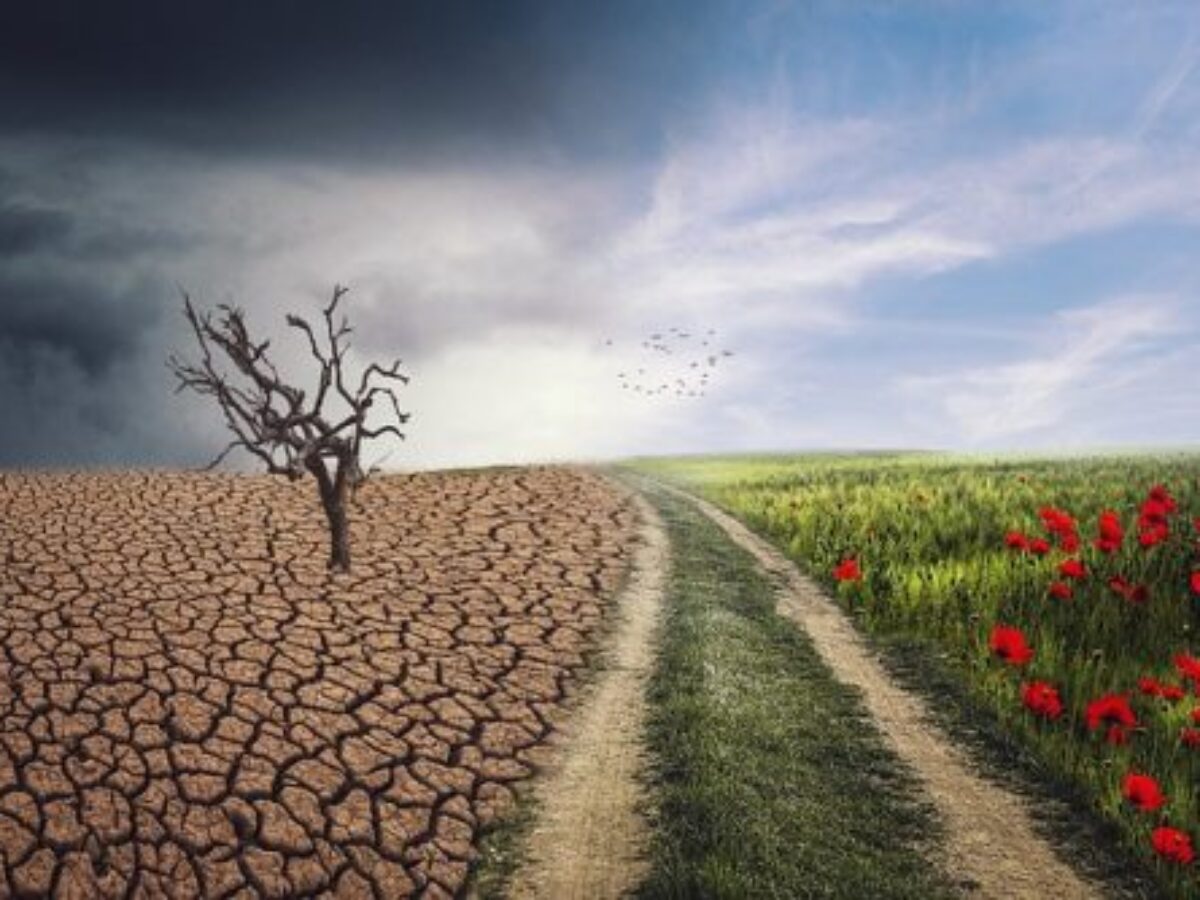


Climate change is an extreme shift in the global weather system caused by human activities such as the burning of fossil fuels, deforestation, and industrialization. This activity emits green gases, such as carbon dioxide and methane, that trap heat in the atmosphere and lead to a rise in the planet’s temperature, commonly referred to as global warming. Despite Pakistan contributing less than 1 percent of the world’s greenhouse emissions, the country has consistently been ranked as one of the most vulnerable countries in the world regarding climate change. The global effects are already extreme, and climatic changes, such as increased temperatures, unpredictable rainfall, and radical weather conditions, are leading to social and financial upheaval. To understand why Pakistan suffers so much, it is necessary to examine the country’s peculiarities, the extent of the damage that can be observed, and the need for effective and practical solutions.
The greenhouse effect is a natural process that causes certain gases in the Earth’s atmosphere, such as carbon dioxide and methane, to trap the sun’s heat, ensuring the Earth remains warm enough to support life. However, the fact that humans emit too much greenhouse gas, mainly through the burning of fossil fuels, clearing and destroying forests, and employing unwisely farming practices, has exacerbated this process to an unprecedented level and is causing the world to heat up faster than ever before. Pakistan’s contributions to global emissions are minimal, accounting for a share of less than one percent, or approximately 0.88 percent, of the world’s total emissions. However, due to the high level of deforestation, rapid urbanization, and traditional modes of farming activities in the country, local emissions and environmental stress are on the rise. The connection between global warming and Pakistan’s limited contribution to the problem has serious local impacts on the country, exacerbating already-existing weaknesses, including issues of scarce water, unpredictable weather, and unreliable agricultural systems.
Factors Making Pakistan Highly Vulnerable
Climate change issues are part of Pakistan’s peculiar position, being prone to environmental changes due to geographic, socioeconomic, institutional, and geopolitical factors. Physically, the nation is situated near the Himalayan mountains, which provide over 7,000 glaciers that offer essential water for most agricultural activities and everyday life. There is a rapid glacier melting, coupled with Pakistan having huge arid and semi-arid areas, thus making the country flood-prone as well as prone to droughts. According to socio-economic factors, the poverty level in Pakistan is very high. The primary sector of the economy is agriculture, which still employs approximately 40 percent of the population. It is highly susceptible to temperature fluctuations, rainfall changes, and weather catastrophes. Rapid growth in urban settings places even more pressure on limited resources, resulting in air pollution, overcrowding, and the proliferation of informal settlements. Institutionally, Pakistan’s ability to be adaptable is constrained by its inadequate infrastructure. This complicates the formulation of an adequate response to climate disasters. Water security is always a geopolitical threat, as India has a treaty on water, the Indus Waters Treaty. Water scarcity can be exacerbated by the disturbance or diversion of water flows, especially during times of regional tension, creating an impact on food security. All these linked weaknesses make Pakistan one of the most vulnerable nations to climate change exposures, despite its low emissions.
Impacts of Climate Change in Pakistan
• Pakistan has already warmed up extensively, with the average annual temperature increasing by about 0.5 °C since the 1960s. Estimations show that it will rise further by 1.31.5 C till 2050, which will aggravate heatwaves and put pressure on ecological systems
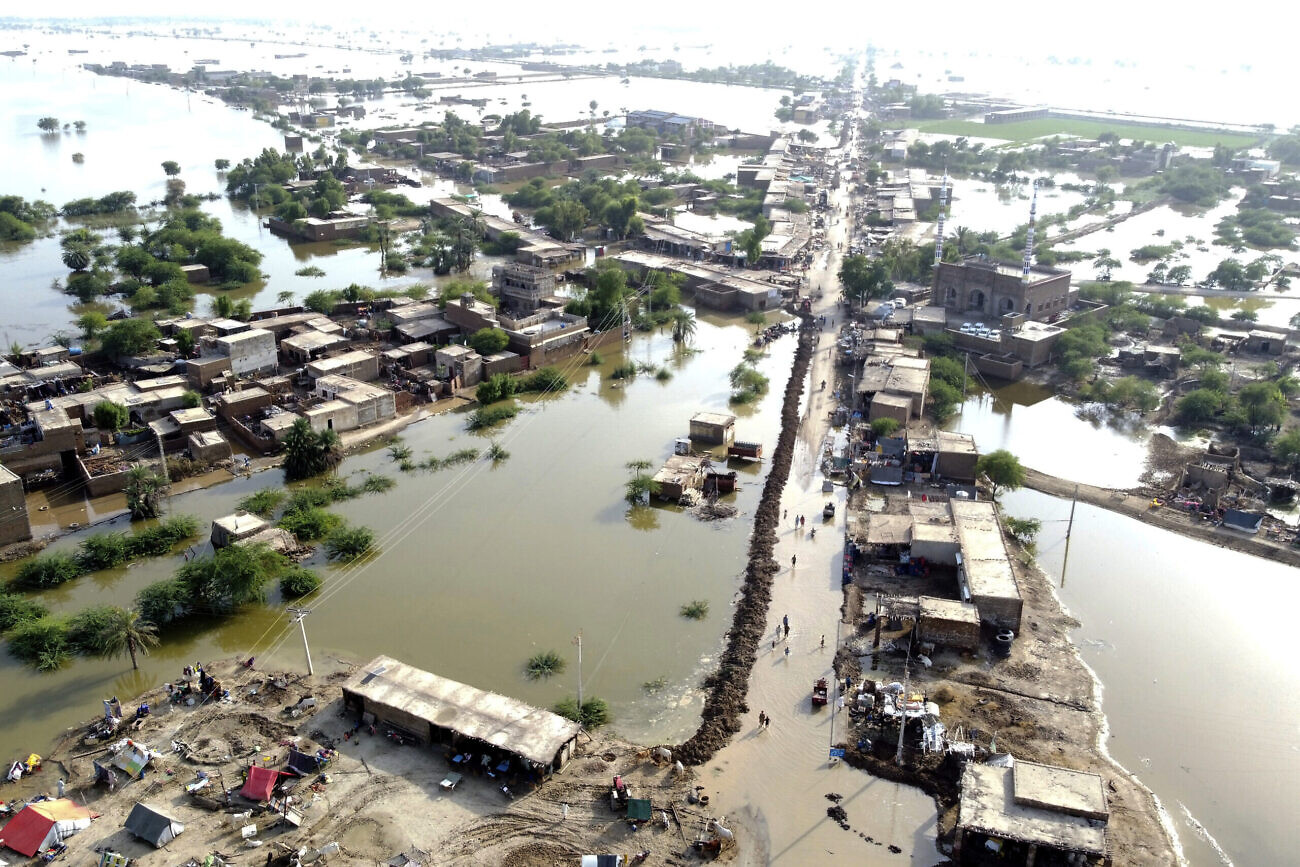
• Severe weather cases are creating extreme situations that are catastrophic. The 2022 floods displaced more than 33 million people, killed 1,700+ people, and caused USD 30,140 billion in damages. On the contrary, the Karachi and Sindh heatwave in 2015 took the lives of approximately 2,000 people, and high temperatures were up to 49 °C.
• The shortage of water has become a burning issue. The availability of water per head of the population plummeted to about 1,000 m³ in the present day, compared to 5,000 m³ in 1951, drawing Pakistan into the realm of water stress forever.
• There are over 7,000 glaciers in the country that melt at a high rate. This poses a greater risk of Glacial Lake Outburst Floods (GLOFs), especially in northern regions such as Gilgit-Baltistan.
• Punjab also witnessed a close to 20 per cent decline in wheat harvest in 2018, posing a threat to food security, which is stewarded mainly through agriculture, which employs a proportion of the workforce (about 40 per cent).
• Warming, intense weather, shrinking water resources, melting glaciers, and broken agriculture are grim trends that constitute a harsh reality. Pakistan, despite its minor contribution to greenhouse gases, is experiencing severe and interconnected climate effects that endanger the country, its population, and its future.
The effects of climate change are not evenly distributed in Pakistan, as certain areas are particularly hard hit. The regions of Sindh and Balochistan experience major flooding during intense monsoons and persistent droughts, endangering livelihoods in rural areas. In the Northern regions, excessive melting of glaciers has led to a high occurrence of hazardous glacial lake outburst floods (GLOFs), which isolate communities and destroy infrastructure in the Gilgit-Baltistan and Chitral regions. The Thar Desert is caught in a loop of malnutrition and chronic drought, where there is minimal provision of safe water. In the meantime, more extended periods of intense heat and air pollution are experienced in cities such as Karachi and Lahore, due to the destruction of vegetation and overpopulation. These geographical differences display that climate change in Pakistan is not only an environmental problem, but a truly social and geographical one.
Response So Far: Policies and Projects
Pakistan has made significant contributions to climate change, both through ambitious projects and policy restructuring. The Billion Tree Tsunami initiative effectively planted more than two billion trees, becoming internationally recognized, but also faced criticism related to oversight and transparency. The National Climate Change Policy (2012, revised 2021) and the Pakistan Climate Change Act (2017) were in place to mainstream the element of climate resilience in planning and the establishment of specific climate-related bodies, but they are underfunded and semi-active. At the international level, Pakistan is a member of the Paris Agreement and is committed to reducing greenhouse gas emissions, provided it receives financial and technological assistance from foreign countries. Notwithstanding these measures, the distance between the policy and good practice remains significant.
What Needs to Change?
The climate crisis confronting Pakistan should involve the reinforcement of its climate governance, including sufficient funding and the authority of its climate institutions, as well as coordination at all levels of government. There should be an escalation of renewable energy (particularly, solar and wind) to minimize the reliance on fossil energy. There is an urgent need for effective water management, which involves the construction of small dams, modernization of irrigation systems, and watershed protection. Early warning systems and disaster preparedness should be increased, particularly in high-risk areas. Grassroots adaptation can be achieved by increasing climate education and awareness. Finally, Pakistan must take advantage of international climate finance, which involves accessing sources such as the Green Climate Fund, the IMF, and the World Bank, as a facilitating tool towards its development. Real progress can only be achieved via an integrated, well-funded, and science-led action.
Pakistan occupies a prominent position in the climate crisis, which is being disproportionately impacted by such emissions. The menace is not merely environmental, but also serious in social, economic, and political aspects. Development of resilience entails transitioning to action through effective policy, institutions, at the community level, and across borders. Sustainable planning must be based on science, and more funding, as well as quick and combined action, is required to protect Pakistan’s future. Without these, the country is at risk of further entrenching itself in a vicious cycle of disasters and poverty caused by climate change. It is high time to act and act together.
