
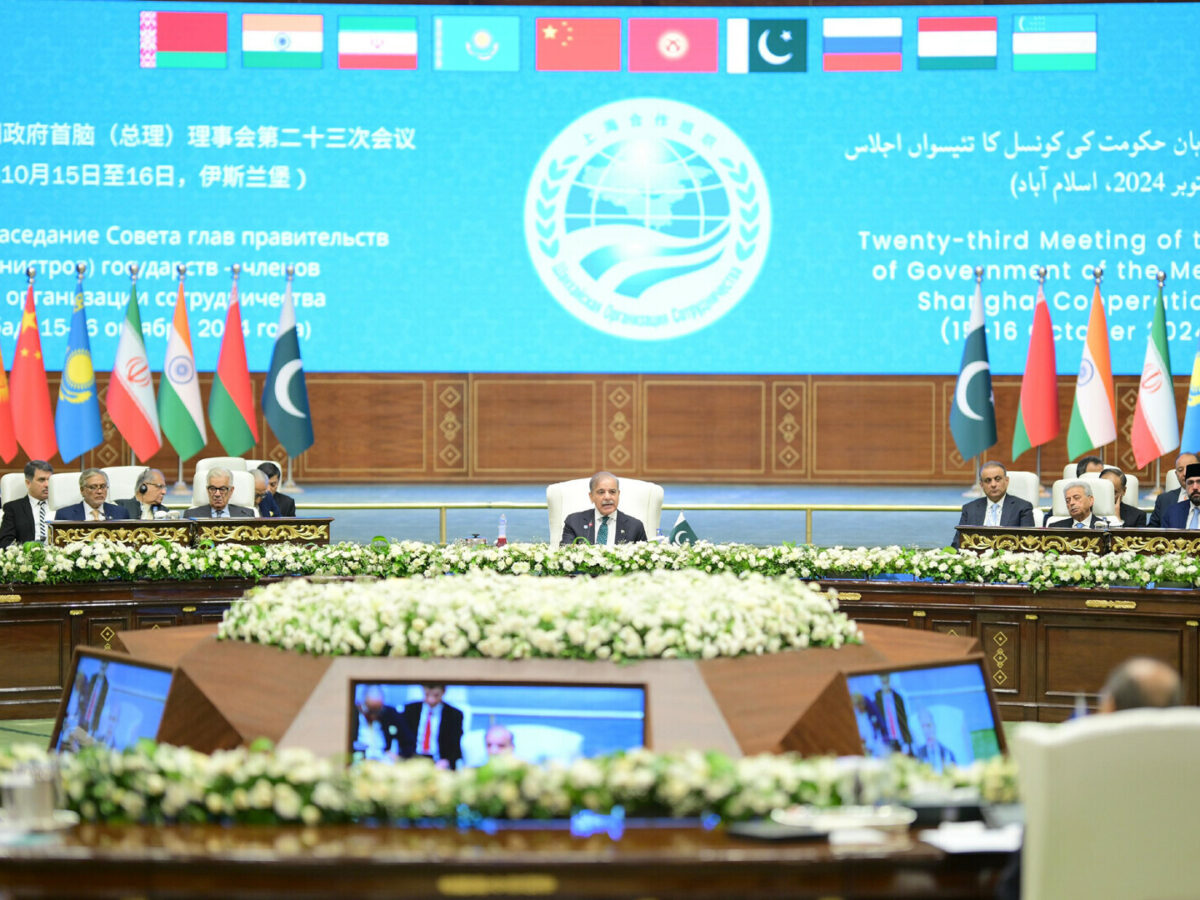


The Shanghai Cooperation Organization (SCO) has evolved from a small regional security coalition into one of the most impressive and influential multilateral organizations in the world. With ten full members, fourteen dialogue partners, and a footprint that encompasses more than 40 percent of the global population and nearly 25 percent of global GDP, the SCO is both ambitious and complex. It is against this background that Pakistan’s role has undergone a critical transformation. After being predominantly a security player, the country is currently defining itself under the SCO as one that supports peace, stability, and economic connectivity. The current events provide an empirical example to analyse this transition.
Diplomatic Reset and Multilateral Credibility
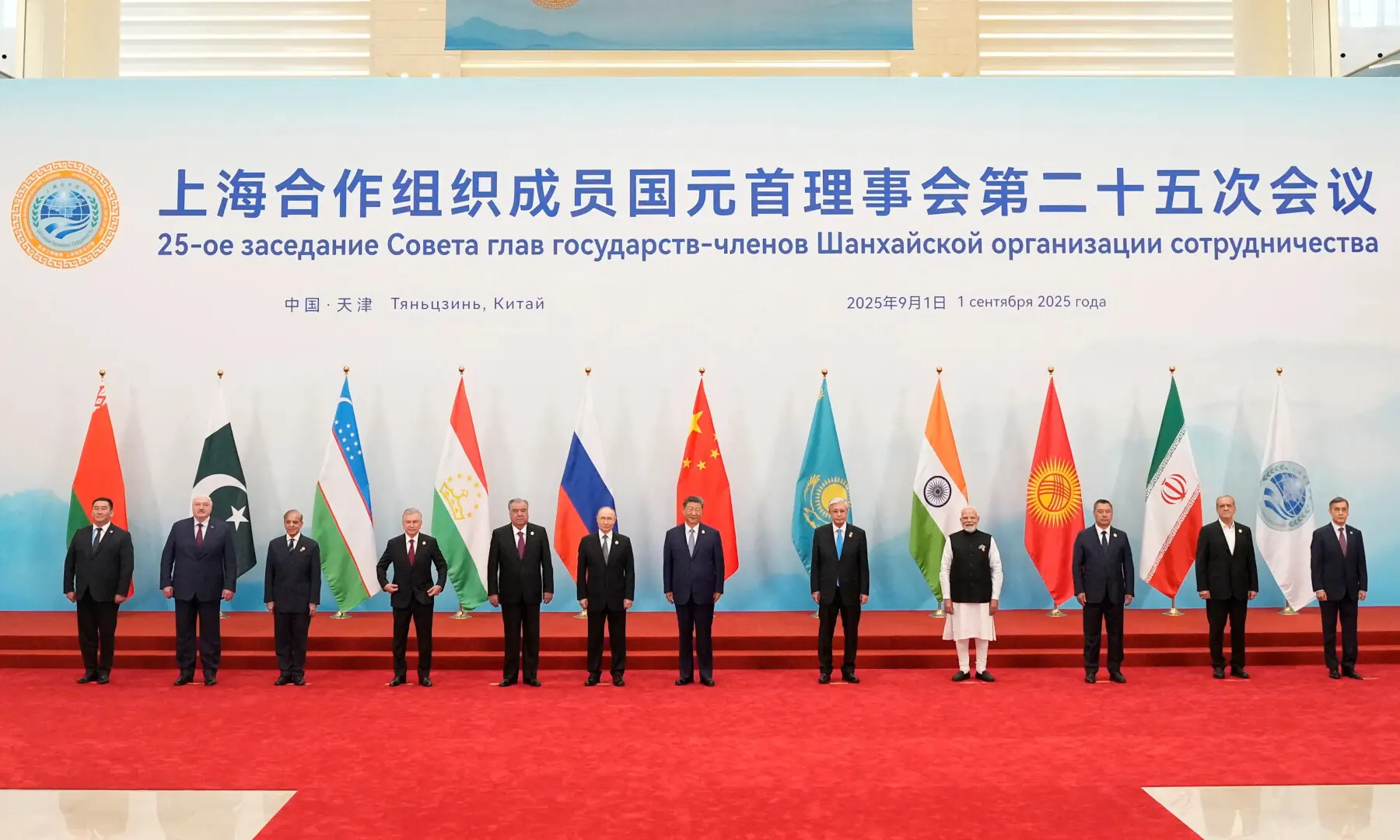
The most noticeable was when Pakistan opened diplomatic relations with Armenia on the sidelines of the SCO summit in Tianjin. This was not a regular rebalancing but a re-evaluation of years-old foreign policy alignments. In forming formal associations after decades of estrangement, Pakistan was indicating its readiness to proceed pragmatically in supporting regional reconciliation. The timing and venue matter. Running this breakthrough on the SCO platform reinforces the platform’s role as a trusted space for building trust and de-escalating conflict. It demonstrates that Pakistan can utilize multilateral environments to foster bilateral diplomacy in various forms, promoting collective stability. In addition to symbolism, this action can open trade routes into the Eurasian Economic Union via Armenia, particularly after the free trade agreement between the Eurasian bloc and Iran comes into effect in May 2025. This has allowed Pakistan to access a market of 180 million people through reduced-tariff routes via Iran and Armenian gateways, where it can have a realistic chance of exploiting the opportunities. SCO offers the framework within which such experiments can be institutionalized.
From Security Club to Development Platform
The SCO is in a decisive phase of its development, and the concept of a Development Bank is gaining increasing popularity. This would embed the idea of financial cooperation within the institution, underpinning the existing Interbank Consortium, which was formed in 2005. In the case of Pakistan, the potential is enormous. The all-year-round flooding tragedies in the nation cost the nation 1.5-2 percent of GDP in annual losses. In 2025, alone, Punjab suffered heavy flooding due to cross-border water releases, which displaced millions of people and destroyed crop production. Another source of funding for the aforementioned flood-resilient canals, embankments, and early-warning systems can be via the proposed SCO bank. The same applies to the energy sector. In early 2025, Pakistan was admitted to the world’s 25 percent solar club, with approximately a quarter of its monthly electricity production generated by solar energy. This is an impressive but precarious success, as grid instability and the absence of storage will ultimately impact reliability. Targeted financing of battery storage and grid modernisation would ensure these gains through an SCO mechanism. They could be exported as an example to other member states experiencing climate volatility. Therefore, counterterrorism or border control is no longer the only argument that Pakistan can advance in the SCO. It is the process of addressing climate security and sustainable development as the fabric of regional cooperation. Such a transition is consistent with the mission articulated by the SCO of integrated security and economic growth, and reinforces Pakistan’s leadership role in defining the organisation’s agenda.
Complex Trade Realities and Opportunities
The financial indicators do not give a promising picture. In fiscal year 2025, Pakistan exported goods worth $32.1 billion, representing a 4.7 percent increase from the previous year. The largest partner was China, which traded to the tune of $23.1 billion, but Pakistan contributed only $2.38 billion. In Central Asia, exports remain on the fringe, accounting for less than one percent of the total, and even decreased by 17 percent in the first half of FY25 to approximately 90.8 million. The trade with Russia is restricted to less than $70 million per year, and payment channels limit the trade with Iran.
When the gap is put against the scale of the SCO trade, it becomes apparent. In 2024, China traded with SCO member states for $512.4 billion, and with the participation of observers and dialogue partners, the total reached $890.3 billion. The China-Europe Railway Express alone made more than 19,000 journeys, representing a 10.7 percent annual increase. The fact that Pakistan is underutilizing this regional throughput is both a weakness and an opportunity. The emphasis is not on generic promises, but on technical solutions: mutual acceptance of sanitary and phytosanitary standards, investment in modern packhouses, and stable cross-border payment systems. When Pakistan pilots ten SCO-commissioned rice, kinnow, and meat export facilities, the nation will contribute at least $ 150 million to Central Asia exports in a year. Similarly, moving even half a billion dollars of China-related trade to local-currency settlement through the SCO Interbank Consortium would decrease dollar dependency and make it more resilient. These small steps can be measured and replicated by other members.
Peace and Stability as Strategic Currency
Pakistan joins the SCO at a time when geopolitical tensions are at their peak. In early 2025, a four-day conflict with a neighbour culminated in missile and drone flights and was only stopped by outside intervention. The episode revealed the fragility of peace in the South Asian region and the importance of institutionalizing crisis-management instruments. The SCO and its Regional Anti-Terrorist Structure, having experience in organizing security responses, is a suitable venue for experimenting with new mechanisms. The most sensible suggestion would be the creation of a 24/7 crisis hotline, run by SCO, and an incident-logging system available to everyone on board. This type of mechanism would not resolve disputes, but would help minimize miscalculations and escalation. Combined with the fact that Pakistan has decided to explore new diplomatic options within the Caucasus, the message is clear: stability is not a slogan, but a strategic currency. A nation that always declines to be a provocateur in a multilateral context enhances its credibility and power.
 Climate Resilience as Collective Security
The 2025 floods once again underscored that climate events are not merely national issues but rather regional security challenges. International water releases exacerbate flood management challenges, while heatwaves threaten energy grids and agriculture in South and Central Asia. The SCO Flood and Heat Risk Taskforce, proposed by Pakistan, would directly address such issues. Such a task force can produce concrete results by combining hydrological information sharing, emergency provisioning, and collective financing of damage repair, via the proposed SCO bank. This is not intangible advocacy. Pakistan has already demonstrated its ability to rapidly scale renewable energy, increasing its solar penetration to a quarter of its monthly generation in just a decade. This experience, shared and reproduced through multilateral finance, offers a way to collective security beyond the deployment of troops and intelligence exchange over the SCO space.
Towards a Measurable Future
The key test for Pakistan’s role in the SCO will be whether it can translate summit rhetoric into measurable outcomes. Five concrete steps define this trajectory:
1. First mover borrowing by SCO finance: Borrow up to 2-3 billion in Phase-1 lending to support flood resilience and solar grid-firming with concrete metrics, including a 20 percent growth in safe discharge capacity at key headworks and 500 MW of storage in place.
Payments innovation: In China, settle at least half a billion dollars tied to trade in local currency by FY26, eliminating dollar exposure and testing scalability with other members.
2. Standards harmonization: Develop 10 SCO-certified export hubs for agricultural products, which will increase Central Asia’s exports by $150 million in one year.
3. New diplomatic routes: Introduce the Armenia channel to implement test loads within the framework of the EAEU tariff book and receive the first 100 containers in the country within 20 days.
4. Rail-sea integration: Co-locate with the China-Europe Railway Express and establish a Karachi/Gwadar sea leg, which will reduce the transit time between Tianjin and Karachi to below 18 days.
Conclusion
The SCO has ceased to be a peripheral event; it is the frontline of the Eurasian contest of ideas, markets, and security paradigms. Pakistan’s attendance at Tianjin in 2025 demonstrated a calculated shift: from a reactive actor concerned with security fears to an advocate of peace, stability, and integration. The establishment of ties with Armenia, the push for a development-oriented SCO, and the articulation of climate resilience as collective security mark this transition. In the case of Pakistan, the way ahead is obvious. The challenge is to shift declarations into deliverables, focusing on funding resilience, promoting open trade, institutionalizing crisis management, and operationalizing new diplomatic paths. When undertaken with discipline, Pakistan’s engagement in the SCO will not only boost its stability but also enhance the organization’s reputation as a platform for joint peace and prosperity among Eurasians.

Research Associate, Pakistan House