
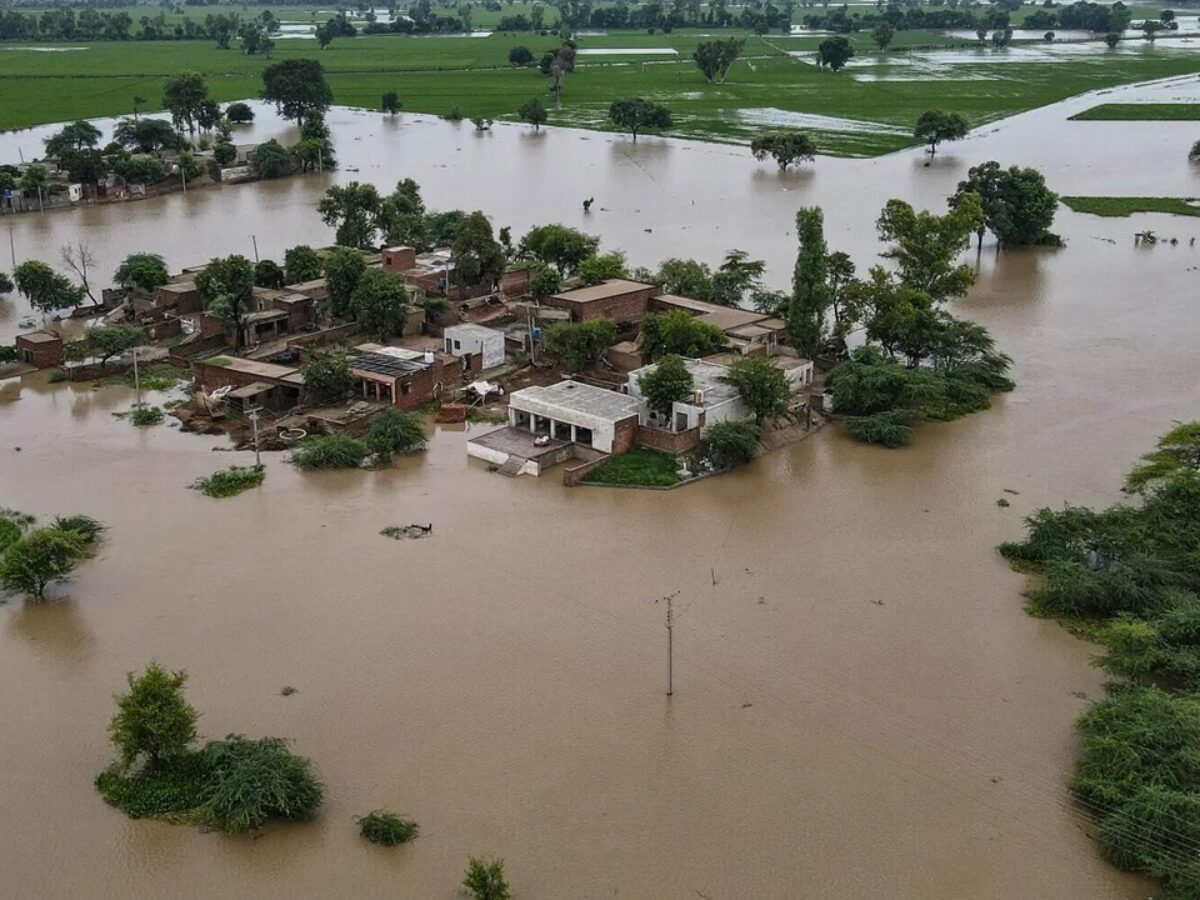


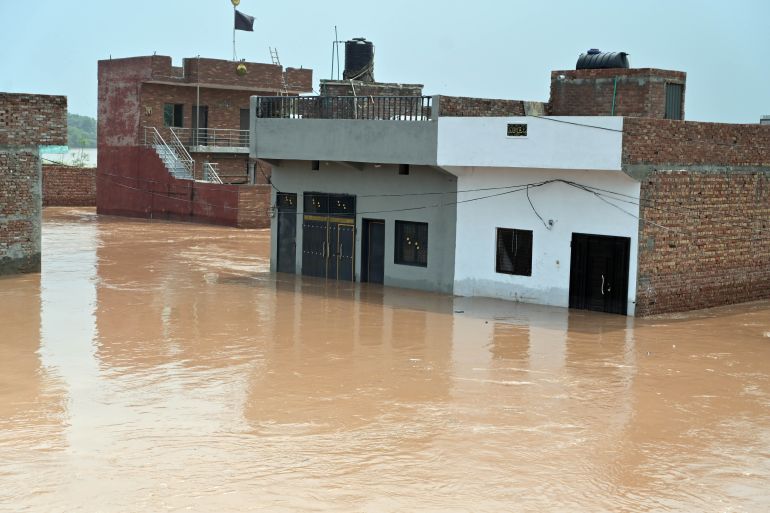
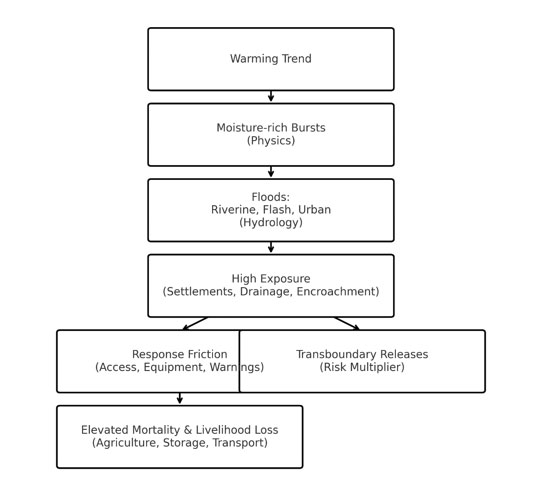
This time, in 2025, Pakistan is going through a more severe climate disaster than the disastrous floods of 2022, and the causes are multi-layered and mutually connected. Human-induced warming has increased monsoon rains by 15 percent this year, and this trend is consistent with scientific knowledge that the magnitude of extreme rainfall increases with the degree of temperature rise. This implies that record disasters may occur even in the absence of record seasons, when brief periods of rain with high moisture content deluge susceptible terrain. However, in contrast to the national deluge that struck the country in 2022, the existing crisis has been localized in Punjab, where the precipitation is 26.5 percent greater than it was in 2021. The Sutlej, Chenab, and Ravi rivers have reached record levels, prompting intentional overtopping of embankments and the displacement of millions. Since Punjab is the wheat and cotton belt of the country, this geographic concentration increases the risk of economic and food security. The state of affairs is aggravated by compounding risks: cloudbursts in the western Himalaya and Khyber Pakhtunkhwa, which are increasingly common in a warmer climate, have overloaded already oversaturated catchments, and unplanned urban development that transforms heavy rain into mass-casualty events. To this are added transboundary risks when discharges from Indian dams overflow into Pakistan’s rivers, changing the end result from severe floods to catastrophic ones. Below these short-term causes lies long-term susceptibility: Pakistan has become more than half a degree warmer in a century, seawater off Karachi is rising, and heavier rain and heatwave days are becoming more common, putting rivers, coasts, and cities at risk and forcing them to fail at lower levels. The hazard is exacerbated by governance and exposure lapses, as informal settlements occupying floodplains, encroached drains, and the lax implementation of building regulations expose millions of people to the hazard. Communication breakdowns and bottlenecks in rescue operations were again highlighted as issues that have been identified over the years but not addressed.
These climate-related losses are already costing the country USD 38 billion a year, and the experience of 2022, which saw over USD 30 billion in losses, has not translated into more serious investment in resilience. The 2025 disaster is then the direct outcome of poor preparedness, inadequate financing, and poor organizational structure. What is unique this year is that attribution science proves that climate change has directly increased rainfall. Now that over two million people are affected and the rivers in Punjab are at record levels, the crisis demonstrates that an attack on the breadbasket can wreak havoc on the economy as much as a nationwide flood. Food-price volatility and fiscal strain is here to stay, unless immediate measures are implemented to secure pre-harvest crops, increase storage, and fortify protective infrastructure
The “why now” diagnosis
What must change now?
Pakistan’s approach to the 2025 floods must extend beyond mere emergency relief and incorporate structural reforms that regard climate resilience as a vital component of national infrastructure. Firstly, floodplains ought to be treated as essential assets. Implementing river setbacks with cash-plus relocation for the most vulnerable households, alongside anti-encroachment initiatives on significant urban drainage systems, can diminish immediate fatalities and avert expensive emergency breaches.
Secondly, last-mile warnings must effectively reach the populace. Enhancing cell-broadcast alerts, installing sirens, upgrading radar systems for cloudburst detection, and establishing clear trigger-to-action protocols within schools and communities would convert lead time into organized evacuations.
Thirdly, adaptation strategies should transition from temporary sandbags to permanent hydraulic solutions by broadening and safeguarding urban drainage systems, decommissioning weak embankments, and rehabilitating wetlands and mangroves to manage peak water flows. Agriculture, which is the cornerstone of Punjab’s economy, must be fortified against shocks through secure grain storage, resilient crop varieties, water-efficient practices, and insurance schemes linked to rainfall and river stage indicators.
Moreover, financing must correspond to the magnitude of risk. This entails creating parametric catastrophe layers and contingent credit facilities while safeguarding adaptation budgets to ensure stability during fiscal challenges. At the transboundary level, protocols for the Indus basin must be updated through agreed-upon release notices, ramping schedules, and collaborative flood exercises with India to mitigate unexpected downstream surges.
Lastly, national policy must be in harmony with scientific realities. Planning standards should now account for more intense one-day rainfall extremes, reconstruction efforts should adhere to resilience benchmarks rather than outdated standards, and capital expenditures must be directed toward infrastructure capable of enduring the climate conditions of the 2030s and beyond. Collectively, these measures would stabilize lives and livelihoods, reduce disaster premiums, and shield Pakistan from recurring cycles of loss and unpreparedness.
The equity and macro case
Pakistan contributes less than 1% to global greenhouse gas emissions. Yet, it is classified as one of the countries most vulnerable to climate change, incurring economic impacts related to climate amounting to USD 38 billion annually. The disaster in 2022 alone resulted in damages of USD 14.9 billion and losses of USD 15.2 billion—figures that will need to be reassessed unless the risks associated with habitation and value production are systematically mitigated. The crisis in Punjab in 2025 demonstrates that specific failures in agricultural regions can have macroeconomic repercussions comparable to those of national flooding. Consequently, the evaluation of Loss-and-Damage financing and domestic protective measures should be based on the verified reduction of risk per dollar spent in flood-prone areas, drainage systems, and last-mile warning systems, rather than merely on ceremonial inaugurations.
What to measure next monsoon (accountability dashboard)
• Lead time delivered (minutes/hours) to households per alert;
• % of encroachments removed on named urban drains;
• Hectares under setback enforcement and households relocated with cash-plus;
• Parametric coverage (lives/livelihoods) and payout time post-trigger;
• Storage protected (grain/livestock) and post-event price spikes avoided;
• Basin release notice compliance (timestamped).

Research Associate, Pakistan House