


14 August is a day that the people of Pakistan celebrate every year as it changed the history of millions of Muslims in the subcontinent. It was in 1947 that the dream of those forefathers was realized through the aspirations and dreams of our forbearers. The establishment of Pakistan was not an arbitrary political change, made on a map, but was an incredible act. This achievement is bought with blood and tears and sacrifices of a thousand thousand men. This Independence Day is not merely an occasion to celebrate sovereignty but also a day that makes us reflect on the sacrifices made by our forefathers so that this freedom could be achieved, and a call to our brothers and sisters in Indian-occupied Kashmir who continue to aspire to the right of self-determination.
The road to independence was a long, hard one. The political awakening of the early days under Sir Syed Ahmed Khan to the philosophical vision of Allama Iqbal and the ultimate leadership of Quaid-e-Azam Muhammad Ali Jinnah enabled every step to show the vision and relentlessness. Even though ill health took him seriously, Jinnah dedicated his last years to the cause, despite his declining health, to make sure that the pace of the Pakistan Movement never wavered. He was accompanied by his sister, Mohtarma Fatima Jinnah, who fought side by side with him in mobilizing women and providing political support to the Muslim League. Many leaders, activists, and commoners sacrificed themselves in this national cause, and it is a common realization that their individual sacrifice was the cost of a free nation.
The 1947 Partition stands out among the most significant and most traumatic mass movements of people in human history. A total of over 15 million had been displaced, and they had to leave their homes, businesses, and their ancestral lands and cross the newly defined borders. Indescribable struggles characterised the road to the process; in the stations, trains rolled in with the lifeless bodies of people who had gone in hopes but could never reach the shore. Communal massacres extinguished entire families, and two million people were said to have lost their lives during the violence that accompanied independence. The people who had survived had to support their lives with nothing. Highly qualified people, such as professionals, business people, and civil servants, who immigrated to Pakistan took on lower jobs and wages to help the country survive. They were the pioneers of the early institutions of our state and the impetus that set the dream of a prosperous Pakistan that was not motivated by individual benefit.
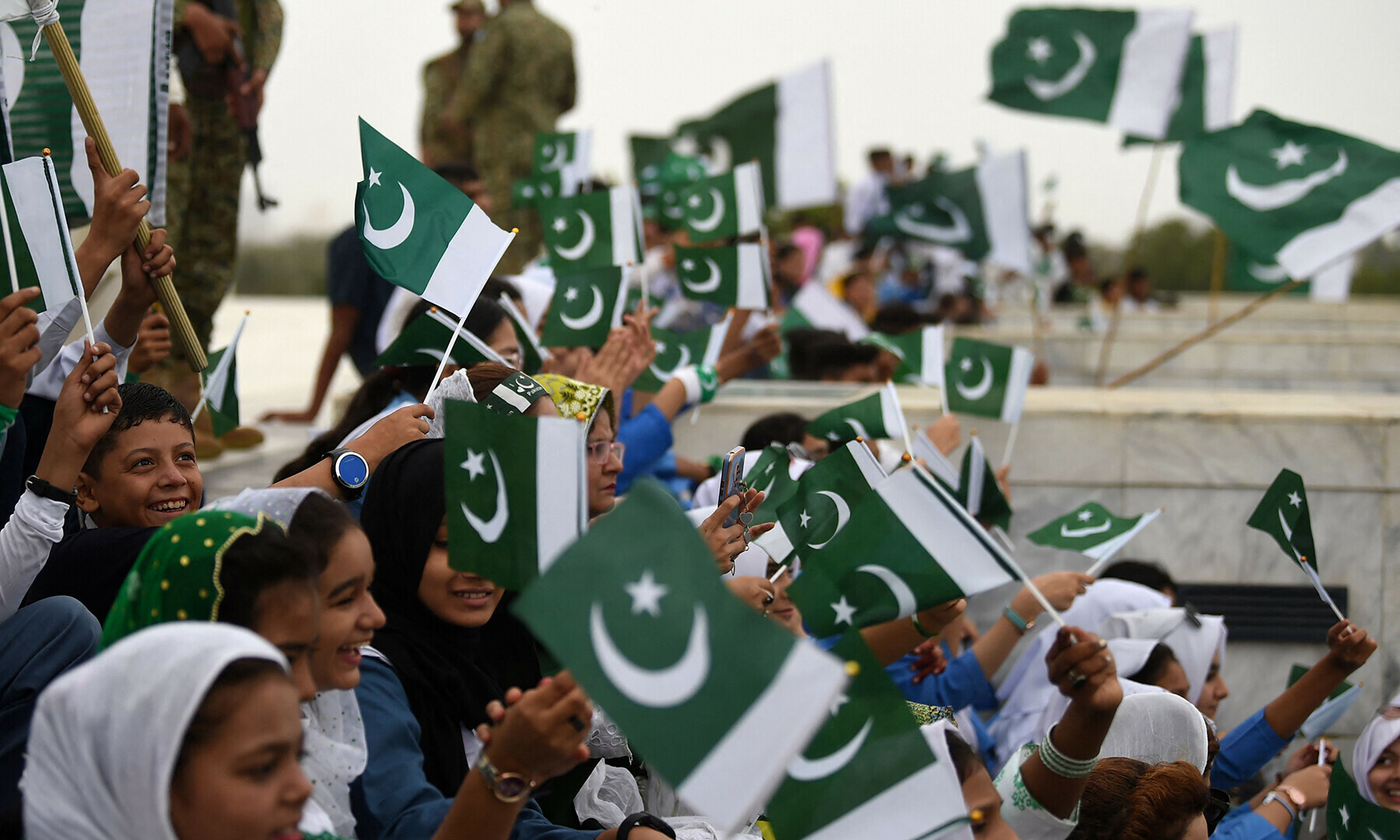 Ever since its formation, Pakistan has celebrated Independence Day with pride and thanksgiving. It starts with hoisting the national flag in Islamabad, the national capital, with speeches made by the President and Prime Minister, paying tribute to the past sacrifices and the country’s vision for the future. The green and white flags are set a-fluttering on the rooftops of cities and villages, the roads are gay with buntings, and the air is filled with patriotic songs. The group of family members sits at a table, sharing the experiences of their elders in getting through the hard times, teaching resiliency to the young ones. Such cultural programs, parades, and exhibitions bring history to life and guarantee that the spirit of 1947 will never be forgotten.
But as we relish in our freedom, we do not forget our conscience, which reminds us of our pending business of Partition, the destiny of Jammu and Kashmir. Princely states were supposed to be merged with either India or Pakistan at the time of independence, depending on the location and the desires of the population. Kashmir, as a place with a substantial Muslim majority and cultural closeness to Pakistan, was supposed to join Pakistan. Instead, the Indian troops went into the region in 1947, igniting the initial war between the two new states. The Indian voters in the occupied Kashmir have since lived under decades of military occupation, human rights violations, and political oppression.
Kashmir has experienced uninterrupted brutality for more than three-quarters of a century. There have been months of curfews imposed on entire towns, communications have been cut so they can no longer communicate with the rest of the world, and thousands have been detained with no trial. Extrajudicial killings, torture, and the targeting of civilians have been documented by reports issued by international human rights organizations. The annulment of Article 370 in 2019 reduced the freedom of the territory, and that only heightened the feeling of betrayal and occupation. Despite this, the Kashmiri spirit has not been crushed. Their struggles can be traced back to the first rebellions, like the Poonch Rebellion of 1947, to contemporary rebellions. People feel a need to fight against the same cause that brought the Pakistan Movement, that no nation has the right to deprive people of their freedom and dignity.
It is not only history that ends at 1947, but also the history of sacrifice. Despite wars, economic crisis, natural calamities, and political failures, Pakistan has had the choice of living a stable life, and the greatest asset of the country has been its people. Leaders such as Liaquat Ali Khan, the first Prime Minister of Pakistan, stabilized the young state at the cost of his own life, having been assassinated in 1951. The army has played its role to protect the independence of the country against all odds, and numerous soldiers have become martyrs to keep the fatherland safe. The living legacy of the commitment to autonomy consists of such sacrifices.
Independence Day is thus not just a time of recollection; it is something that we look forward to achieving. It is a reminder of how, within Pakistan, we were united, how the state was built through faith and with discipline, and how we applied these same things in dealing with our problems today. There are areas that we should strive to improve in, and these are the strengthening of the democratic institutions, guarantee of social justice, education investment, and the attainment of a self-reliant economy. Meanwhile, we should not relent in supporting Kashmiri people on diplomatic, political, and moral aspects. Their freedom is not merely a local issue-it is an issue of redeeming the promise of justice upon which our independence struggle was based.
When the green and white flag is hoisted on August 14th, it not only shows our sovereignty but also our generation’s sacrifices. It bears the memory of those who died so that we might live as free people. It also bears hopes about the people of Kashmir, whose right to self-determination has never been fulfilled yet. This Independence Day, we should feel proud of what we have accomplished, salute our martyrs, and rededicate our commitment to support our Kashmiri Brothers and Sisters until the day they, too, will be able to breathe freely in their land.
Research Associate, Pakistan House