
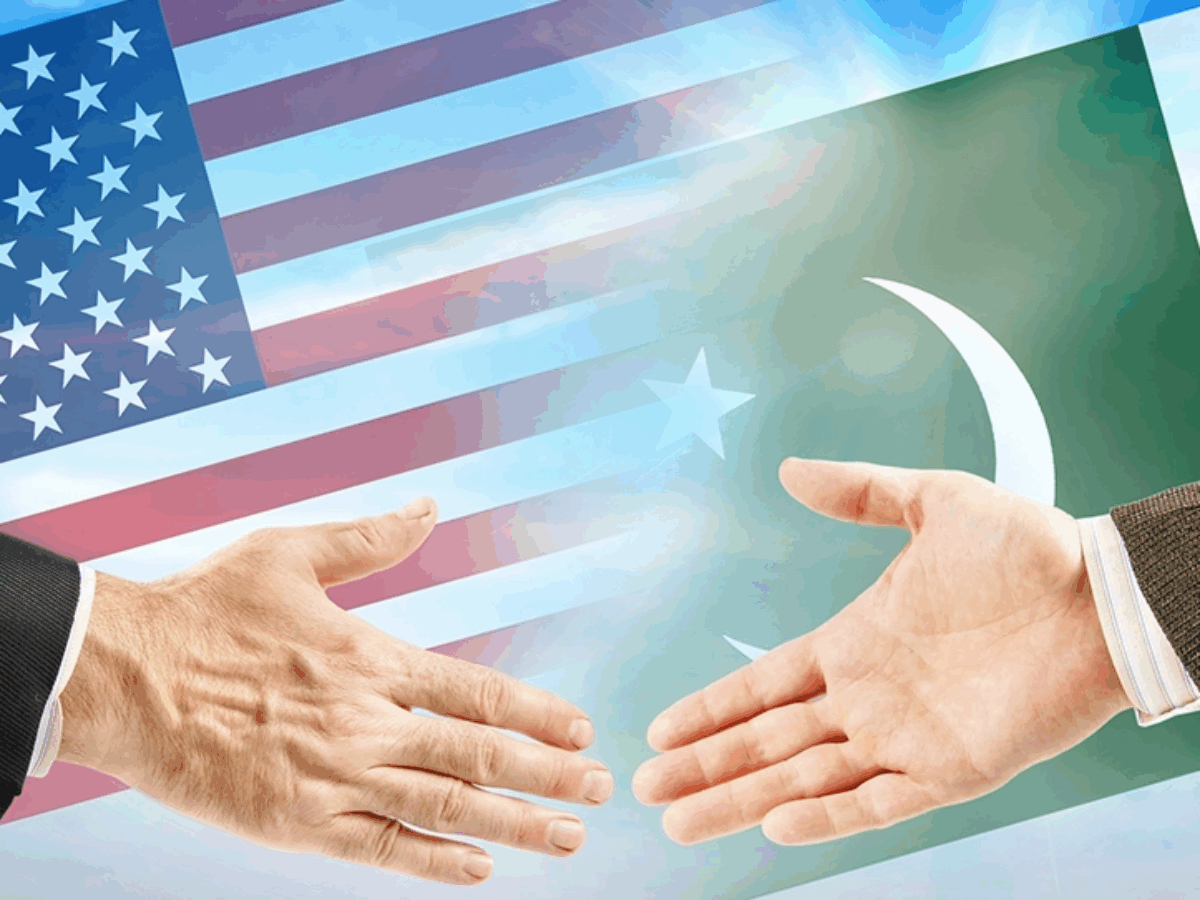


Opportunities for a Strategic Economic Reset
Perhaps one of the most crucial and cyclical relationships in Pakistani foreign policy has been between Pakistan and the United States. It has lapsed and switched in the last 70 years between intimate collaboration and bouts of unbridled estrangement. It has been influenced mainly by developments in the global strategic sphere, and no longer by bilateral plans. Pakistan has been labeled as the most allied ally and the most sanctioned ally of the United States, with an emphasis on its vacillations in the American priorities. In the past, peak periods of engagement have been attributed to common geopolitical interests, e.g., Pakistan as a catalyst in U.S. and Chinese rapprochement in the 1970s, as a partner in disengagement of Soviet forces in Afghanistan in the 1980s, and as a frontline ally in the post-9/11 war on terror. These incidents showed that whenever both countries have worked hand in hand, the effects of such have not been limited to their respective countries but instead have affected the world strategic balance itself.
A decisive paradigm shift occurred in 2021 when the United States’ war in Afghanistan came to an end. The loss by Washington of its logistical routes, counterterrorism operations, and showdown with the Taliban through negotiations meant a significant drop in the strategic centrality of Pakistan. If this new reality held, it was reflected in the policies of the Biden administration. There was no demonstration of high-level White House commitment: President Biden never spoke to a Pakistani leader, and contact at the diplomatic level consisted of mid-level programs, such as the Green Alliance, dialogues on health matters, and aid after the 2022 floods. There was military-to-military coordination, especially on the issue of over-the-horizon counterterrorism in Afghanistan, but the relationship was not sufficiently economically or politically based. According to Brookings scholar Madiha Afzal, bilateral relations reached an “unspectacular equilibrium,” which is characterized by minimal cooperation in select fields as well as the primacy of Washington in its obsession with the security of Pakistan’s nuclear weapons stockpiles.
However, with the change that occurred in Washington, the discussion over whether this partnership can be expanded into a more comprehensive one has been reopened. With the departure of President Trump, a new diplomatic style, transactional, leader-to-leader, and deliverables-based, has emerged that presents opportunities as well as challenges to Islamabad. The problem is that Trump very clearly tied any trade agreement to Pakistan, avoiding confrontation with India, especially honoring the ceasefire he says he negotiated in May. Such a situation leaves Pakistan in a precarious position between the regional geopolitics and its trade interests. The opportunity is based on Trump’s economic priorities, including rare earth minerals, U.S. leadership in cryptocurrency and artificial intelligence, and increasing its energy exports, which all overlap with where Pakistan can add value.
The past couple of months have witnessed Pakistan positioning itself to exploit this alignment. In April 2025, a Mineral Investment Forum in Islamabad was held at a high-profile event, with an estimated USD $6 trillion worth of yet undiscovered mineral reserves on display and offering U.S. corporations highly favorable terms to entice them to come. This went along with an offer of a zero-tariff bilateral trade agreement to expand market access, American investment, and Pakistan’s imports of U.S. crude oil and liquefied natural gas. Islamabad not only wants to attract U.S. exports into Pakistan, but by lowering tariff barriers, it is expected that the U.S. would be anchored in its resource, manufacturing, and energy sectors.
The most conspicuous one is possibly the entry of Pakistan into a joint venture involving cryptocurrency and artificial intelligence with World Liberty Financial. This firm is associated with business affiliates of the Trump family. The venture took co-founder Zachary Witkoff to Islamabad, where he met with top leadership, including the Army Chief of Staff, Field Marshal Asim Munir. About the same time, the Special Assistant to the Prime Minister on the newly established Crypto and Blockchain portfolio in Pakistan visited a significant cryptocurrency and AI summit in Las Vegas, which U.S. political and business leaders attended. There, he plotted the benefits of cheap, high-output mining of Bitcoin in Pakistan and how it could be a hub in the region in terms of AI data infrastructure. Such outreach fits with both Trump’s personal and policy interests, as it provides a win-win system whereby Pakistan wins technology transfer and investment by the United States, which wins a partner in the developing digital economies.
The recent trade-related activities point to a tremendous change in the Pakistani strategy. As opposed to using security cooperation as the primary basis of engagement, Islamabad is pitching its case to the U.S. in terms of economic complementarity, strategic resources, and technology cooperation. When maintained, this will have the potential to rebalance the relationship to something less susceptible to the effects of geo-political crises. Nevertheless, to translate these proposals into a lasting structure, high-profile events and announcements will not be enough. The investment environment in Pakistan will be a matter of consideration for American firms, taking into account the level of political uncertainty, macroeconomic instability, and the level of economic interconnections with China because of the China-Pakistan Economic Corridor (CPEC). Washington has remained cautious of the Belt and Road Initiative, and American companies seeking opportunities in Pakistan might need to interact with the infrastructure part of CPEC, which will prompt Islamabad to assure both Beijing and Washington that their interests could be accommodated.
In the case of Pakistan, it would require maintaining credibility during negotiations, upholding the terms of agreements, and providing reforms in governance to make doing business a great opportunity. Further liberalization of imports of U.S. agricultural products and construction equipment, as proposed by some of the officials, can increase trade volumes further, whereas joint energy, mining, and technology ventures can entrench the business of the U.S. within the most strategic geographical spheres of Pakistan, not forgetting the resource-rich but unstable states like Balochistan and Khyber Paktunkhwa. Physical presence of the firms in these regions would not only be a source of economic gains, but it could also elicit further cooperation in the area of counterterrorism since both parties would see their security interest.
The developing dynamic presents a possible meeting point of vision of a futuristic partnership, ISSI, and the preferences of a transactional ISSI, Trump. The institutionalisation of a broad-based economic relationship may assist Pakistan in moving beyond the ad-hoc strategic cooperation and disaffiliation on a recurrent basis. This would involve establishing a permanent economic dialogue structure, e.g., a Pakistan-U.S. Economic and Technology Council that could prioritize, coordinate regulatory efforts, and follow up on common initiatives. It would also require political stability at home since investors and policymakers in the U.S. will hesitate to invest in long-term ventures in a situation of frequent political crises and policy revolutions.
Perhaps the final verdict in all this will be how Pakistan can translate these new trade initiatives, be it the Mineral Investment Forum or cryptocurrency partnership, into actual firm agreements that both parties can measure. Success would thus show that Pakistan has been able to offer the United States economic, technological, and strategic opportunities beyond the limited thinking of a security relationship. As opposed to that, failure would only support the view that Pakistan’s moves are full of ambition but lack commitment. The present time is consequently critical. It is the first time since the U.S. left Afghanistan that a combination of economic demands, the promise of strategic control of resources, and personal diplomacy has had the opportunity to overturn the bilateral relationship. Provided that Pakistan can control its relations with neighbors, Washington will feel less insecure about Pakistan’s links with China, and the commitment made to meet the targets of the trade with Pakistan, the partnership can be much more stable, diversified, and mutually beneficial. The alternative is a reversion to the low normal of limited engagement–a move which would waste the rare confluence of political goodwill and economic interest.
Research Associate, Pakistan House