



Introduction:
Controversy about Jeffrey Epstein has expanded far beyond his legal issues. Originally a crime investigation , then turned into an international discussion concerning elite networks, institutional accountability, media representation, and political accountability in general. The release of the Epstein Files was heralded as a significant step toward transparency; however, it also created many new dilemmas about the nature of redactions, selective disclosure, and boundaries of justice. This paper will examine the overall structural outcomes associated with the leak of documents, subsequent victim responses, institutional behavior, changes in political communication, and issues related to global governance. The Epstein situation represents more than just the personal acts of wrongdoing; it represents the inability of systems of accountability to withstand challenges from concentrated power and influence.
The Epstein case has captured the public’s imagination like very few scandals in modern history have. He was accused of very severe and alarming crimes, and raised the level of controversy around his case because of the extent of his social connections to elite individuals; politicians, business leaders, academics, and other public figures created the impression that the case was extending far beyond the individual acts committed by Epstein and his alleged co-conspirators, and into elite power and networks.
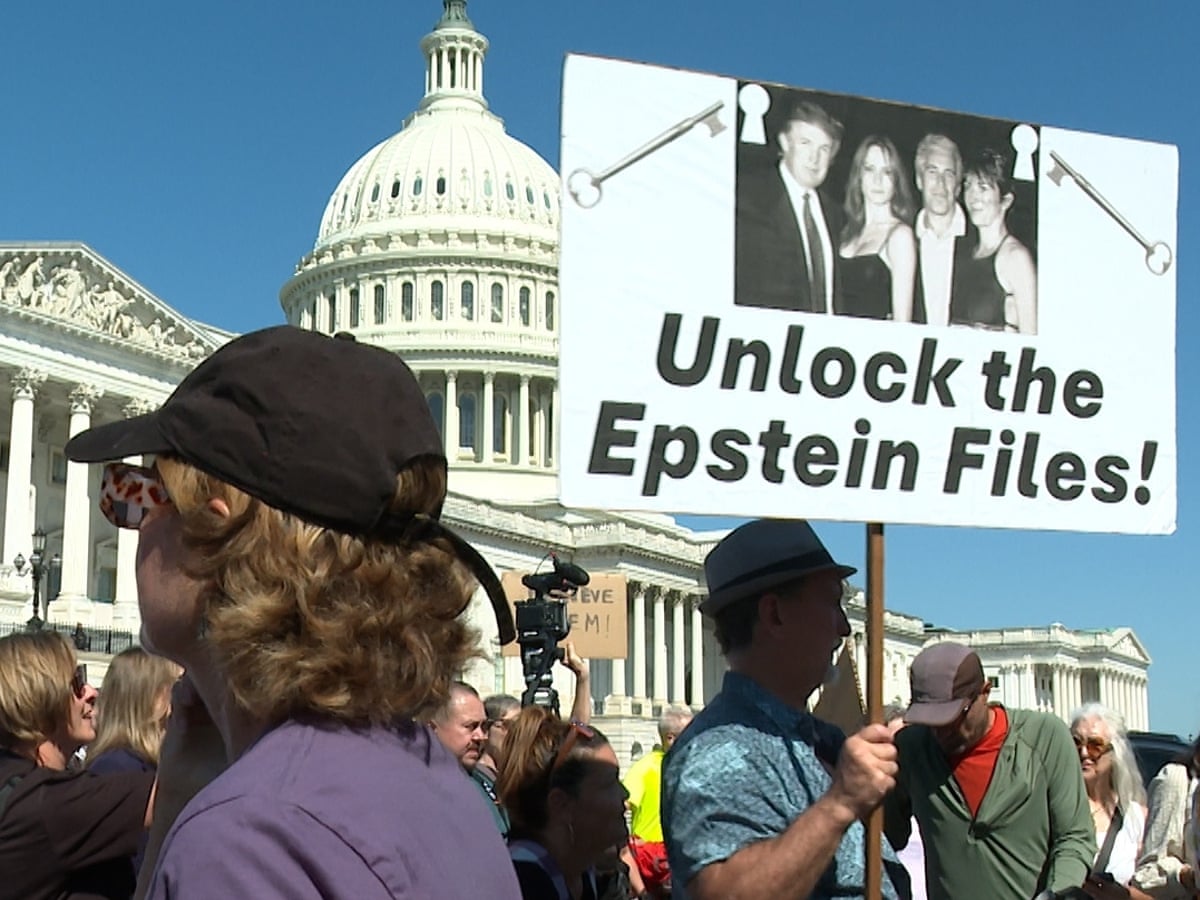
When the authorities released millions of pages of documents, commonly called the “Epstein Files,” many people believed that the release of those documents would bring clarity to the situation. However, rather than bringing clarity, the release of the Epstein Files has brought about a confusing mixture of revelations, confusion, and renewed skepticism. The release of the Epstein Files opened up previously sealed archives of evidence, yet the way in which they were released into the public had the effect of introducing many new controversies regarding the way in which the documents were redacted/omitted, as well as procedural inconsistencies in the manner in which they were released.
What had originally begun as an investigation into “What did Epstein do?” has morphed into the debate of “How do institutions respond to power?” The emergence of calls for a “cover-up” has occurred not only as a result of the existence of hidden documents, but also because the gap between the promise of transparency and the actual experience of disclosure has generated suspicions about the true nature of the Epstein case.
The Epstein Files: A Historic Release
The Epstein files include a significant volume of thousands of documents – court rulings, investigative reports, email communications, and travel records – that were created over many years, during the ongoing investigation. The number of released documents is far greater than any previously related to criminal acts committed by those in power.
The original reaction to the announcement of the information that would become available was one of excitement; transparency was expected with the opening of long-sealed records, greater public scrutiny, and journalists, academics, and non-profit organizations will be able to access previously un openable records.
Unfortunately, the overall level of transparency was inconsistent; many documents were redacted, some documents were not able to be identified, many documents did not become available in the time expected, and many documents were subsequently denied full public access due to being temporarily under seal. This led to several debates as to the definition of transparency, as in some cases the release of documents created new suspicion rather than alleviating suspicion regarding the documents.
Ultimately, this raised the question of whether the released information was sufficient to understand the level of accountability for those who were being held accountable through the release of records.
Selective Disclosure and Institutional Caution
Legal constraints affect the way institutions function. Institutions often defend their redactions by saying that redacting is for protecting individuals’ rights to privacy, is due to ongoing investigations, or is due to protecting the rights of individuals who have not formally been charged with a crime. In high-profile instances, the appearance of providing legal protections may be indistinguishable from protecting those who have power.
The Epstein Files’ release showed us this dilemma. One criticism of the documents released was that there were a lot of documents but not necessarily all the documents. By having the ability to redact their names, some people have begun to question who decided which names to show and which names to not show.
There is no evidence of an organized attempt to hide information; however, when individuals in power appear to be protected using complex procedures, more skepticism exists in the public about the powers that be. In addition to keeping a secret, the public will always believe that they have been hidden by others.
It is not possible for institutions to conspire to hide information, but the results of the use of cautious bureaucracy, the legal risks associated with providing information, and political sensitivities can result in some of the same outcomes that would occur if information was hidden.
Elite Networks and Structural Power
The Epstein case helps us see how elite networks work in political and social systems. The connections to famous individuals indicate that any established processes will struggle to remain isolated from the various influences of outside; thus, there will be no ability to guarantee independence from them.
While power and wealth do not offer immunity to prosecution, they do provide access to attorneys, public relations assets, and other institutional resources of influence. These resources can alter how an investigative process is conducted and/or how fact information get delivered.
The broadest issue was related to structural concerns. The accountability systems of our institutions, in relation to having to hold many powerful individuals accountable, are highly susceptible to breakdown when confronted by powerful people, when no institution demonstrates equal accountability to powerful people under the law, which increases the likelihood of perceptions of procedural irregularities being deemed as evidence of preferential treatment.
Therefore, “cover-up” describes the context of the larger question of whether there are systemic levels of inequality in relation to our judicial system.
Victims and the Collapse of Trust
One of the most significant emotional developments in response to the file release has been the reaction of victims. Many survivors have gone public with their feelings about how documents have been produced. Some of them have indicated they will compile their own independent list of people they think were involved in Epstein’s network.
This is indicative of a lack of trust. When victims are motivated to assemble their own record of suspected connections, it means they have little faith in the official process competing with what they believe to be true.
On an obvious legal level, independent naming poses a burden of potential harm. The requirement for due process dictates there must be evidence, verification, and a finding rendered by a predetermined process. Publicly naming someone without a formal adjudicated outcome may cause legal liabilities/harassment for the dénouement of the alleged victim.
On a moral level, however, the reaction of the victims signifies a more serious issue: if trust is broken, it is not easily repaired. Regardless of how fully transparent an action, if a victim continues to believe that the disclosure of matters is incomplete, the victim will have no confidence in the validity of the action.
Media Fragmentation and Competing Narratives
The media was instrumental in providing the public with information regarding the Epstein Files. Due to the unprecedented amount of documents released from these files, media organizations were unable to use their traditional reporting methods to analyze or report on how to contextualize this information as they were being released.
As such, reporting on the subject became fragmented, with some journalists choosing to focus on the investigative breakthroughs while other journalists were reporting on the lack of definitive information that might provide solid evidence of a new crime. At the same time, the online platforms were generating increasing amounts of speculation and conspiracy theories associated with the subject matter contained in the Epstein Files.
The result of this fragmented reporting created complications in establishing accountability. Instead of a cohesive public response, the public discussion and debate regarding the files became fragmented into competing views. Some viewed the files as evidence of systemic corruption, whereas others indicated they were evidence of institutional transparency.
Media framing is more than just reporting on a specific event; it also creates the framing of that event. The lack of a common narrative in this case has created greater polarization and made it difficult to establish a common point of view.
Political Communication and Attention Cycles
Political communication tactics of two large entities–Donald Trump and Jeffrey Epstein–overlapped with one another as a result of the intense media scrutiny placed on the Epstein-related files; therefore, when examining how political messaging occurs on social media platforms such as “Truth Social,” there have been observable changes that occurred on a short-term basis by Donald Trump. While there is no evidence that political actors intentionally distracted their messaging because of this new cycle, caution should be used in trying to determine the number of times a political actor has associated their messages with other current events; this can occur when large, controversial events are making the headlines.
The modern “information ecosystem” is based on rapid attention cycles. A member of the public’s attention can shift rapidly from one topic to another through an information ecosystem. If there is any loss of momentum in a specific topic, it will occur as a result of the public having already had their attention refocused. The relationship between political communications and media coverage shows that simply having “transparency” or “accountability,” will not be able to provide the evidence needed for maintaining steady state scrutiny.
Global Dimensions and Governance Gaps
The Epstein Case was not limited by one jurisdiction, his extensive global social or financial network complicate accountability.
Legal systems primarily are national, evidence can be inherently slow to achieve. Jurisdictions are often able to go forward with investigations, while other jurisdictions often are not, leading to fragmented jurisdictional enforcement that creates loopholes.
Consequently, the Epstein Files illustrate how fragile global governance is. Effective transnational processes require international cooperation frameworks; standardized international disclosure of information; and independent international oversight.
Without those reforms, elite networks will continue to experience future scandals through the same pattern of partial transparency and unresolved doubt.
 Transparency Without Reform
The Epstein Files that are now in Public Access highlight how just having access to records doesn’t mean that justice will occur. Eventhough their public view may help all parties involved. There can be continuing institutional culture just because they provide the public with the name of an individual does not guarantee that they will actually be accountable for their actions. There will still be increasing access to the public while the structure of the systems they were released from will remain unchanged.
In addition, the situation with Epstein shows that there is both transparency occurring along with a degree of secrecy. Even though the Authorities may be providing millions of pages of documents to the public, they continue to maintain the sole authority as to how many pages were created, how to redact them and seek to interpret those pages.
If there are not functions that will reform the system that will provide transparency to all of the individuals that work within the community, the provision of transparency will be little more than a symbolic action and will fail to create any substantive change.
Conclusion
‘Cover-up’ has a heavy implication as in it is an act designed to conceal or shield those involved in that act of concealment and was executed with a coordinated effort to hide or protect those who are responsible for that act of concealment. Regardless of the existence of collusion, the persistent existence of the narrative that emerged will also indicate that the “crisis” of confidence has gone much deeper.
The uncertainty around the events will only fuel suspicion. Failure of consistent disclosure and media coverage of the entire issue, along with the shifting focus of political power, have created an environment in which there is no way of providing assurance that doubts will arise. The “Epstein Files” also represent the largest known dump of documents in history and have provided some of the largest disclosures on Epstein; how Epstein operated as a criminal; and ways in which authorities protected him; or did not take reasonable steps to protect the public from Epstein.
The Epstein controversy is not a series of crimes; it is a demonstration of how societies will respond to and challenge concentrations of power. It is about developing a system that provides for effective transparency with respect to the powerful.
At last, the Epstein case exposes contemporary governance at work. Many have argued there has been some degree of improvement in transparency, yet the overall trust in the system remains low even though there have been public disclosures, closure remains illusive.
