


Introduction:
AI for Development and Economic Growth
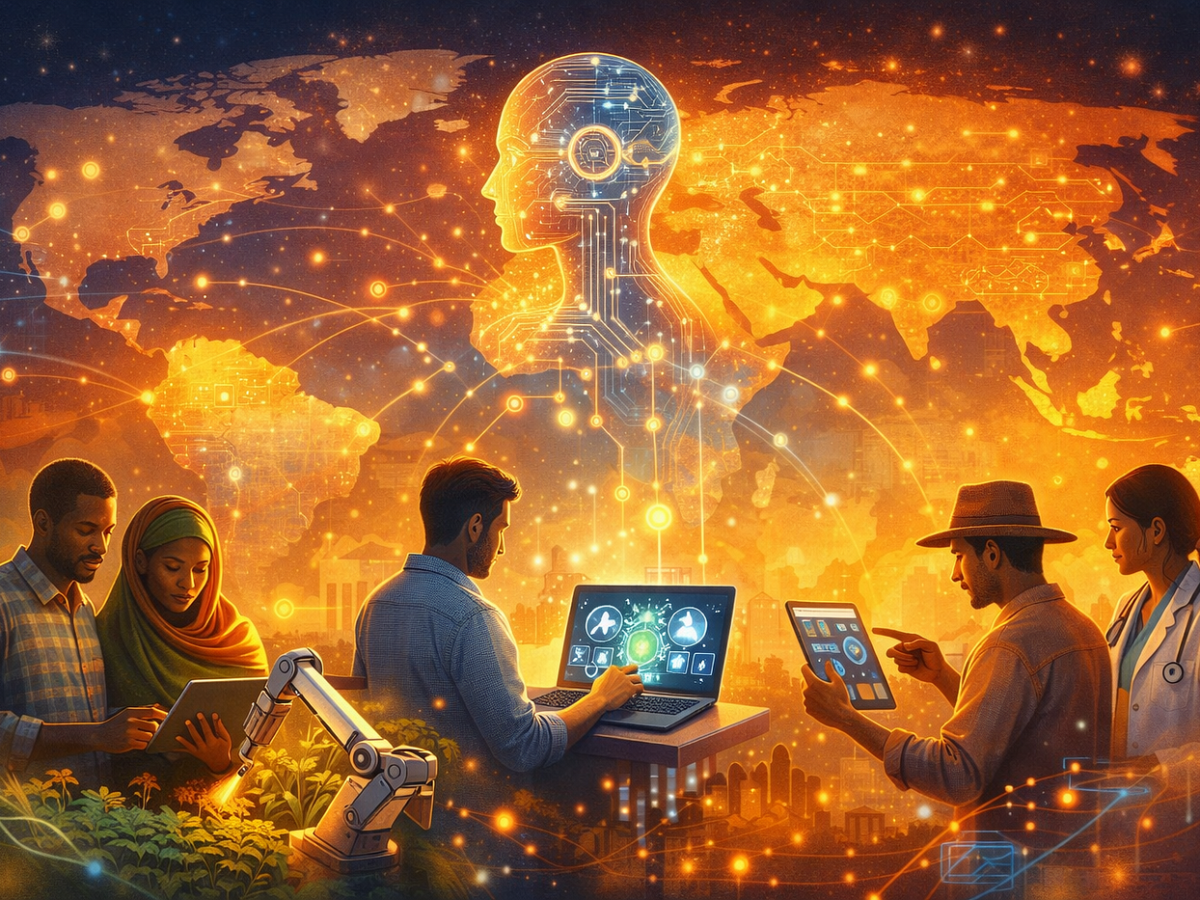
The potential impact of AI technology in developing nations throughout Africa, Asia, and Latin America could significantly contribute to economic development as well as inclusive development and shared benefits. Developed countries have already greatly benefitted from advanced technology applications; how AI can benefit developing nations will include the modernization of industries, creating more efficient governmental operations, and providing solutions to longstanding challenges such as poverty and inequality. These countries can increase productivity levels, diversify economic activities, and improve their global competitiveness by putting into place strong policies that create an appropriate infrastructure and prepare a trained workforce for using AI systems. Many developing countries also experience redundant structures that hinder economic growth; for example, many developing countries lack developed industrial sectors, experience high unemployment rates, have large disparities in the availability of technology relative to developed countries, and are highly dependent on the economies of developed countries. While it is not possible for AI to resolve these barriers to economic growth on its own, developing and modernizing construction through the use of AI will enable developing nations to better achieve their goals of achieving economic growth and technological advancement. By using AI in a responsible manner, developing countries will be able to achieve successful and sustainable methods of achieving economic growth.
Sectoral Applications And Opportunities
AI Technology has become widely applied by many companies and organizations in order to implement solutions for everyday problems and challenges facing their respective societies. The implementation of AI Technology has several benefits to both organizations and individuals alike; as an example, Farmers can now grow greater amounts of food on their land and with the resources available to them than at any previous time in history. Healthcare professionals can now diagnose patients much more quickly than previously, and provide much better quality diagnoses to patients based upon previous Health History (i.e., the patient’s Medical Record). The improved Technology through the use of AI is also helping to personalize education by enabling students to learn at their pace and according to their learning styles in terms of concepts or subjects they wish to study and when they wish to study them. Banks have utilized automation through AI to help them increase the efficiencies and effectiveness of their operations thereby enhancing their business processes as well as enhancing their risk management function and ability to use Analytics and Data to enhance their decision-making processes.
In conclusion, better Data usage and Analytics will enable all governmental entities to improve the quality of their decision-making at all levels of government, enable them to create better quality policies and programs, and ultimately, better quality services to the citizens of that particular country. These types of applications will create more jobs, increase productivity/jobs, diversify the economies, and improve the quality of life in those economies. AI innovations will help strengthen the digital economy and open up new avenues for entrepreneurism and local businesses.
Challenges and Structural Risks
Simultaneously, Pakistan has been opening major crossings to humanitarian flows into Afghanistan despite the tension. Allowing United Nations aid and business goods to cross into the country is indicative of the fact that the everyday Afghans should not suffer the cost of the actions of the armed groups. To the state that has its own large refugee and returnee population, it is in its interest to ensure that the trade routes are operational and the basic relief channels are available so that they do not suffer further displacement and instability spills across the border. The recent confrontation in Spin Boldak should then be viewed as a larger trend: Pakistan taking in the repercussions of unresolved issues in its west, and attempting to protect its own people, who are attacked outside its borders. Pakistan is signalling that it is interested in stability and not confrontation by calling a collective response to militant networks, by accepting mediation, and by making its military posture one of deterrence and defence. Now it is up to all concerned to ensure that words are accompanied by action in the field, so that this sensitive frontier can no longer be a repeated flashpoint but a channel of legitimate trade, safe movement, and regional collaboration.
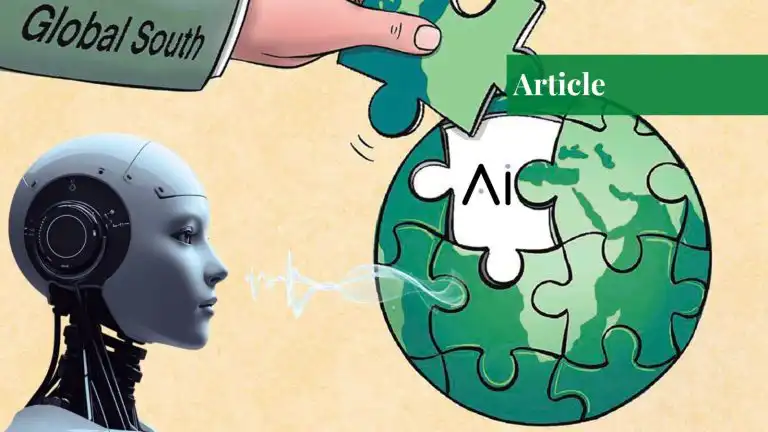
Additionally, a large majority of AI systems currently available have been created from an exclusively Western data and cultural perspective and do not reflect the unique culture, language, or society of people living in countries in the Global South. These systems will likely create a level of algorithmic bias, misrepresentation of cultures, and social inequalities as well. The countries in the Global South have a very limited ability to voice their concerns regarding the future governance of AI due to an already imbalanced power structure in the international technology governance community.
Socio-Cultural Dimensions of AI in the Global South
Although many people think of Artificial Intelligence (AI) as a way to make our economy and technology better, AI has the potential to also build new relationships between people, create new cultural identities and change how we behave every day.
We can use AI technology to change how we communicate with one another (through both in-person and electronic media), how we connect to our work and job locations, how governments govern us, and how we relate to one another as human beings on a social basis. However, if AI technologies are developed based on only the technology itself without considering the culture in which the technology will be used, Indigenous Peoples will most likely lose the traditional Indigenous knowledge associated with that use and experience further (in some cases) of social inequities and exclusion.
So, in order to create AI technologies ethically and socially, a methodology for developing AI from a social standpoint will have to be developed and/or created. In other words, there are numerous social factors that will dictate how AI technologies will be developed/produced, and therefore we need to consider these social factors and how they affect the creation of the AI. These factors could include, but are not limited to, the cultural diversity of multiple communities; the knowledge and skills that host communities possess in creating/designing the AI technologies; and the providing of input to the decision makers in respect to the AI technologies being created/designed for the host communities. There will also be a need for social/cultural criteria to be developed by countries to ensure that the design of AI technologies is done ethically and legally, as well as, providing a framework to design AI technologies that respect the fundamental human rights of all people, regardless of their cultural background.
Governance, AI Justice, and Policy Narratives
In the Global North there are many cultures and societies; all of these groups will continue to not only have their own economic situation/ history; but also will have opportunities to develop and face challenges; The way that country develops opportunities and faces challenges will depend significantly on the factors that influence the economy (i.e., what are the forms of government and economic system?) and political structure of that area; therefore, we should not treat the Global North as one great big group of nations; According to many of the efforts around the world to create artificial intelligence (AI) policy, currently there is action going on to provide the Global South opportunities for technological advancements through artificial intelligence, in order to better their opportunities for economic development. However, the current effort to promote technology as a solution to solve the majority of the social issues which exist in many societies does not take into account the need to ensure that all people in a given society are provided humane conditions in the workplace, that all citizens in a particular society are treated equally by the legal system, that the privacy of every digital citizen is protected, and that citizens with the greatest need receive an appropriate amount of assistance. Different societies have different amounts of accessibility to the use of AI technology, so there is a need for a common model of AI governance that considers all different stakeholders, including those people involved in making governance and policy decisions regarding the implementation of AI technologies.
Governance, and the Future Path:
If nations in the Global South want to take advantage of artificial intelligence, they will need to invest in three key areas: education, technology, and infrastructure. Developing countries will also require legal/governance frameworks to set standards of ethical use of artificial intelligence; protect individuals’ privacy regarding their personal information; promote equitable access to technology.
A way in which they can develop a decolonized and democratized development for AI is to create an environment for local innovation and create an environment that recognizes their data sovereignty, while also enhancing their ability to participate in international forums where software development occurs.
Countries located in the developing Global South are using Artificial Intelligence (AI) to attempt to create an avenue that supports the inclusive development of their respective countries; they are also using AI as part of their strategy to create globally equitable wealth distribution. Deploying AI effectively in the developing countries of the Global South requires such countries to have leaders seeking to lead with vision or have been provided with a plan to implement AI plans within their country. The effective implementation of any program utilizing Artificial Intelligence in developing nations will require the ability of the leader(s) of each of those nation(s) to seek regional collaboration, and develop equitable transformational relationships with industrialized nations (following the creation of equitable partnerships) for developing nations to achieve long-term economic sustainability in establishing inclusive policies around AI. If developing nations are able to achieve inclusive AI policies through investing in these regions, then over time these countries will find themselves becoming high-quality, self-sufficient, and developed economies
