
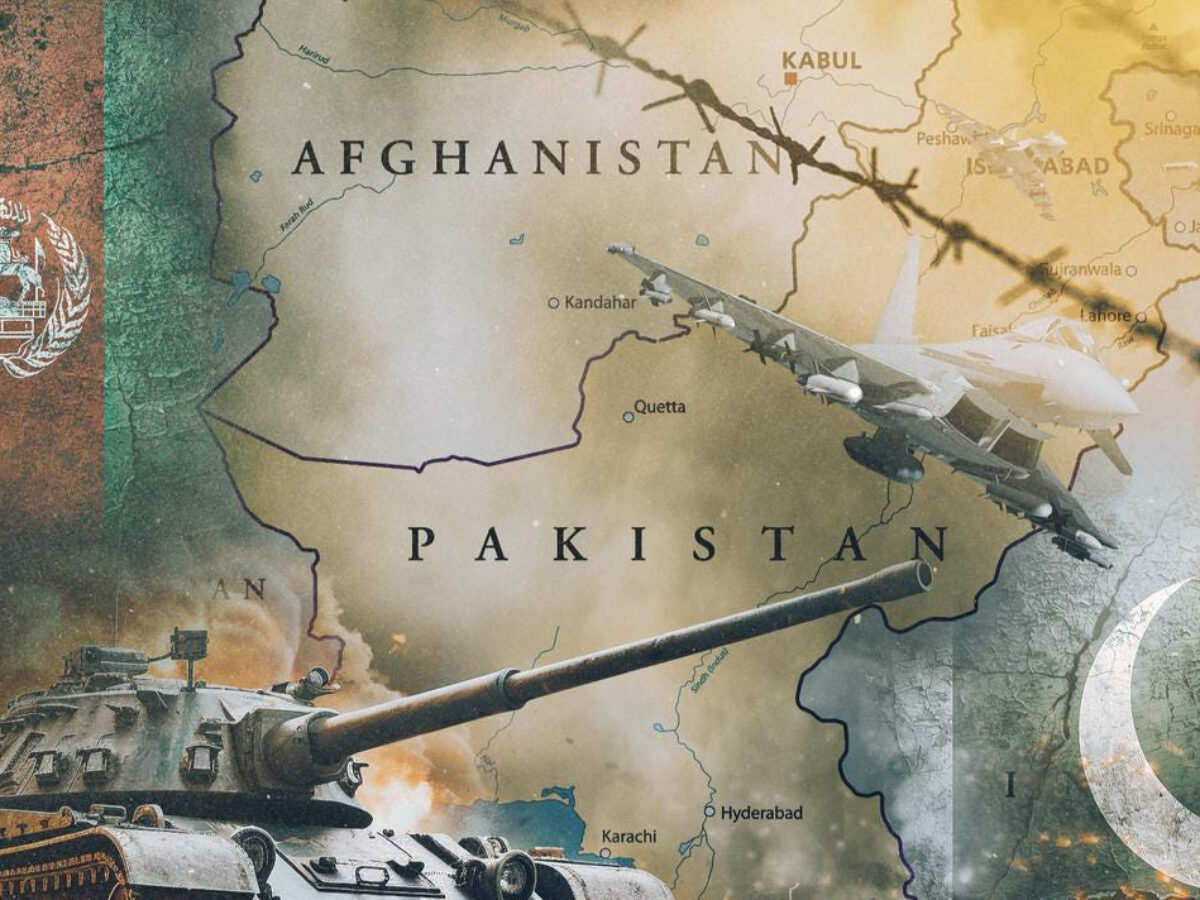


The August 2021 takeover by the Taliban has significantly shifted Pakistan-Afghanistan relations from strategic alignment to heightened tensions. The recent escalations have pushed both countries into armed confrontation.
Historical background: The Roots of Hostility
The hostilities between these two countries date back to 1947, when Afghanistan became the only country to vote against the admittance of Pakistan into the United Nations. This was primarily due to the Durand Line Agreement of 1893, signed by Sir Mortimer Durand, representative of British India, and Amir Abdur Rahman Khan of Afghanistan. This agreement drew a line stretching about 2,649 km, cutting through Pashtun tribal regions between the British Raj and Afghanistan. When Pakistan emerged as an independent state in 1947, it inherited the international borders of British India under the principle of state succession. The issue arose when Afghanistan refused to accept the Durand Line Agreement after 1947, arguing that it was only valid between British India and should have been renegotiated after British withdrawal, thus demanding a separate Pashtun state. This resulted in border clashes for the first time in 1949-50.
Contemporary Drivers of Conflict
Today the issues revolve around border fencing, refugee politics, cross-border militancy (primarily TTP), and sovereignty disputes.
Pakistan has fenced most of the Durand Line, which Afghanistan opposes. These have led to armed confrontations at the Torkham and Chaman crossings.
Moreover, Pakistan is host to 3-4 million Afghan refugees, placing significant pressure on its systems. Thus prompting large-scale deportations from 2023 onwards, deporting 2,009,241 from 15 September 2023 to 31 January 2026. The government proclaims the increased crime and suicide bombings as a reason behind these mass deportations, leading to humanitarian and diplomatic tensions.
The key issue, however, remains Tehrik-i-Taliban Pakistan (TTP), a militant group targeting Pakistan, which Pakistan claims to be operating from Afghan soil. Pakistan views TTP as an existential internal threat, referring to it as Fitna al Khawarij. While Kabul denies harboring them.
The February 2026 Escalation
The recent escalation took place on Thursday, 26 February 2026, when Pakistan launched airstrikes in Afghanistan, including its capital city, Kabul. The birthplace of the Taliban movement, Paktia and Kandahar provinces, was also targeted.
Pakistan claims that the airstrikes were a response to the earlier cross-border attacks. Pakistan launched the operation ‘Ghazb lil Haq,’ targeting militant hideouts across Afghanistan. The information minister Attaullah Tarar in his post on X stated that Pakistan’s armed forces have destroyed 188 Afghan Taliban posts, capturing 31, killing 464 Afghan Taliban, and injuring over 665 since the start of the operation. He further confirmed that Pakistan has destroyed 192 tanks, armored vehicles, and artillery guns while targeting 56 different locations across Afghanistan by air.
Security forces have also conducted intelligence operations in the Domel tehsil of Khyber Pakhtunkhwa’s Bannu district, reportedly injuring several militants. The information minister confirmed that 40 Taliban personnel were killed in KPK overnight operations. Security forces have also carried out operations in Balochistan in response to their physical attack on 16 locations in the north of the province, killing 27 Afghan Taliban.
State-run PTV news also reported that Pakistan armed forces have carried out operations in Jalalabad targeting Afghan Taliban fighters. Moreover, the Pakistan Air Force has struck the Bagram air base and Khugyani base in an ongoing Ghazab lil-Haq operation, inflicting heavy damages.
The shelling across the Pakistan-Afghanistan border in KPK continues, with no major casualties. KPK remains on high alert, announcing the closure of 37 public and private sector educational institutes. There have been reports of intense clashes with heavy firing in the Mohmand district of KPK. According to the residents, 54 educational institutes and local shops have been closed as precautionary measures.
Both countries have repeatedly blamed each other for provoking attacks.
In 2024, the TTP was held responsible for over 480 attacks and 558 deaths, the highest since 2011. Pakistan claims that it has conclusive evidence that TTP was behind the recent bombings in Islamabad, Bajaur, and Bannu. The strikes by Pakistan on 21 February were a response to the terrorist attacks by militant groups operating from Afghan soil. Pakistan accuses Taliban of serving as an Indian proxy. According to Asif, “India wants to engage in a low-intensity war with Pakistan. To achieve this, they are using Kabul.”
The Taliban government says that Pakistan is violating Afghan sovereignty and that the attack by Pakistan was unprovoked. They stated that the Afghan attack was a retaliatory operation against the earlier attack carried out by Pakistan on the night of 21 February in Nangarhar and Paktika provinces, killing at least 13 Afghan civilians, according to UN reports. The Taliban’s spokesperson, Zabihullah Mujahid, said that the “security challenges inside Pakistan have no connection to Afghanistan,” and that Pakistan “must resolve their own issues and refrain from further harming their ties with Afghanistan, as this would be detrimental to both countries and the entire region.”
According to Afghan official Zakir Jalali, active diplomacy is taking place alongside military actions. Jalali stated that Afghanistan has held detailed discussions with the foreign ministries of Turkey, Qatar, and Saudi Arabia, briefing them on their position.
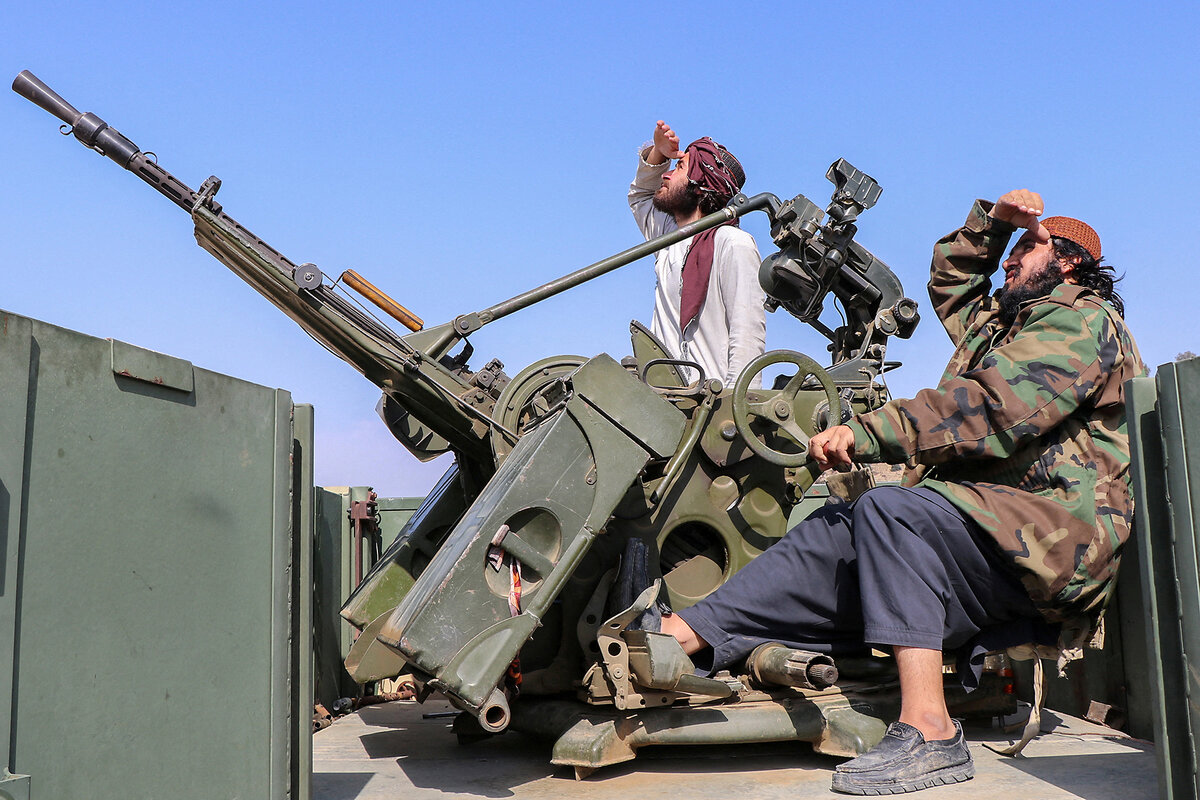
Islamabad has rejected the Afghan claims and maintains the position that Pakistan launched the operation after the unprovoked firing from across the Afghan border. Pakistan also refused any suggestions of talks; the spokesperson of Prime Minister Mosharraf Zaidi stated that “There won’t be any talks. There is no dialogue. There is no negotiation. Terrorism from Afghanistan has to end.” The Defense Minister Khawaja Asif said, “Now it is open war between us.”
International Response
The international actors have urged both countries to de-escalate and engage in diplomacy. The UAE, Jordan, Saudi Arabia, the UN, and the Council of the European Union have called for an immediate end to these hostilities and the pursuit of diplomatic means to resolve the conflict.
Throughout 2025, both countries have been involved in a series of heated exchanges. The major escalation took place in Oct 2025, when Pakistan conducted airstrikes inside Afghanistan targeting the militant bases, leading to multiple clashes on the border. After days of fighting, both agreed to the ceasefire in mid-October in Doha. The talks were mediated by Qatar and Turkey to put an end to the violence and work towards peace. However, the follow-up negotiation talks held in Turkey at the end of October failed and did not produce any lasting breakthrough. Since then, trade and the border crossings between the two countries have been shut down.
Pakistan claims that its main objective is to counter terrorist activities, justifying its cross-border intelligence-based operations as necessary security measures to dismantle TTP infrastructures. While Afghanistan aims to protect its sovereignty and territorial integrity.
The major dilemma, however, remains the lack of verified information from both sides. As the Taliban does not allow easy access to foreign journalists to investigate the sites and verify the claims. It is also not easy to gather information from borders in Pakistan.
The claims from both sides remain largely accusatory.
