


Introduction:
Asia is facing a major shift as the international system transitions from unipolarity towards a multipolar order. China’s growing economic, technological and geopolitical influence have threatened the long standing dominance of the United States’ one world order, reshaping world affairs.
Pakistan’s strategic partnership with china has gained a significant importance in regional power dynamics of South Asia.
The long standing bilateral relationship between Pakistan and China is often described as an ‘all weather strategic cooperative partnership’ built on mutual trust and cooperation in defense, economy, diplomacy and infrastructure regardless of global and regional changes. However with the emergence of multipolar Asia, this partnership has evolved beyond its traditional framework.
Multipolar Asia:
Multipolarity is an international system structure where power is distributed among multiple states rather than being dominated by one hegemon. This diffused structure threatens the survival of countries which is now shaped by power, competition, economic resilience and collaboration (alliances). United States’ maintains a global dominance, however it has encountered challenges from a rising China and other regional actors such as India, major powers like Russia and key Middle Eastern countries gaining strategic and economic independence.
The Indo- Pacific Strategy of US aims to counter China’s growing influence through strategic alliances, collaborative work, economic cooperation and military presence, primarily with countries like India, Japan, and Australia.
As a response, China has taken strong economic and strategic initiatives such as the Belt and Road Initiative (BRI), also known as One Belt One Road and often as New Silk Road, serving as the cornerstone of the regional connectivity in Asia. This has been signed by more than 140 countries, including several members of the European Union.
For Pakistan, multipolarity generates opportunities for strategic and diverse economic collaboration. However, it also creates external pressures as major powers attempt to control and regulate strategic coalitions. Hence Pakistan’s partnership with China has become a key driver for its economic and financial stability as it provides Pakistan freedom to act more independently.
Historical context:
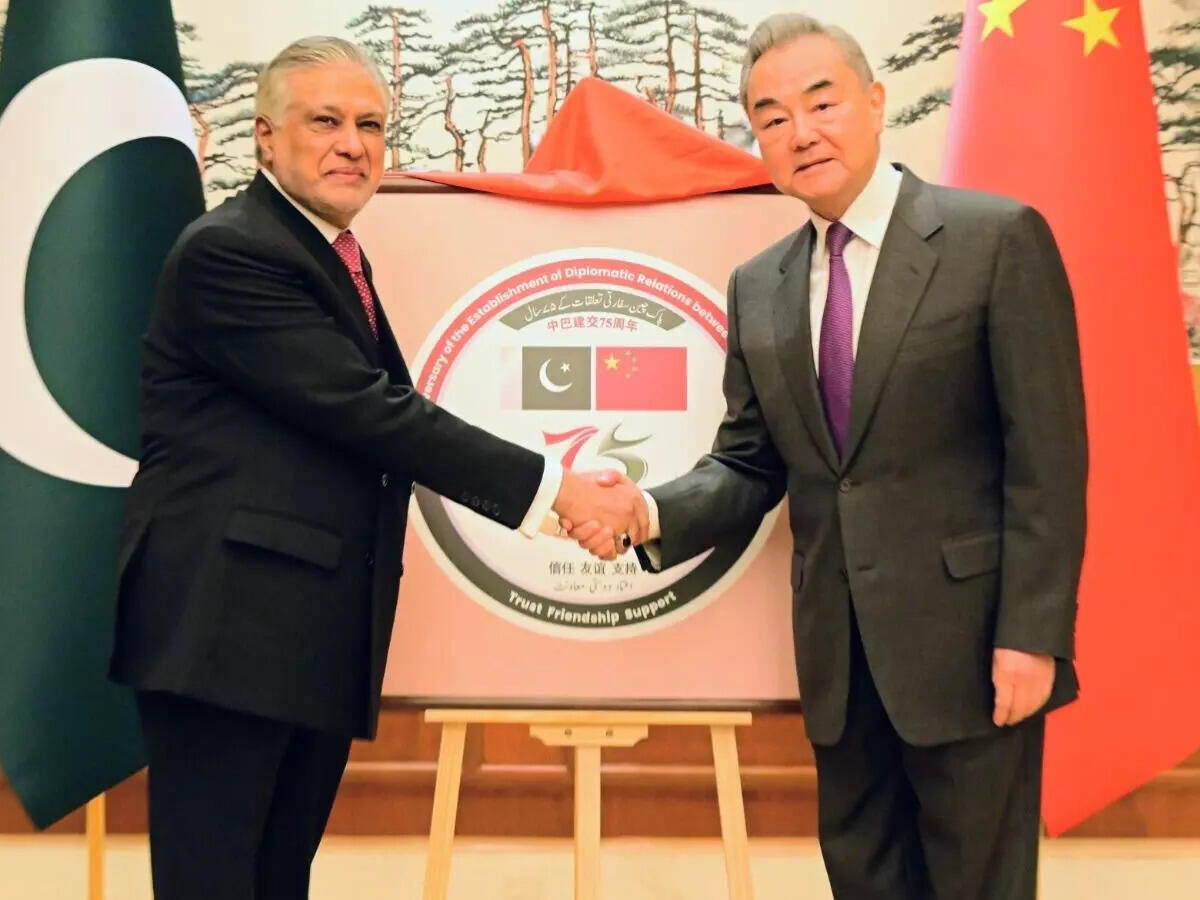
The relations between Pakistan and China have progressed since their establishment on May 21, 1951 launched on political, economic and strategic cooperation. The partnership strengthened with time through defense, cooperation and political alignment. In 1963, the two countries signed a border agreement, defining territorial boundaries and solidifying diplomatic relations. China’s consistent support for Pakistan key issues, including Kashmir and Pakistan’s endorsement of China on matters such as Taiwan and Xinjiang, set the groundwork for long term strategic partnership.
Over the decades, security and defense cooperation became key component of bilateral ties. Defense collaborations, Joint military exercises, and intelligence sharing have further consolidated trust between the two countries. Following 21st century, this relationship began to grow significantly with economic collaboration under CPEC .The partnership has progressed beyond traditional military or political cooperation, and now expands into more comprehensive framework further improving regional connectivity which includes energy, trade, infrastructure and transport.
China maintains its status as the largest trading partner and a major investor of Pakistan, playing a crucial role in shaping regional dynamics in South Asia.
China-Pakistan Bilateral Trade:
China is Pakistan’s largest trading partner and biggest import source. Pakistan-China trade has exceeded US$28 billion in 2025. Pakistan’s export to china stood at US$2.8 billion, while monthly imports from China has surpassed US$1.74 billion in September 2025, including machinery, electronics, chemicals and industrial inputs.
China’s exports to Pakistan is dominated by electrical machinery, iron and steel products and mechanical appliances, reaching approximately $19.62 billion to $20.23 billion, revealing Pakistan’s interdependence on China. While, Pakistan’s export profile remains sector specific, primarily led by copper products and sesame seeds.
China’s total investment in Pakistan under CPEC totals US$64-65 billion over the past decade across energy, transport, and infrastructure. In September 2025 US$8.5 billion has been added through new MoUs and joint ventures in agriculture, renewable energy, EVs, steel and health sector.
Other bilateral treaties include trade, taxation, security and cultural cooperation agreements. The Pakistan-China Free Trade Agreement (CPFTA) established in July 2007 is the foundation of the economic partnership fostering trade relations and mutual economic growth between two countries. The Phase II of this agreement was signed in 1January 2020, expanding tariffs concessions for examples on Pakistani products such as cotton, yarn, leather, apparel, aquatic products and nuts. While Pakistan removed tariffs on Chinese furniture, electrical machinery, textiles, glass products, fertilizers and automobiles.
China and Pakistan also signed several treaties such as the Bilateral Investment Treaty (BIT) in 1989, to protect and promote investments and the Double Taxation Agreement (DTA) signed in 1989 prevents double taxation on income earned by individuals and businesses from either country, promoting cross-border investment and trade.
Pakistan and China have also strengthened their counter- terrorism cooperation. A key aspect of the counter terrorism cooperation is the joint military training and exercises. In November and December 2024, the joint counter- terrorism exercise was conducted, called “Warrior-8”. These drills include joint planning, mixed-unit training, live-fire exercises, and command operations, seeking to improve the coordination and security measures in counter terror operations.
Pakistan and China also share a cultural cooperation. Over the years both countries have collaborated to enhance cross-culture dialogue and solidarity. This includes exchanges in areas such as art, literature, music, sports, cultural diplomacy, educational collaborations and language programs.
CPEC as a strategic instrument in a multipolar Asia
Pakistan holds significant importance for China’s overseas construction and engineering projects due to its geographical location, a gateway to the Arabian Sea and Indian Ocean through Gwadar port. Since the launch of the CPEC in 2015, Chinese companies have actively engaged in Pakistan’s energy, transport industries, transmission lines, oil exploration, communication hydropower, airports and ports.
To strength regional connectivity, primarily for trade enhancement The China-Pakistan Economic Corridor serves as a multidimensional platform, This project seeks to expand and enhance the economic cooperation and development which not only provides gains to these both countries but also benefits the neighboring countries such as Afghanistan, Iran and some Central Asian states (Kazakhstan, Uzbekistan, Turkmenistan,)
The CPEC comes under the China’s Belt and Road (BRI) initiative, which aims to establish a connectivity corridor through the network of railways, highways and energy projects that offers alternate trade and energy routes. This direct access to the Arabian Sea via Gwadar Port further strengthens China’s presence in the Indian Ocean region and reduces its reliance on high risk maritime chokepoints such as Strait of Malacca.
For Pakistan, this corridor is likely to stimulate trade and investments, further yielding employment opportunities and reducing poverty through infrastructure, logistic centers and industrial zones developments. These strategic ventures thus aim to address Pakistan’s long-standing economic difficulties, subsequently improving regional connectivity for both nations.
The phase II of CPEC comprises of new additional sectors, incorporated by Industrial cooperation, agriculture and technology transfer, strengthening its position in a multipolar world.
Major energy development initiatives include various hydroelectric, wind, coal, solar projects have been completed, such as the 1320MW Sahiwal Coal-fired Power Plant and the 1000MW Quaid-e-Azam Solar Park in Bahawalpur. Further energy projects are in progress, including the 1124MW Kohala Hydropower Project and the 300MW Gwadar Coal-Fired Power Project, providing lasting energy security and sustainability.
In Transport sector, the broad railway infrastructure and extensive road networks have further improved connectivity. Completed projects include the Peshawar-Karachi Motorway’s Multan-Sukkur section and the Orange Line Metro Train in Lahore. Developments such as the upgrade of the Main Line-1 (ML-1) railway and new motorways like the Peshawar-D.I. Khan Motorway are still in progress which will further enhance transportation and trade.
However, CPEC still faces significant challenges including major security concerns, mainly regarding the Chinese national’s protection and infrastructures. Furthermore, there has been economic criticism which has made implementation quite complicated, encompassing debt sustainability and project delays. These impediments highlights the nexus between strategic risks and economic objectives within Pakistan-China relations.
Pakistan’s strategic balancing in great power competition:
Pakistan’s geostrategic location holds significant leverage in South Asia, particularly due to its borders with Afghanistan, India and Iran and other Middle Eastern countries. This geopolitical position places Pakistan at the center of the greater power competition providing both strategic advantages and disadvantages. India’s proximity calls for necessary strong defense and security measures. While other border sharing with Afghanistan and Middle Eastern countries exposes Pakistan to regional instability and cross-border tensions. As a result, Islamabad has developed plans to tackle these complications by maintaining its relations with various powers to protect its national Interests.
United State and other countries view Chinese investments and technological support to Pakistan as China’s growing influence and dominance. This creates a major challenge for Pakistan as to balance its strategic alignment with United States while managing its deepening partnership with China. Pakistan maintains a cooperative and collaborative relations with United States based on economic and diplomatic exchanges, particularly in areas such as trade, financial engagement, counter-terrorism, defense and regional instability. Correspondingly, Pakistan also maintains bilateral relations with other with Middle Eastern countries particularly with Saudi Arabia and UAE on labor, energy and defense collaborations.
Through these engagements Pakistan aims to balance its reliance on any single power thereby enhancing flexibility and autonomy to protect its national interest in this highly competitive world.
Constraints:
Pakistan and China, both face several challenges despite the strengths that threatens its multidimensional partnership. Pakistan’s autonomy becomes quite restricted due to its economic weaknesses such as fiscal instability, political instability, governance constraints which restricts Pakistan to fully utilize Chinese investment. The delays in project implementations and institutional inefficiencies diminish the performance outcomes of major projects, including CPEC.
Furthermore, the regional uncertainty and political flux also create security dilemma and intensifies rivalries. The increasing polarization, ongoing tensions with India and the instability in Afghanistan impedes regional cooperation. The substantial Chinese investments, especially in high risks regions like Balochistan and Khyber Pakhtunkhwa triggers security challenges from insurgency, political unrest and militant threats. This increases mutual vulnerability between security cooperation and economic engagement creating security burdens and constraining Islamabad’s strategic flexibility
At the diplomatic level, Pakistan should pursue autonomy over reliance thus find a balance to maintain flexibility and sustainability. Excessive dependence can limit Islamabad’s diplomatic adaptability and agility in decision making.
It is crucial for Pakistan to maintain and monitor financial accountability so it does not enter into such debt terms with China otherwise it would make it impossible for the country to pay off loans in the future. The momentum and range of future engagements may also be affected due to China’s domestic deceleration and evolving global priorities.
Looking-ahead, Pakistan-China deepening partnership will continue to play a pivotal role in Asia’s politics. The partnership built on mutual growth and economic interests requires careful management to avoid overdependence. Nevertheless, the effectiveness and productivity of this partnership depends on Pakistan’s capability to convert the strategic alignment into concrete economic gains and greater regional influence.
In today’s transitioning multipolar world, a country’s survival truly depends on its flexible diplomacy. Hence Pakistan must pursue diverse partnerships to avail opportunities for maximum strategic benefits and economic gains.
Conclusion:
The emerging multipolarity of Asia highlights the significance of Pakistan’s partnership with China exhibiting both an opportunity and a test. To manage this relationship effectively requires balancing ambition with capacity, alignment with autonomy and cooperation with caution to keep up with this competitive race.
