
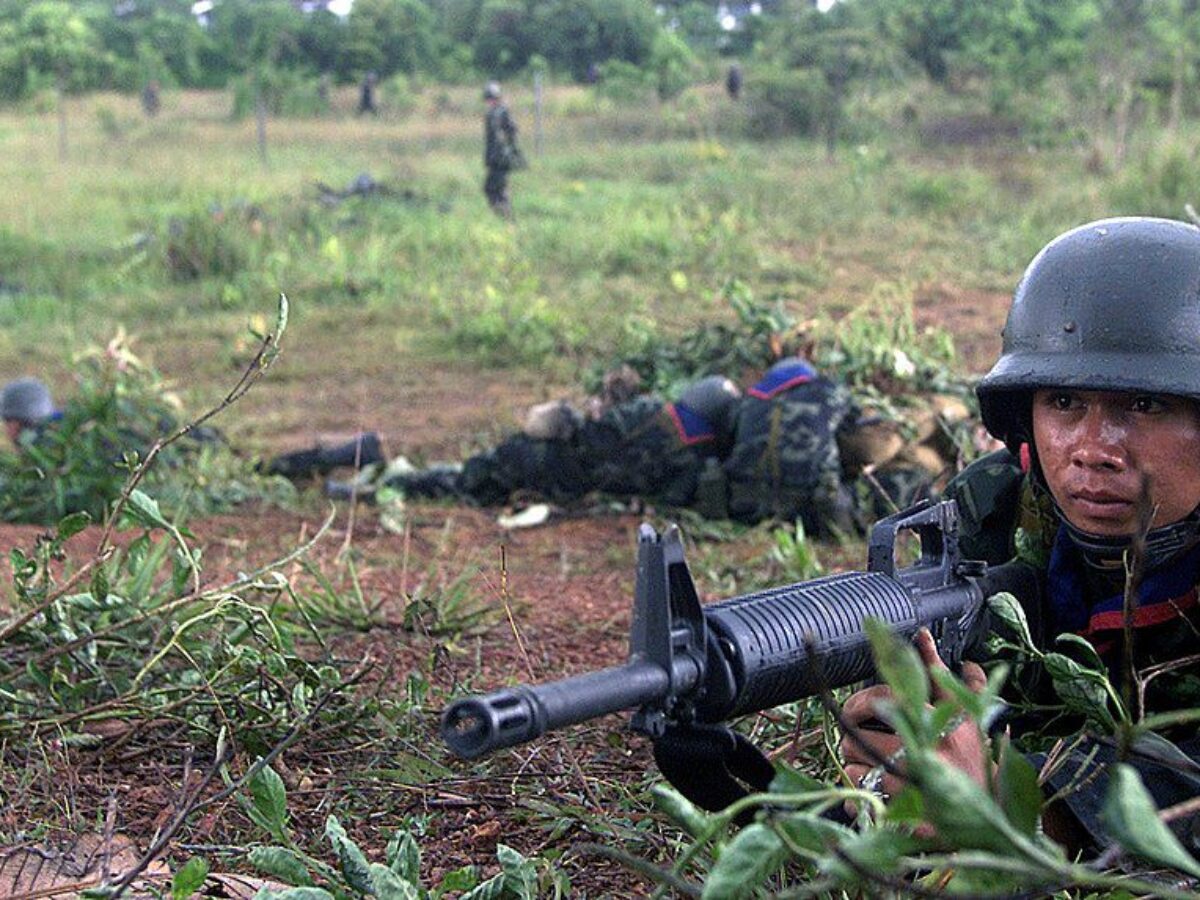


The old border conflict between Thailand and Cambodia has gotten out of hand once again, with Thai air attacks that represent the most severe escalation since the middle of 2025. Fighter jets hit Cambodian military installations on both sides of the frontier that had been contentious, with Thai troops caught in the crossfire and at least one dead and some men and women hurt, on Monday, according to the Thai army. The Cambodians reject the allegations of shooting first and accuse Thailand of unprovoked aggression, injuring at least three civilians in the Preah Vihear province. The 817-kilometre border between Thailand and Cambodia has been simmering for months, especially around temple complexes like Preah Vihear and Ta Muen Thom, where the border is ill-defined and highly symbolic. The immediate catalyst behind the decision by the Bangkok government to summon the air force was a fatal event on Sunday when the Thai government alleges that the Cambodian troops fired shells in Ubon Ratchathani province, killing a Thai soldier and injuring others.
Thai officials deny that the air raids were offensive measures and assert they were limited, defensive measures against artillery positions and troop masses, which they say were concentrated near the border. Thai F-16s attacked Cambodian territory in Preah Vihear and Oddar Meanchey provinces around dawn, the Cambodians counter the Thais, hitting villages in the area and causing people to evacuate. The violence has broken a ceasefire signed in Kuala Lumpur in October, when former U.S. President Donald Trump and Malaysian Prime Minister Anwar Ibrahim facilitated the Kuala Lumpur Peace Accord between Thai Prime Minister Anutin Charnvirakul and his Cambodian counterpart, Hun Manet. The agreement obliged both parties to withdraw heavy arms, to collaborate in the clearance of landmines, and to have ASEAN observers patrol the truce. That was a setup that was already strained. In November, Thailand suspended its deal and claimed that landmines maimed several of its soldiers, who it claimed had been recently planted by Cambodian forces, an allegation Phnom Penh denies. Clashes had sporadically halted its deal, and ASEAN observers had already suspended some of its monitoring visits due to security reasons. Trump has offered the October deal as the flagship achievement of his current foreign policy activism, and Anwar, as the chair of ASEAN, spent significant political capital bringing both sides to Kuala Lumpur. The air attacks of Monday are now threatening to unwind that diplomacy and to bring discredit to ASEAN as a conflict manager in its own region.
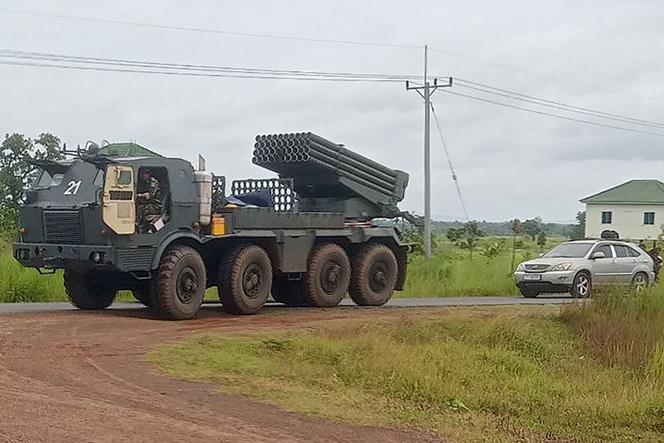
The re-emerging conflict is targeting civilians in frontier provinces that had already been traumatised by the clashes in July that claimed dozens of lives and displaced over 300,000. According to Thai officials, over 35,000 residents have already been evacuated in Ubon Ratchathani, Surin, Sisaket and Buriram districts, where their houses are located near potential firing by artillery, in schools and sports halls. Thousands of people are reported to be leaving Preah Vihear and Oddar Meanchey border communities by Cambodian officials in fear that ground confrontations can follow the air raids. There are also threats to the local economies. Major crossings have been shut, the flow of goods across borders has slowed, and farmers who are already feeling the inflation pinch are worried that, even without the war spreading, they may lose access to their farms. Humanitarian organisations have been alerting that mass displacement, as in the July mass exodus, could recur with artillery duels returning to normal.
Deep historical roots of the dispute
Even though the current crisis is associated with ongoing conflicts and broken ceasefires, its origins can be traced back to a century of unresolved border and identity politics. The border between Thailand and Cambodia was initially drawn on a French colonial map in 1907 and has been disputed ever since. In 1962, the International Court of Justice determined that the ancient hilltop temple of Preah Vihear was Cambodian, and, as of 2013, explained that the surrounding territory was also Cambodian. However, Thailand questioned several points of the ruling and the precise delimitation of the adjacent land. Both sides are bolstered by strong nationalist accounts, which add weight to these legal arguments. Many Cambodians regard the temples as the representation of the Khmer civilisation, and Thailand is accused of cultural appropriation and territorial intrusion. Other Thai nationalists, in their turn, also challenge the justice of the colonial-era maps and present concessions as the betrayal of Thai sovereignty. The dispute has been used by politicians and even officials in both countries to seek localised political and military backing, which has complicated the reconciliation process.
Malaysian Prime Minister Anwar Ibrahim has termed the air attacks as highly worrying and urged Bangkok and Phnom Penh to pull back to the edge and reaffirm the Kuala Lumpur accord with new ASEAN mediation. The former influential leader of Cambodia, Hun Sen, who is the current president of the Senate, has instructed Cambodian forces to maintain caution and reminded them that whoever intensifies the combat will stand to see the peace they have gained destroyed. To date, there is no indication of active intervention by the major powers; however, Washington, Beijing and neighbouring Vietnam would have a significant stake in ensuring that a long-term conflict does not occur, thus derailing trade routes and supply chains, as well as the stability experienced in the region. The U.S. State Department and the foreign ministry of China are likely to put pressure on both sides, one-on-one, to resume the ceasefire arrangements they signed only a few weeks ago. Whether Thailand will cease air operations in the short term is the most critical question, as well as whether Cambodia will persist in its non-direct retaliation. In case both sides intensify the conflict, by regularly bombing the other, firing artillery at populated areas or invading each other, the war may soon go beyond the borders of communities and encourage ASEAN or the UN Security Council to think about more forceful diplomatic intervention. Both governments assert they still intend to continue negotiations, but each accuses the other of violating the truce. Without unbiased surveillance and a reliable system to probe the occurrences, the accusations of who fired first are likely to persist. It is the crisis that highlights the precarious nature of the 2025 peace architecture surrounding the Thai-Cambodian border: historic grievances, vague borders, landmines, and well-armed forces, all within kilometres of each other.
The air attacks on Monday will not be the first, but unless there is continuous pressure from ASEAN, major powers, and domestic populations in both countries, no political settlement, no real demilitarisation of sensitive regions will be achieved.
Research Associate, Pakistan House