


Executive Summary
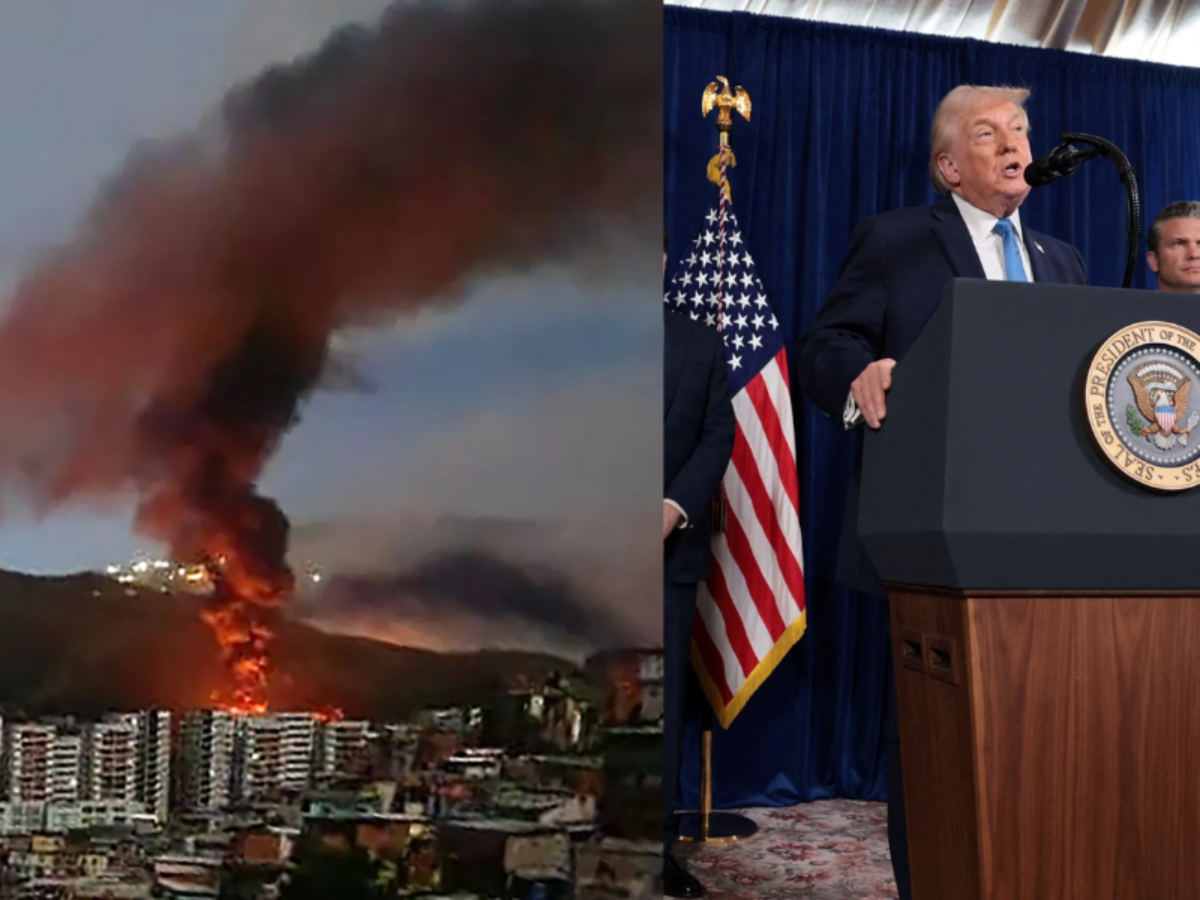
The action taken by the US on January 26, 2026 changed both the global political sphere and the international security landscape of Venezuela; the objective was to capture President Maduro whose government has been accused of using drug trafficking and to create a better atmosphere in that region.
There are some nations that believe this action was an imposition of the US; they viewed the level of US involvement as an attempt by a more powerful country to take control of less developed countries thereby violating their rights regarding sovereignty. These developments encourage discussions regarding the issues of state sovereignty, the role of international law, and the way the global/order is structured. Many critics of US Policy, have stated that many of the same powerful countries will use ‘national security’ as rational for acting in the manner in which they do throughout the globe. The incidents surrounding this particular event will illustrate how the unilateral decisions of one country adversely affect the security of another country. Therefore, the ultimate thesis presented by this paper will show that the US actions violate international law, create an unstable environment, and destroy international systems and trust in international organizations.
History and Context
The relationship between the US and Venezuela has been one of tension over an extended period of time, largely due to political and economic sanctions and ideological rifts. Venezuela’s oil reserves and its government’s anti-US position made it a target for US pressure and containment; the US response had evolved throughout the years from using diplomacy to sanctions and ultimately to economic isolation.
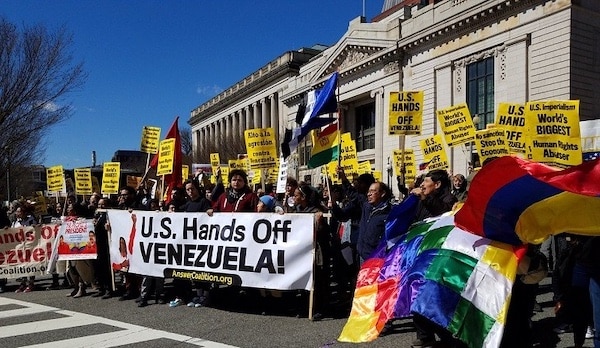
In January 2026 that had become direct military intervention. The US forces invaded the country of Venezuela and captured President Maduro . Although the military operation was sold to the public as a law enforcement operation targeting drug trafficking and other crimes, the magnitude of the military operation indicated much more than law enforcement activity; it was really a political and military action against the sovereign nation of Venezuela.
Analyzing Security and Global Impacts
The idea of intervention is opposed to a very basic societal principle – all nations should be given the sovereignty necessary to control & manage any of their internal affairs. Military actions taken unilaterally violate international law but also violate the right of each nation to be free from interference in its domestic affairs.The continuing violation of the principle of non-intervention and the failure of the Global Peace and Security Law to provide an enforceable universal standard has resulted in the establishment of an altered world order, where establishing political relationships has become less a matter of rules than a matter of the coercive exercise of power. Thus, countries with more power have greater freedom to act while countries with less power have less capacity to act and are therefore more vulnerable, thus creating a climate of fear and doubt and uncertainty in the international system, where all nations are currently subordinating their sovereignty to demonstration of force.
The result of this crisis at the regional level has been further instability in Latin America because the unpredictability associated with politics has increased, public institutions’ ability to impose their authority over citizens has diminished, and the rule of law is becoming less effective as a means of regulating behavior.
Policy Options and Recommendations
The shift away from military force toward cooperative and collaborative efforts to achieve security will need to begin with international cooperation and understanding about how international institutions can define security through law and other forms of non-military power, rather than by using military force in an unilateral manner (or partly unilaterally). Regional states should identify and develop regional cooperative solutions that use other regional states as the primary source of assistance through dialogue and non-controlling means. Security should also focus on the individual through the promotion of economic and political development and the establishment of inclusive political organizations. Furthermore, when dealing with any global challenges (such as drug and crime), governments should act cooperatively rather than use military force or intervening in the domestic affairs of another country.The primary and best principle for governments to use in constructing a security policy that is based on the idea that all security should be built on law, equality, and cooperation, rather than on power or domination.
Conclusion
The present day situation in Venezuela, where the USA has intervened militarily, demonstrates that the US is currently exerting power regionally and globally to reshape the evolution of National Sovereignty; and ultimately, it demonstrates how Security Language (or the Language of Security) is utilized by developed (or super-power) nations to exert historic (and continuing) control over newly independent or sovereign nations while attempting to redefine Security norms globally. Global Security cannot be created via the use of violence and the threat of violence. It must be created based on international recognitions of National Sovereignty, Education about International Norms and Fostering and Sharing in Responsibility Globally. Continuing the theme and topic of this dissertation, the impact of using Security for Power in a new global landscape has created a more volatile and insecure world today than at any other time in human history.
